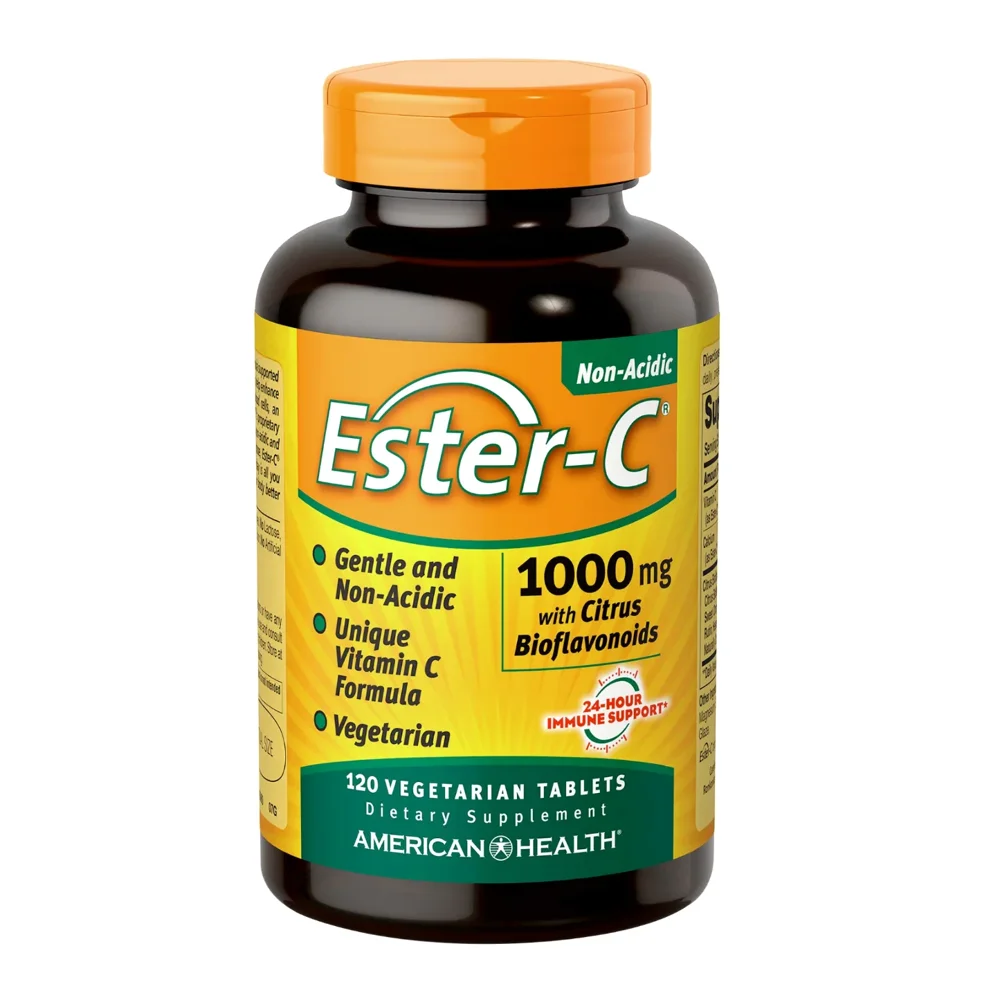
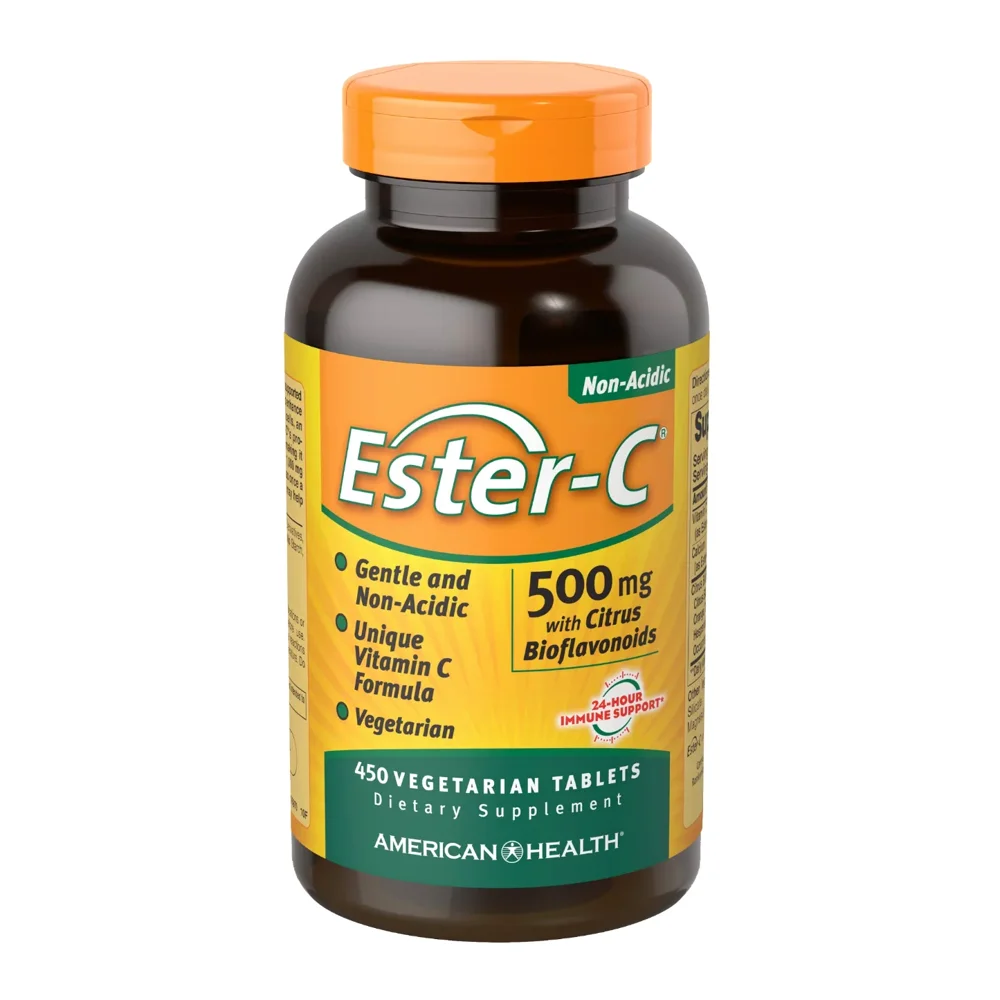
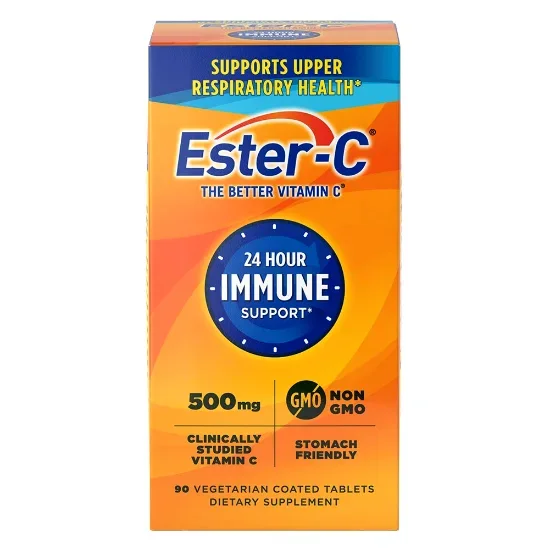
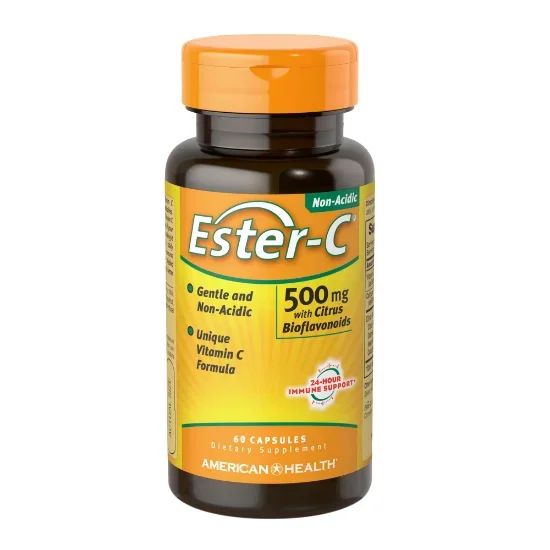
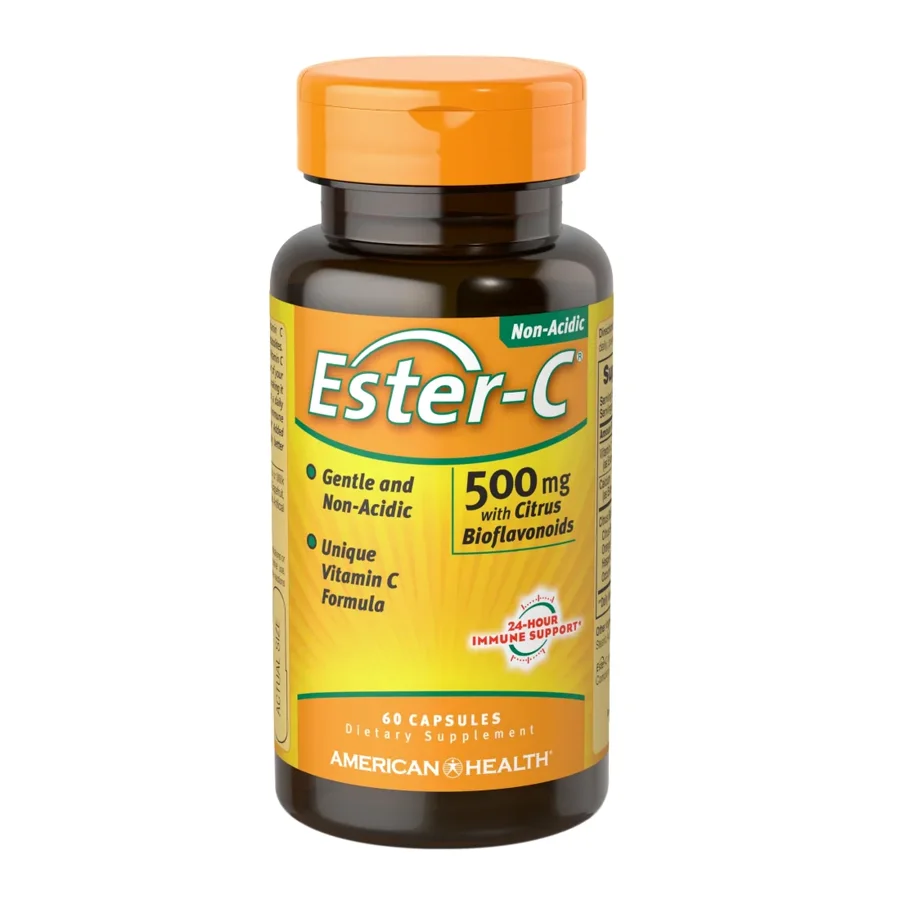
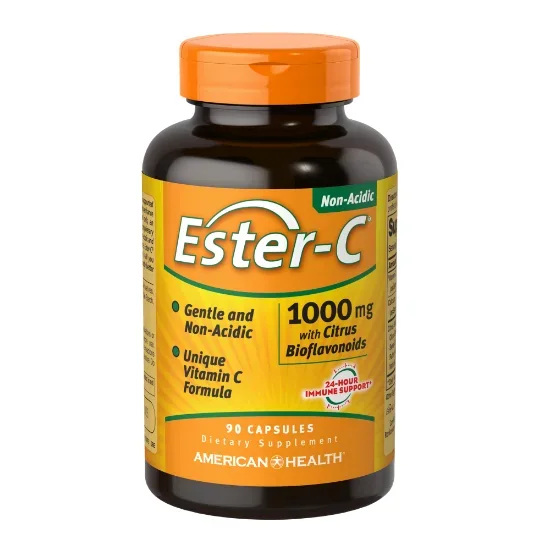
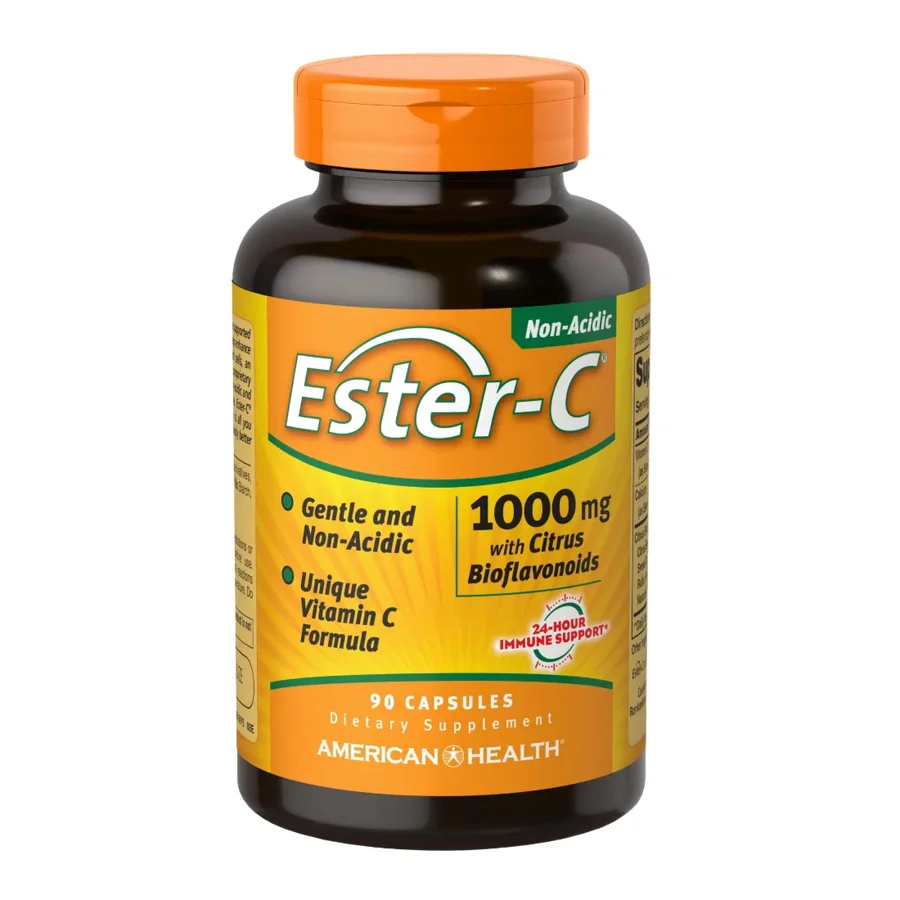
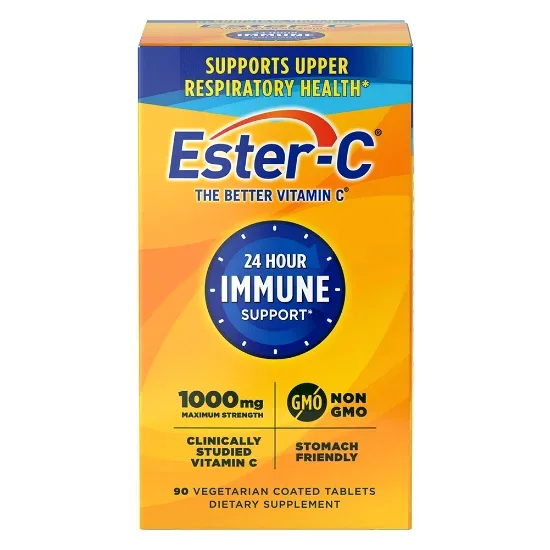
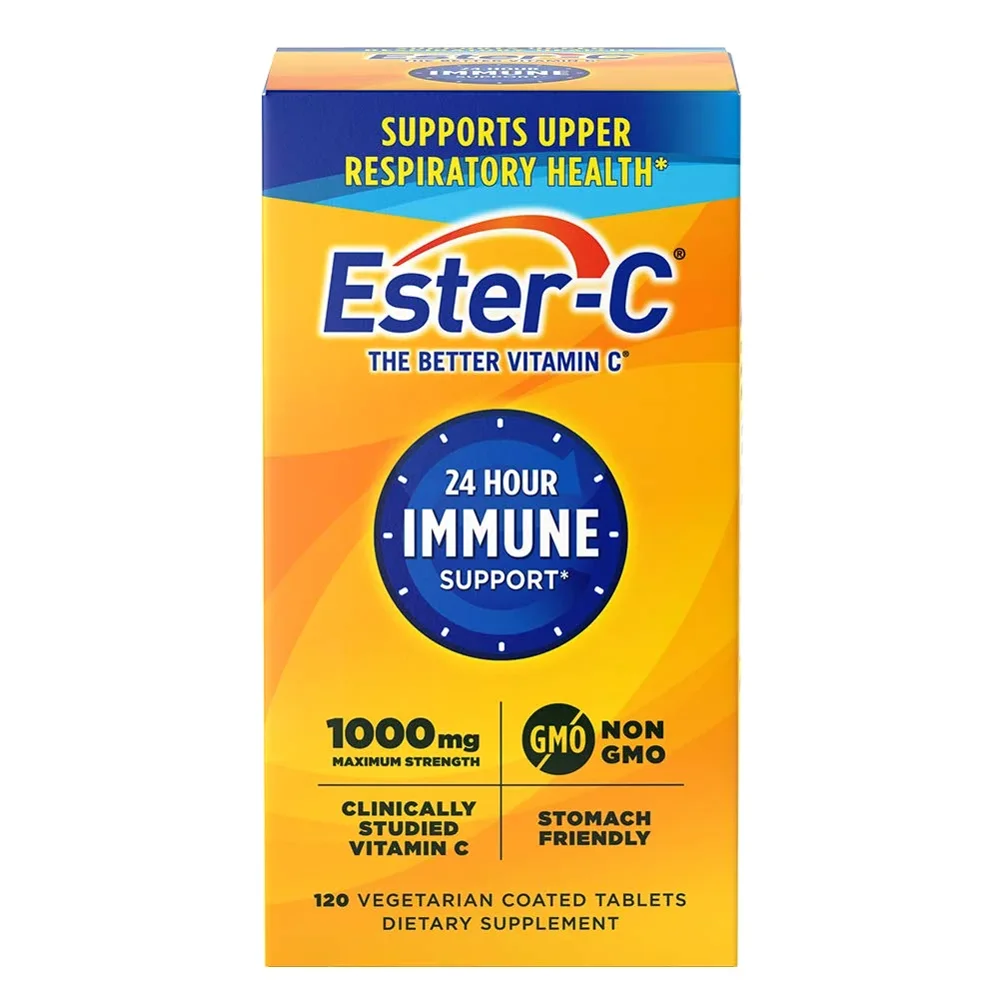
Two Ester-C bottles in the same catalog each contain ninety tablets. One provides ninety labeled servings. The other provides forty-five. Both list 1,000 mg of vitamin C per serving. The difference is the size of the unit: one formula puts a full serving in a 1,000 mg tablet, while the other calls for two 500 mg tablets. This distinction changes the cost, how frequently the bottle needs replacing, and how many pieces you have to swallow.
We recommend the 1,000 mg Coated Tablets as the simplest option within this range for an adult who has already decided that this amount is appropriate and prefers a single vegetarian tablet. The 500 mg formats make more sense for someone who prefers two smaller units, and the capsules are distinct from the vegetarian tablets. We would pass on the entire group if what you are actually looking for is a modest supplement close to the adult daily requirement. The six choices here all lead back to the same high labeled serving.
Read the panel in this order
Start with the words immediately after “serving size.” They identify whether the amounts below apply to one tablet, two tablets, one capsule or two capsules. Then read the vitamin C line, followed by the other declared nutrients and blends. Only after those pieces are clear should you look at the number of tablets or capsules in the whole container. This sequence prevents a common comparison error, especially when the first figure in a product title is the amount per individual unit.
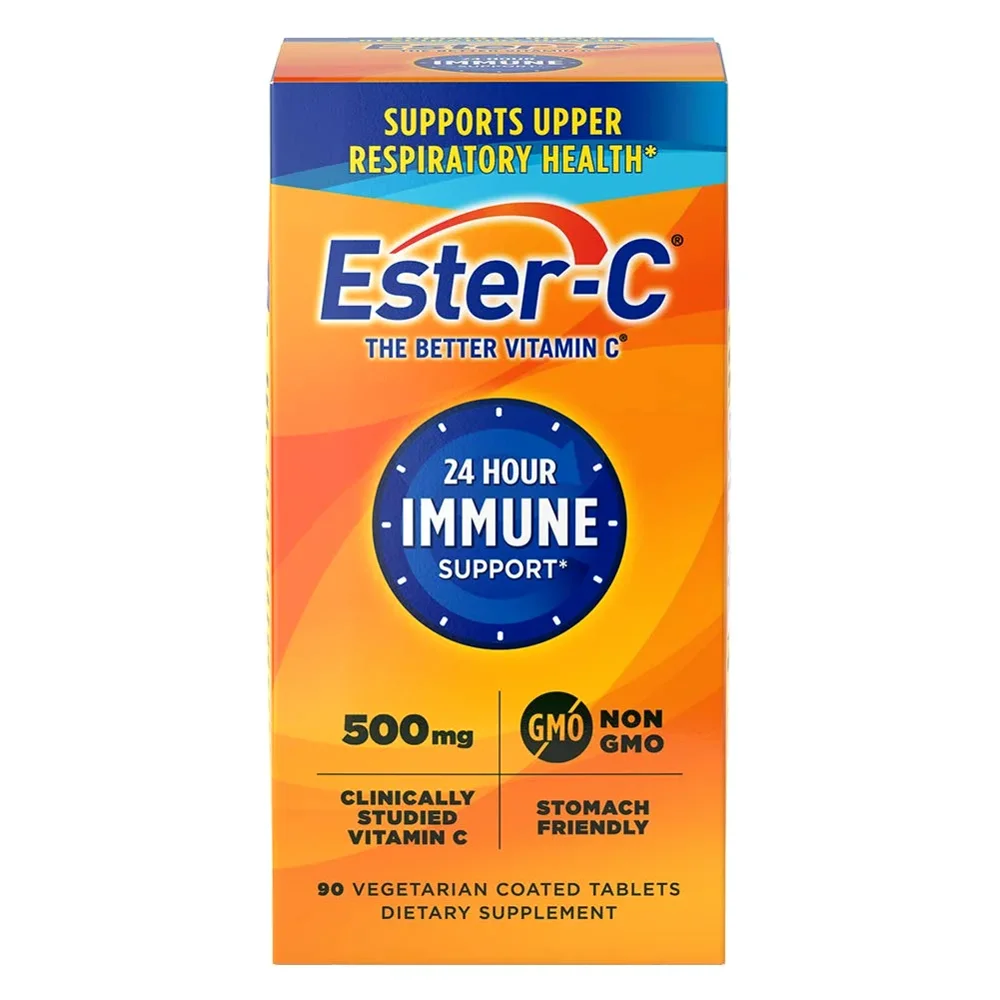
The 500 mg 24 Hour Tablets illustrate the point. Someone comparing them with the 1,000 mg Coated Tablets could reasonably expect half the vitamin C for each day's labeled serving. The catalog actually lists two 500 mg tablets for that serving. If a healthcare professional has recommended a particular daily amount, do not select a format solely because the numeral on the box appears to match it. Show them the back panel if you are unsure which serving they intended. The figures here describe published products, not personal dosing instructions.
| Exact format on the source shelf | Units per labeled serving | Vitamin C per serving | Calcium per serving |
|---|---|---|---|
| Vitamin C 1000 mg Coated Tablets | One tablet | 1,000 mg | 110 mg |
| 500 mg 24 Hour Tablets | Two tablets | 1,000 mg | 110 mg |
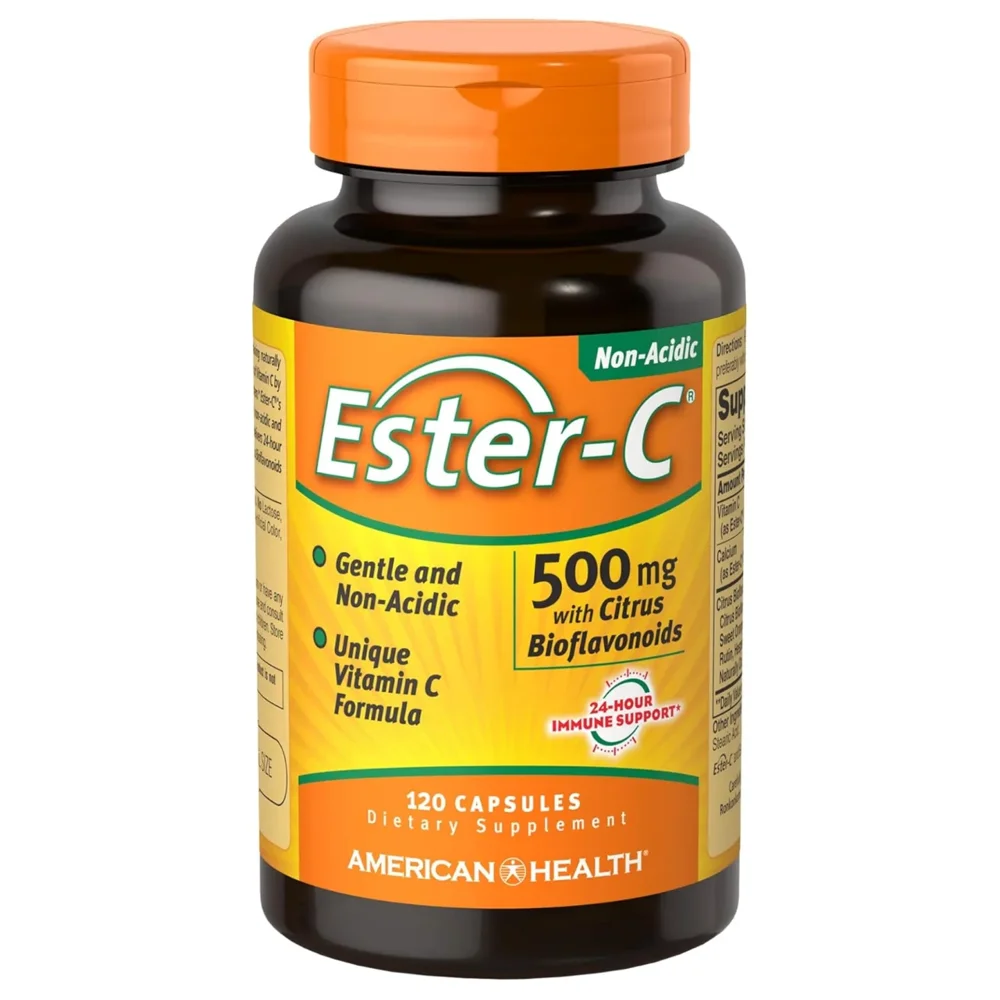
| 500 mg with Citrus Bioflavonoids Capsules | Two capsules | 1,000 mg | 110 mg |
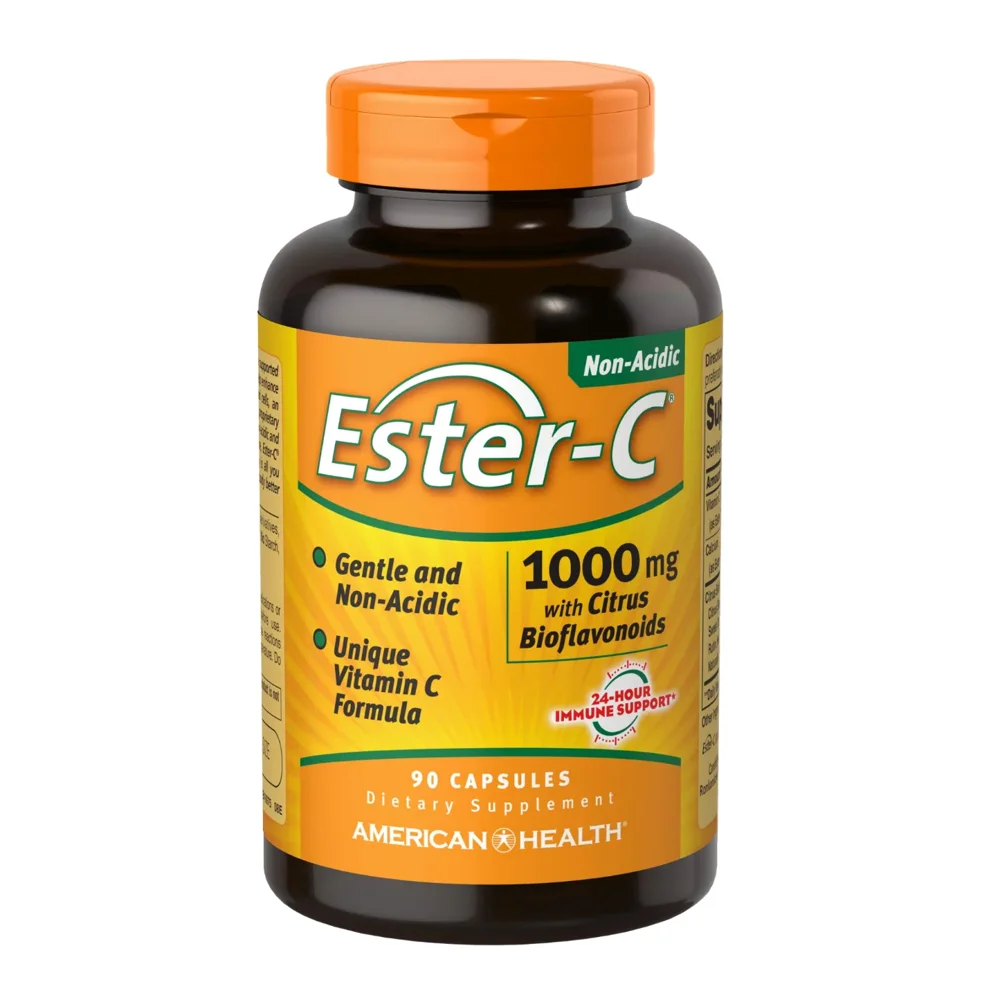
| 1000 mg with Citrus Bioflavonoids Capsules | One capsule | 1,000 mg | 108 mg |
| 1000 mg with Citrus Bioflavonoids Vegetarian Tablets | One tablet | 1,000 mg | 110 mg |
| 500 mg with Citrus Bioflavonoids Vegetarian Tablets | Two tablets | 1,000 mg | 110 mg |
The six products divide evenly between single-unit and two-unit servings. The reviewed packs under the two capsule titles are marked nonvegetarian. The other four are marked vegetarian in the comparison catalog. That difference matters to buyers who have had good experiences with vegetable capsules elsewhere and assume the word “capsule” on its own means vegetable cellulose. Look for the shell material in the other ingredients and any explicit vegetarian statement for the exact product you plan to receive. Ester-C shelf comparison
What buffered vitamin C adds to the label
Ester-C is a branded form of vitamin C based on calcium ascorbate and vitamin C metabolites. Calcium ascorbate contributes both vitamin C and calcium, so the panel can display a substantial vitamin C amount and a separate calcium line. They are two different nutrients. For the formulas compared here, the calcium figure is 108 or 110 mg per serving. It does not mean an extra 108 or 110 mg of vitamin C should be added to the stated 1,000 mg.
People sometimes choose a buffered form because they have disliked the experience of taking plain ascorbic acid. That is a reasonable preference to investigate. It is different from assuming that a buffered supplement is better for everyone, delivers more of every benefit, or can reliably avoid digestive discomfort at a high dose. The NIH Office of Dietary Supplements puts the comparison of forms plainly: “Research has not shown that any form of vitamin C is better than the other forms.” NIH consumer fact sheet
The label describes how much is in the serving, and evidence about a population or study describes something else. Even a product that suits a particular person's stomach better may offer no practical advantage to someone who already eats a varied diet and is not looking for a supplement. An adult who needs to keep track of calcium from multiple sources may also want the complete label despite shopping for vitamin C. Read that secondary line before placing the bottle beside an existing multivitamin or calcium supplement.
What the studies actually measured
One small crossover trial involved fifty healthy volunteers who reported sensitivity to acidic foods. The researchers compared Ester-C with ordinary ascorbic acid and collected reports of upper abdominal symptoms. A crossover design lets participants experience more than one preparation during the study. The comparison is relevant to a shopper asking about short-term comfort in this particular group. It is a much less direct answer to a shopper asking whether a daily supplement improves overall health, prevents common infections or agrees with everyone over a period of years. Original tolerance trial
A later randomized, double-blind crossover trial compared Ester-C, ascorbic acid and placebo. It tracked changes in vitamin C measured in plasma and white blood cells. Some results favored Ester-C for the percentage change in white blood cell vitamin C at eight and twenty-four hours. The question studied was where vitamin C could be measured after the participants took the preparations. A higher value at one time point in one compartment is different from demonstrating a lower risk of catching a cold, or establishing the number of hours a person will feel protected. Original blood-concentration study
This is the part of the review where “24 Hour” on the carton needs the most careful reading. The wording helps identify a product line, but it does not by itself tell you whether a tablet is a time-release drug, whether an individual needs a supplement, or whether two competing formulas produce different clinical outcomes. When the difference between two bottles appears to rest on a study, ask what the investigators measured, in whom and for how long. Here the relevant outcomes are reported comfort and measured vitamin levels. They are not interchangeable.
Coated tablets compared with the bioflavonoid line
The naming creates another minor trap. Only four of the six product names prominently say “with Citrus Bioflavonoids.” The source comparison also lists amounts associated with the coated lines. The displayed values are 102 mg per serving for the 1,000 mg Coated Tablets and 204 mg for the two-unit 500 mg 24 Hour Tablets. The exact blend name and components should come from the package. Comparing a named blend as if it were a single purified ingredient would give the number a precision it does not have.
The four explicitly labeled formulations separate again by strength per unit. The 1,000 mg capsule and the 1,000 mg vegetarian tablet each list 200 mg in the bioflavonoid column per serving. Both 500 mg versions list 400 mg there for their respective two-unit servings. Doubling a figure on the front of the package does not guarantee a larger amount of every companion ingredient. These numbers are useful for matching a familiar formula, but we did not find evidence that the highest amount in that column produces the best result for an individual buyer.
For someone comparing two bottles on a shelf, the practical questions are fairly concrete. Is the unit a compressed tablet or a capsule? Does the bottle carry the vegetarian designation you need? Does one unit supply the whole listed serving? Is the accompanying blend the one you previously used? A larger companion-blend number may make an offer look more impressive, but it has little value if the person receiving it cannot use that capsule or wants to follow a different vitamin C amount discussed with a clinician.
When the bottle with fewer tablets costs less per serving
The source comparison makes it possible to use real package counts without assuming that the largest bottle always wins. A bottle with 60 of the 500 mg citrus capsules supplies 30 labeled servings. A bottle with 90 of the 1,000 mg citrus capsules supplies 90 servings. Although the second bottle holds only one and a half times as many capsules, it supplies three times as many complete labeled servings. At different ticket prices that can reverse a judgment you might make by comparing price per capsule.
| Example package | Tablets or capsules purchased | Labeled servings | How to calculate the unit cost |
|---|---|---|---|
| 500 mg citrus capsules, 120 count | 120 | 60 | Divide checkout price by 60 |
| 1000 mg citrus capsules, 105 count | 105 | 105 | Divide checkout price by 105 |
| 500 mg vegetarian tablets, 90 count | 90 | 45 | Divide checkout price by 45 |
| 1000 mg vegetarian tablets, 45 count | 45 | 45 | Divide checkout price by 45 |
| 1000 mg coated tablets, two bottles of 120 | 240 | 240 | Divide the total bundle price by 240 |
Two rows in that table have exactly the same number of servings despite one having twice as many tablets. If the delivered price were the same, their costs per serving would match. Their form and composition would still differ. Now consider the pair of 120-count coated bottles. A shopper who has never tried that formulation may have little reason to commit to both. It is worth comparing the single-bottle cost with the bundle, particularly if the first container will already last longer than you expect to use that product.
On November 14, 2026 the source showed a 120-count single of the 1,000 mg coated tablets for $14.97 and a two-pack for $29.94. The arithmetic is exact: the two-pack cost twice as much and delivered twice the servings. There was no additional product-price saving in that example. The delivered cost could still differ if shipping or other terms changed, so the figures belong to the dated listing, not a promise about the next checkout. What this example establishes is how little information the mere existence of a bundle conveys about value.
How it compares with Nature Made and Solgar
Nature Made's Vitamin C 500 mg Tablets offer a comparison for a shopper who wants a straightforward 500 mg tablet from another supplier. Its product name does not carry the Ester-C branding. The relevant items to compare are the actual vitamin C form, the amounts per labeled serving and the additional ingredients. Anyone selecting a buffered form for a specific reason should verify that point on the panel before treating a similarly sized numeral as evidence of equivalence. Nature Made Vitamin C 500 mg Tablets
Solgar is an instructive comparison for a different reason. Its Ester-C Plus 500 mg Vitamin C Vegetable Capsules explicitly identify the shell as vegetable-based. Solgar also markets a similarly named Ester-C Plus 500 mg with Citrus Bioflavonoids capsule listing that names gelatin among its other ingredients. Even within one competing brand, the front words “Ester-C,” “Plus” and “500 mg” can all match while the shell differs. Match the entire product name and panel when dietary compatibility matters. Solgar Vegetable Capsules · Solgar Citrus Bioflavonoids Capsules
| Buyer preference | Compare first | Detail most likely to change the choice |
|---|---|---|
| A single vegetarian tablet of the reviewed buffered formula | Ester-C 1000 mg Coated versus Ester-C 1000 mg citrus vegetarian tablet | The companion blend and the finished price |
| A vegetarian capsule | Solgar's specifically named vegetable capsule | Shell material and serving directions on the selected pack |
| A 500 mg vitamin C tablet without a preference for the Ester-C ingredient | Nature Made Vitamin C versus the exact Ester-C tablet | Form of vitamin C and quantity per labeled serving |
| A familiar citrus capsule | Ester-C 500 versus 1000 mg citrus capsules | Two smaller units versus one unit and the associated blend per serving |
Our review does not rank the competitors by clinical effectiveness. Their product descriptions and packaging give adequate information to compare several things a person can actually verify before ordering. That is enough to make a better purchase for a defined need. A person who prefers a vegetable capsule need not try the reviewed gelatin capsule to discover it lacks a requirement. A person replacing a bottle under a clinician's instructions can rule out a mismatched serving by reading the numbers.
What 1,111% Daily Value means in this context
The US vitamin C Daily Value used for this labeling is 90 mg. Divide 1,000 by 90 and multiply by one hundred and you arrive at roughly 1,111%. The figure is large because the labeled serving supplies more than eleven times the reference quantity. It is not a measure of how much better a person will feel, a score for absorption, or an instruction to aim for that particular percentage in every diet. The same mathematics applies to all six products because they give the same vitamin C amount per full serving.
NIH lists recommended adult intakes that differ with sex and life stage, and notes an additional need for people who smoke. It also gives an adult upper limit of 2,000 mg per day from all sources, with lower limits at younger ages. An upper limit is a ceiling, not a target. High intakes can cause stomach upset, diarrhea and other problems. If a multivitamin, a fortified drink and a separate vitamin C supplement all contribute to your day, a printed number on one bottle tells only part of the story. NIH vitamin C intake and upper limits
A useful way to prepare for a conversation with a doctor or pharmacist is to photograph the serving panel and supplement list you already use. It is easier to discuss the meaning of a daily total with the relevant labels present than with a vague description of a “vitamin C pill.” Someone managing an existing condition, taking medicine or considering a supplement during pregnancy should discuss their own circumstances with a healthcare professional. An online reviewer reporting a positive experience with a particular brand cannot know the rest of another person's diet or medicines.
Customer ratings and the missing sales figure
The source site publishes ratings for individual product families. As observed on November 14, 2026, the 1,000 mg Coated Tablets showed 4.7 out of five from 21,122 ratings. The 500 mg citrus capsules showed 4.8 from 10,021, and the 500 mg 24 Hour Tablets showed 4.7 from 8,901. The 1,000 mg citrus capsules had 4.8 from 6,650. The 1,000 mg vegetarian tablets showed 4.6 from 4,578, while the 500 mg vegetarian tablets showed 4.8 from 1,344. The source reported 52,616 ratings across the six families.
Those family figures are better read as context for the amount of feedback available than as a clinical comparison. Differences of a tenth or two in the mean could reflect the ease of swallowing or a delivery issue as readily as the formulation. A separate check on November 14, 2026 found linked individual buyer comments for the 500 mg 24 Hour Tablets on Amazon. Its listing showed 7K+ purchases in the preceding month. The 1,000 mg Coated Tablets listing showed 1K+ for the same period. The badges leave the exact number and size of orders undisclosed. We cannot tell how many people raised any particular issue from stars alone, and the rating count cannot be converted into the number of bottles purchased. Those figures have no bearing on whether the dose is suitable for a particular reader.
Four actual purchasers on iHerb’s review page for the 120-count, 1,000 mg Nature’s Bounty coated tablets offer a closer look at what a tablet can feel like. These are verified purchases on iHerb, separate from the catalog ratings above. Kris, a US customer writing in April 2025, found the pills unexpectedly large. A Philippine buyer in September 2025 also remarked on the large tablet but appreciated the absence of a sour taste. Their review includes a customer photograph.
A buyer in Bosnia and Herzegovina in November 2025 was comfortable with the size personally, yet would hesitate to suggest it to someone who struggles with tablets; their original review also has a photo. Anzhelika in Ukraine described the tablets as relatively large in August 2026 and liked the way the coating felt when swallowing. The useful finding is the distinction between size and surface: several purchasers noticed the bulk, but they did not experience it the same way. None of the four reports tests a health benefit or establishes results for the other five formulas.
Our verdict
For someone who already wants a 1,000 mg serving of buffered vitamin C and values taking one vegetarian tablet, the coated version is our recommendation. For someone specifically seeking two smaller units with the citrus blend, the 500 mg vegetarian tablets offer that combination without requiring a gelatin capsule. The 1,000 mg citrus capsule and 500 mg citrus capsule are reasonable selections for people who prefer capsules and have verified the shell and serving. The distinctions worth paying for are the ones that make a specific pack suitable for its intended user.
We would decline a large order until you have compared servings, checked the actual formulation and decided that this is a quantity you can realistically use. We also would not select one of these products simply because 1,111% appears more impressive than a smaller percentage on another bottle. The strongest reason to choose a particular Ester-C formula is a well-defined preference for that form and serving, grounded in your own circumstances. A big percentage, a high rating or the words “24 Hour” cannot supply that reason on their own.