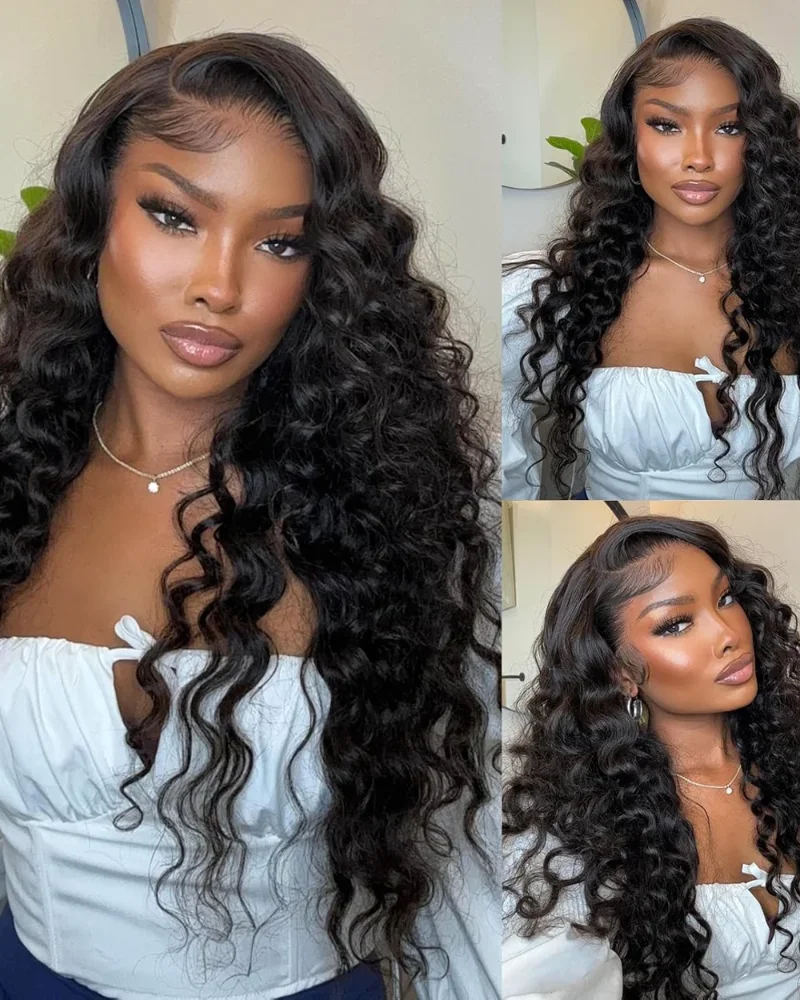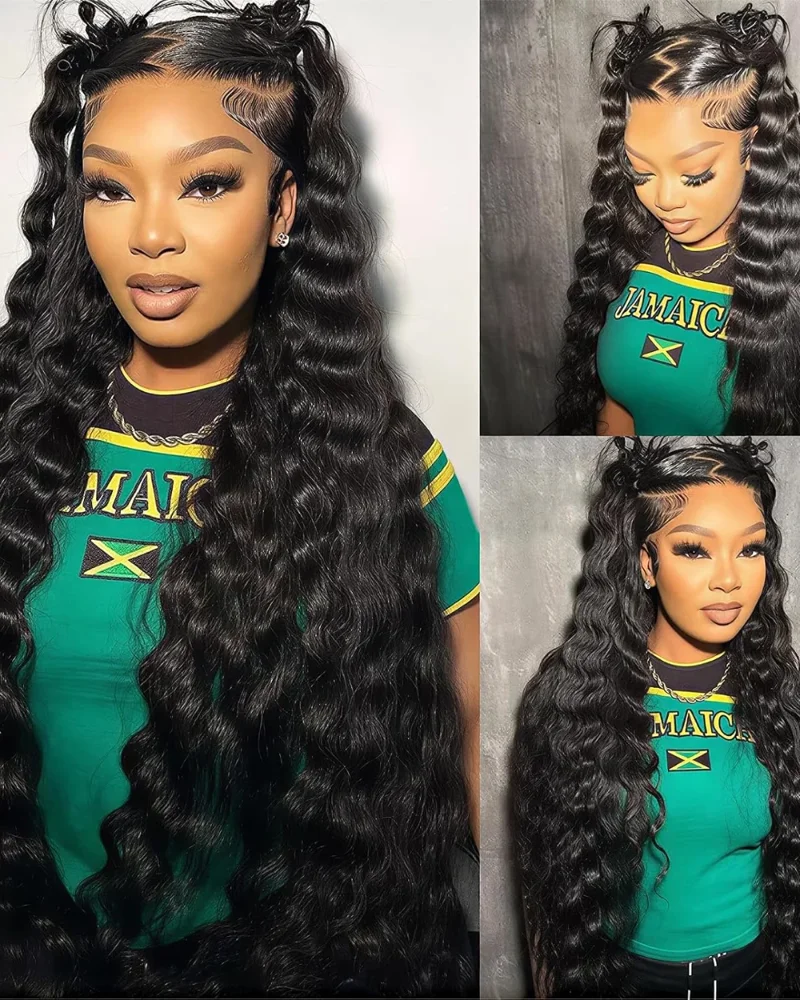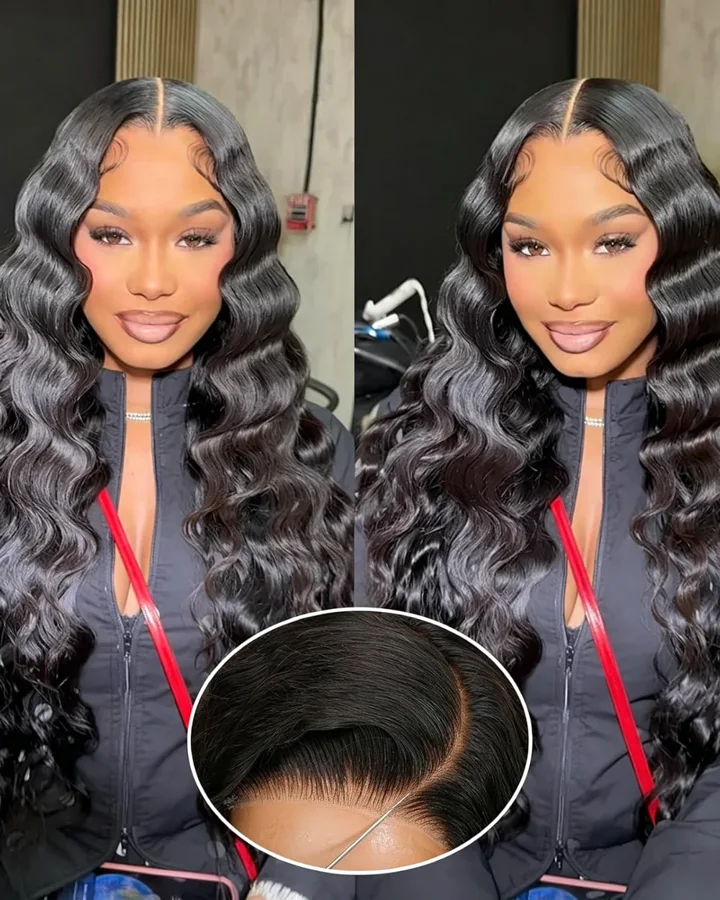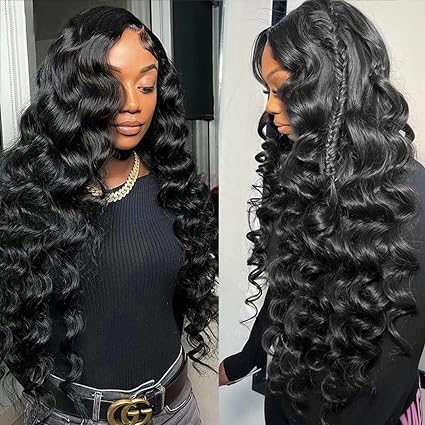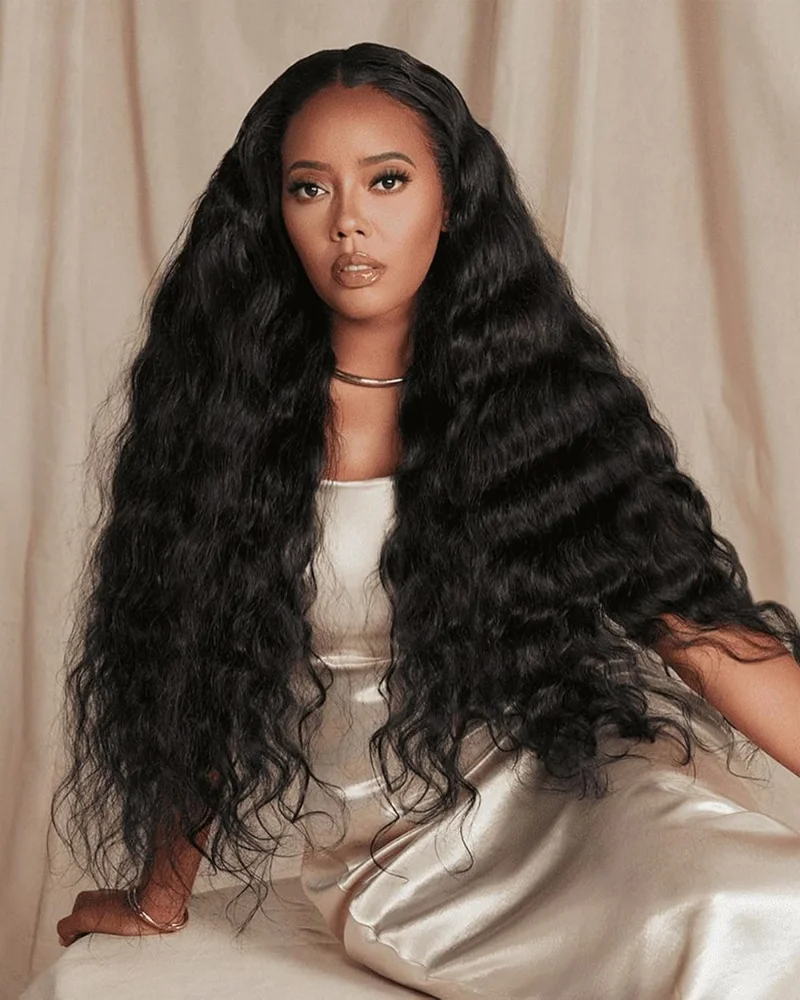
For someone who parts her hair near the middle, wears it down and wants to take the wig off at night, our pick is the 22-inch MEIMEI Wear & Go. Its five-inch-square closure, pre-cut lace and adjustable band line up with that routine. Someone who wears a high ponytail to work should start elsewhere in the same collection. The 360 Lace Hidden Strap carries lace around the nape, precisely where pulling the hair up exposes the back of the cap.
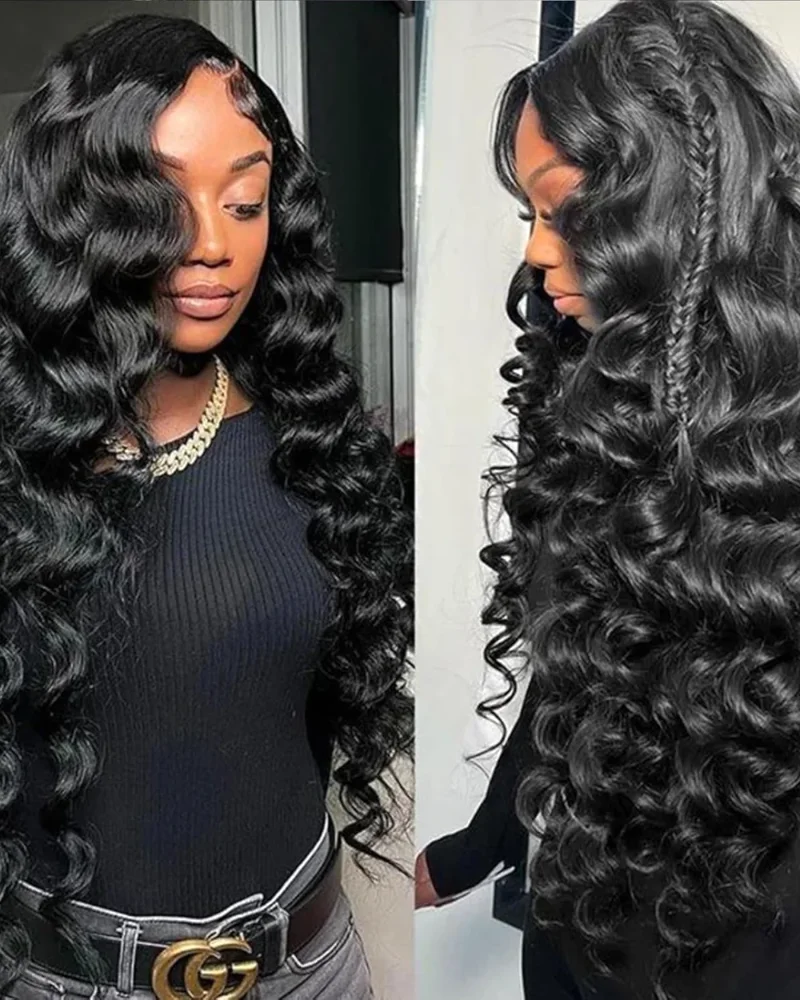
Those choices look remarkably similar in a front-facing photograph. Both have a loose wave, dark roots and full lengths. Turn the model around, lift the hair, or move the part several inches to one side and they become quite different purchases. This review compares the cap under the wave on six specific MEIMEI wigs. We also compare a Luvme Hair frontal that comes prepared for glueless wear. Our findings come from the dimensions, photographs and fitting information for the named versions. Wear, shedding and long-term comfort would take a hands-on trial to judge.
Six wigs worth telling apart
MEIMEI's independent US catalogue lists 27 variations across eleven lengths, from 16 to 36 inches. It groups them into HD Lace Front, Wear & Go Glueless, 360 Lace Hidden Strap and Chocolate Brown. The brown option uses a familiar frontal construction. It makes sense to buy it for the color, but counting that color as a fourth way to build a cap would give a misleading impression of the range. Even within one collection, the cap can change when you change the length. MEIMEI collection guide
| Exact model | Lace and listed density | Reason to look at this one |
|---|---|---|
| 22-inch Wear & Go Glueless | 5 × 5 closure, 250% | A prepared front for a regular center part |
| 18-inch HD Lace Front | 13 × 4 frontal, 250% | More lateral room for a side part in a shorter wave |
| 26-inch HD Lace Front | 13 × 6 frontal, 200% | A deeper part with less listed fullness |
| 28-inch HD Lace Front | 13 × 4 frontal, 250% | Longer, fuller hair with a shallower frontal |
| 34-inch Wear & Go Glueless | 13 × 6 frontal, 200% | Glueless preparation with a wider parting area |
| 16-inch 360 Lace Hidden Strap | Perimeter lace, 220% | A finished hairline at the nape for swept-up styles |
One of the clearest choices here is between the 26- and 28-inch frontals. The shorter one has two more inches of lace depth. The longer one has a higher listed density. If your reference picture has a deep middle part between two smooth curtains of hair, the 26-inch model has the construction to get closer. If the picture shows abundant waves swept across the shoulder and you barely see the part, the 28-inch model makes a stronger case. The two extra inches of hair are only part of that decision. 26-inch frontal · 28-inch frontal
How much of the hairline do you actually show?
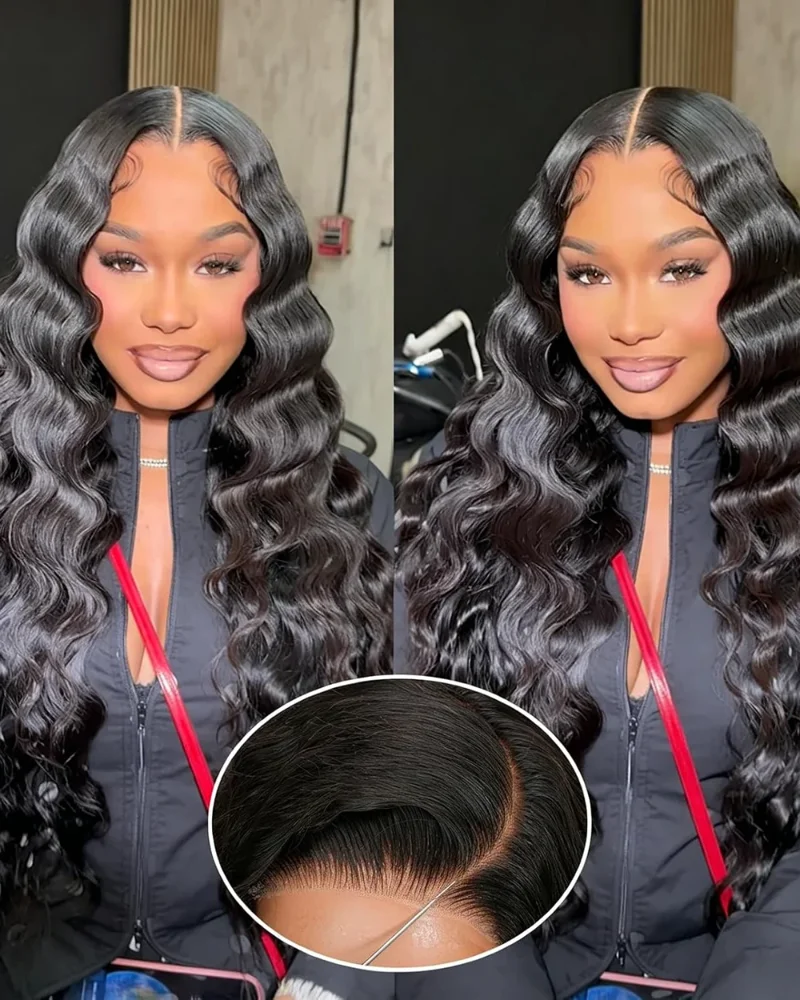
Part your own hair the way you intend to wear the wig. Place one fingertip where the line begins and another where it disappears into the hair. Imagine shifting that entire line toward your temple for a side part. This tells you two things to look for in a cap photograph. The lace must reach back far enough to follow the line, and sideways far enough to cover its starting point. A product portrait taken straight on can conceal both boundaries.
The 22-inch Wear & Go has a square closure. It puts the most useful scalp-like parting surface in the middle of the front. For a soft middle part with the sides falling forward, that's an economical use of lace. The surrounding hair can still move, tuck and fall in waves. What runs out first is the area in which you can open a convincing part. A strong side part that starts near a temple is a reason to choose a frontal, even if you prefer a glueless installation. 22-inch Wear & Go specifications
With a frontal, the first number describes width across the front, and the second gives the stated depth. A 13 × 4 and a 13 × 6 both give you width across the hairline. The extra depth on the second matters when a part travels farther toward the crown. The shape of the individual panel still matters. A photograph of its underside is more informative about the space at the sides than assuming every piece of lace is a perfect rectangle all the way to its outer corners.
The 360 solves a different styling problem. Turn sideways in a mirror with your hair held up. Follow the skin from behind one ear across the nape to the other ear. That's the edge you reveal when you wear a high bun. Lace continues around it on the 360. The catalogue describes perimeter coverage, so it gives us grounds to recommend this cap for a visible nape. It doesn't establish that the entire interior is a hand-tied, full-lace field you could part anywhere. MEIMEI lace and density guide · 16-inch 360 specifications
The 22-inch Wear & Go for someone who wants a repeatable morning
The most appealing part of this model is how much of the first fitting has already been done. The catalogue describes it as having “Pre-cut lace, bleached knots and an adjustable band.” The prepared edge removes a cutting decision from the first wear. Bleached knots address the dark dots where the strands meet the lace. The band gives the wearer a way to secure the cap mechanically and take it off again. Those are three distinct conveniences, particularly if an early departure leaves little time for restyling. 22-inch Wear & Go
There's still a fit to work out. The wearer supplies the head shape, hair underneath and hairline, all of which can change where the closure sits. Picture getting it out of the box the evening before a trip. Start with the underlayer you will actually use while traveling. Place the wig, adjust it gently, and look at both temples and the back in a second mirror. Try parting it once in your preferred position. That sequence answers whether the prepared front works for you before you add makeup to the lace or alter the hair.
At 250% listed density, this is a full-looking choice on paper. Someone after just a light wash of wave around the face may prefer a less full unit. A person who wants the wave to show in a full-length picture may welcome the extra hair. The 22-inch model occupies a useful middle ground in length, with enough hair to bring forward over the shoulders. How far it actually reaches depends on the wearer's crown-to-shoulder distance and on how tightly the wave is sitting that day.
When the frontal earns its place
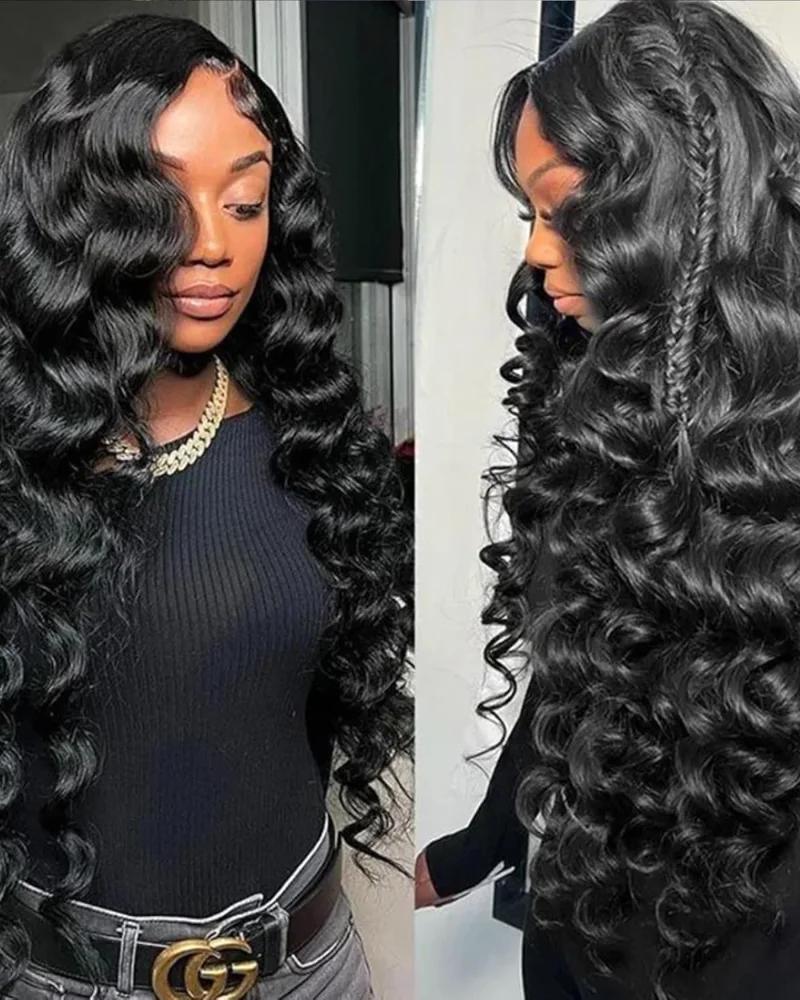
The 18-inch HD Lace Front would be our choice from this group for someone who likes changing sides and wears her hair loose. It gives the same listed fullness as the 22-inch Wear & Go while shortening the lengths and widening the hairline. That combination is especially relevant if you like a dense side sweep. A longer closure wig can give you more hair to move across the face, yet it cannot move the edge of its lace closer to the ear. 18-inch HD Lace Front
The 26-inch HD Lace Front suits a different picture. Its 13 × 6 panel offers extra room running back from the forehead. The catalogue lists 200% density, the lowest of the three density figures in this comparison. Imagine a long wave worn down at dinner, seen from above when you sit at a table. A clean part that continues backward is visible from that angle. That makes the extra lace a tangible feature. Someone who always brushes hair over the part would have less reason to choose it.
The 34-inch Wear & Go deserves a separate look because the collection name easily hides an important distinction. The shorter Wear & Go here is a 5 × 5 closure, but the 34-inch model is a 13 × 6 frontal at 200%. Someone seeking pre-cut lace and a deeper part can have both in this particular version. There is a substantial length commitment attached. Before buying it for the frontal alone, compare a prepared frontal in a shorter length at another brand. 34-inch Wear & Go specifications
How a wave changes the length you see
Wig length starts at the crown and is measured with the hair extended. A loose wave spends part of that length curving outward and back. The MEIMEI guide uses about two to three inches as an estimate of the difference between the stated length and its visible drop. Treat that as a planning allowance. It helps explain how a correctly labeled unit can land above the point you expected when you measured a straight line down your back. MEIMEI length guide
Try a tape measure over the crown and down the path where you usually wear the hair. First bring it forward over one shoulder and then let it fall down your back. Mark the spot you would like the ends to reach on a familiar shirt. Even without a wig, the two paths give you a better reference than a photograph of a model whose torso length you don't know. If you plan to wear the ends around your collarbone, check where the wave will meet your collar when you turn your head.
There are practical differences farther down the range. A 34-inch wig may fall between your back and the chair when you sit. If you wear a shoulder bag, consider which section will pass beneath the strap. If you commute in a coat, think about where the ends will go when you fasten it. None of those is a reason to give up a length you love. They are good reasons to choose it deliberately and to check that the style still looks right when you carry the hair forward.
What density and fit can tell you before ordering
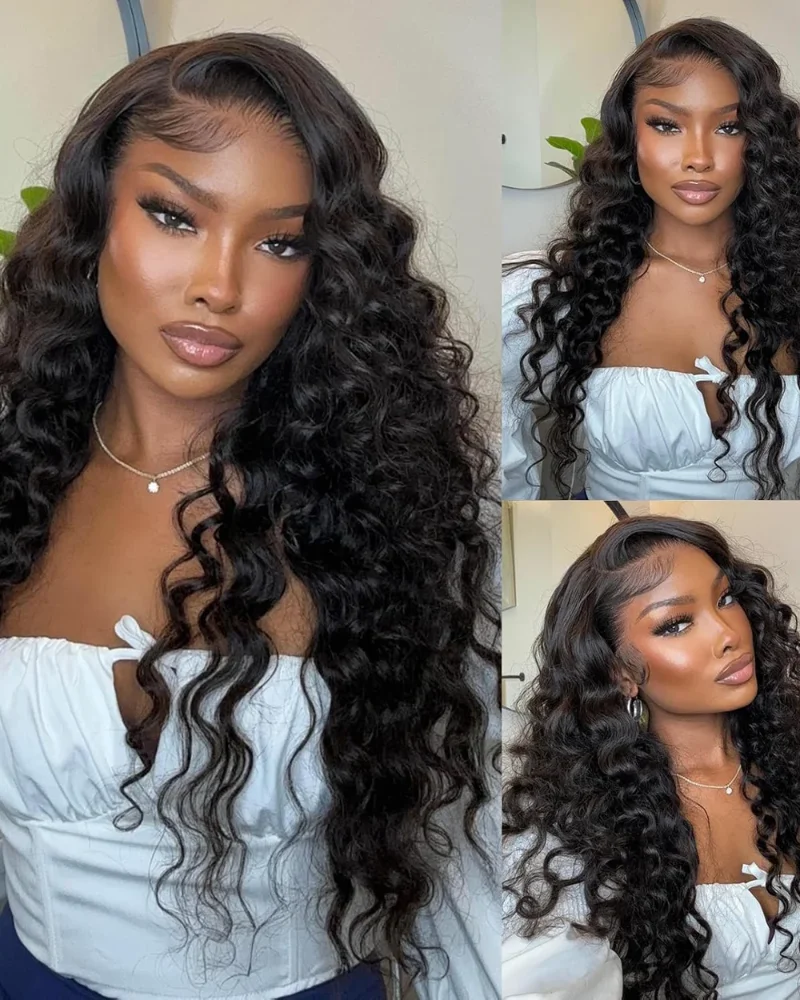
The labels run from 200% on the 26-inch frontal to 250% on the 18- and 28-inch frontals, with the 360 between them at 220%. Density gives you the catalogue's relative description of fullness. It doesn't give the weight of the finished wig in grams, and it cannot tell you how a cap will feel after lunch. Length, cut, placement of the hair and wave all affect what you see. Two wigs with the same percentage can produce very different outlines around the shoulders.
Look at a picture of the ends as closely as a picture of the roots. A cut with graduated lengths can have volume near the face and a narrower outline farther down. A wave separated into wide sections can look airy in one photograph and substantial in another after it has been brushed. If you're aiming for a particular silhouette, find a full-length view with the hair resting in a position you might actually wear. A close crop of the part can't answer a question about fullness at the ends.
MEIMEI's product specifications list a medium cap for the six versions here, intended for a circumference of 21.5 to 22.5 inches. Measure with a flexible tape following your front hairline, above the ears and around the nape. Record the number with the tape lying flat. Check front to nape and ear to ear as well, especially if medium caps you have worn before tend to sit too high or cover the ears. Compare the recorded measurement with the specific version you are ordering. MEIMEI fitting guide
A band can take up some slack, but it doesn't move the ear tabs farther apart or add depth from front to back. If a unit pulls at the temples while the back remains loose, tightening it again may make the front less comfortable. Someone between sizes has a better question for the seller than “Will medium fit me?” Give the circumference, explain where previous caps lifted, and ask for the front-to-nape measurement and ear-tab spacing on the exact cap. An answer in inches is easier to assess than another picture of styled hair.
A competitor with a comparable 13 × 6 frontal
Luvme Hair's NatureMAX loose-wave wig makes the closest outside comparison here. Select its natural black color, 26-inch length and 13 × 6 lace option. That places it alongside the MEIMEI 26-inch HD Lace Front, both listed at 200% density and both described as human hair. Luvme also lists a 13 × 4 option on its product page. Matching the dropdowns first keeps a difference in panel depth from looking like a difference between the brands. Luvme NatureMAX specifications
| What to compare | MEIMEI 26-inch HD Lace Front | Luvme NatureMAX, matched version |
|---|---|---|
| Wave and shade | Loose wave, natural black | Loose wave, natural black selected |
| Lace and fullness | 13 × 6 frontal, 200% | 13 × 6 selected, 200% |
| Fitting detail described | Adjustable nape straps and temple combs | Flexi-Fit drawstring cap |
| Preparation specified | Consult the exact listing before planning the install | Pre-cut lace and glueless wear specified |
| Practical reason to choose | You know that the stated medium cap and straps work for you | You want a prepared frontal and drawstring at this length |
If the point of shopping outside MEIMEI is to reduce preparation, the drawstring and pre-cut lace are meaningful differences. If you already own a medium frontal that fits beautifully on straps and temple combs, you may value the familiar arrangement more. Photos cannot settle which feels better on your head. Nor does matching density establish which hair will tangle less or which knots will last longer. Those are wear questions, and this comparison has no matched wash or wear test to rank them.
Buyer feedback, photography and what to check on screen
The independent MEIMEI catalogue reports 4.2 out of five from 107 ratings for the loose-wave family. It explicitly says the score is pooled. Giving the 28-inch frontal its own 107 ratings and then doing the same for the 22-inch closure would multiply the apparent evidence without adding another buyer. The catalogue also doesn't give a verified count of units sold. Those figures leave no sound basis for declaring one length a bestseller or predicting how many people with your cap size liked the fit. MEIMEI 28-inch rating disclosure · How the catalogue describes its sources
The matched Luvme page shows why individual comments can help when the version is visible. Cooki Dorsey describes the softness of the natural-black 26-inch frontal on opening the box and explicitly says she hasn't worn it yet. Annette singles out the drawstring on her 16-inch ombré unit. Pauline Nicole Ebela, writing about the 22-inch ombré, planned to wear it at her wedding. That is evidence of what these buyers valued at that moment. Only the first account identifies the shade and length in our comparison, and even that account offers no long-term wear evidence. Customer comments on the NatureMAX page
For MEIMEI, start with the product photography for the 22-inch closure and the 16-inch 360. The source has six gallery views on each product page. Keep the model name visible as you browse, especially if your search results mix chocolate-brown and natural-black units. A creator video titled MEIMEI 28 Inch Loose Wave Lace Front Wig Review offers a separate reference for the long frontal. Its title identifies the length and type. The video is a creator's publication, and the catalogue photos come from its product galleries. Amazon links individual reviews of the 13 × 4 frontal family. The same comments recur across two length listings, so they offer evidence about wear within the range but cannot resolve how a specific length will behave. The catalog gallery and the creator video have separate sources. Closure gallery · 360 gallery · 28-inch creator video
In Beautyistic’s five-minute product overview, the description identifies the 28-inch loose-wave wig as a 13 × 4 frontal at 250% density. This is the version to compare if you are considering that exact length and lace area. The creator discloses an affiliate relationship. The other 28-inch cap constructions in the catalog have different lace coverage.
An evening check before changing the lace
If you have a mirror that shows you only from the front, use a phone on a shelf to take three pictures at the same height. Face it, turn your head a quarter turn, and then turn your back to it. Wear the hair down in the first set. If putting it up matters, repeat the same three angles with the hair gathered loosely. You'll learn more about which edges your hairstyle reveals from those paired pictures than from a dozen shots taken from your best side. Keep the pictures for yourself as a reference the next time you compare cap designs.
For an existing wig that you like, there is one more useful comparison. Turn it over and look for the seam where the parting surface meets the rest of the cap. Measure from the front edge to that seam at the position of your usual part. If you already use almost all four inches, ordering a wig with an extra two inches of depth answers a specific limitation. If you use only the first two or three, a 13 × 4 frontal gives you room to spare. That observation can save you from paying for extra lace while the detail you would actually enjoy is the fuller wave on the shorter panel.
Our verdict
We recommend the 22-inch Wear & Go for a routine built around a middle part, loose waves and taking the unit off at the end of the day. Choose the 18-inch HD frontal for a fuller side sweep. Choose the 26-inch HD frontal when you want the part to run deeper. For an updo that shows the back hairline, the 360 is our pick. The one purchase we would advise against is buying the 34-inch model simply to get glueless wear and a wider part. If that length is too much for your day, the prepared Luvme frontal gives you another route to the hairstyle you wanted in the first place.