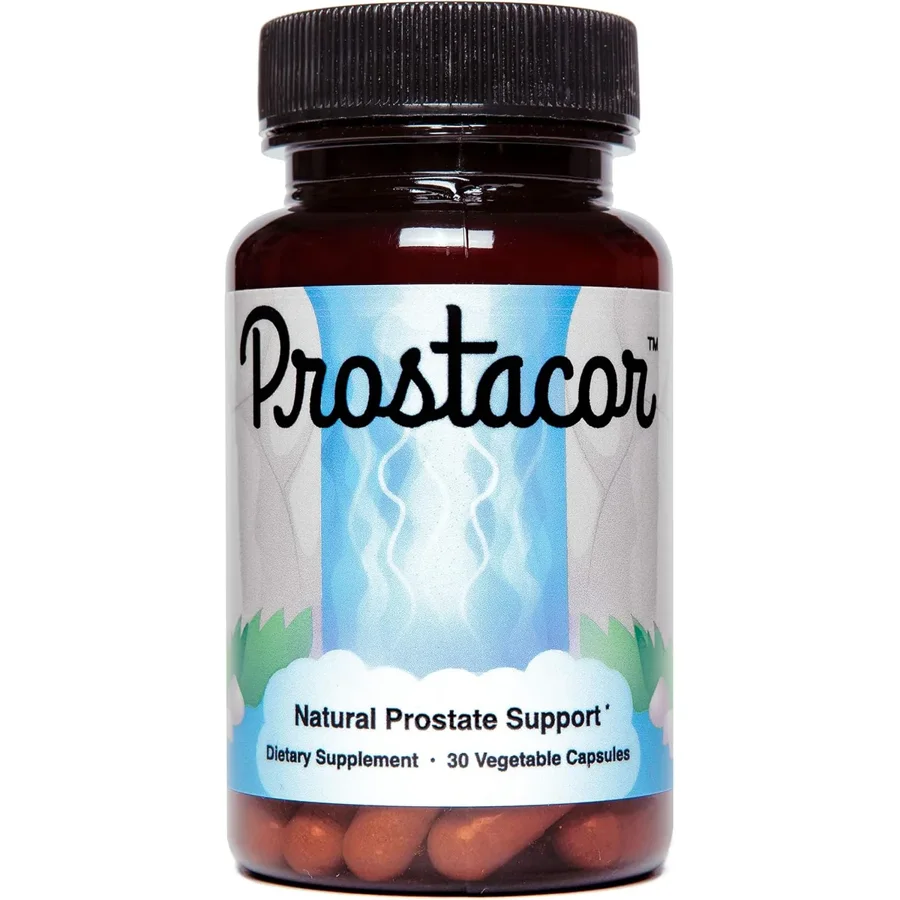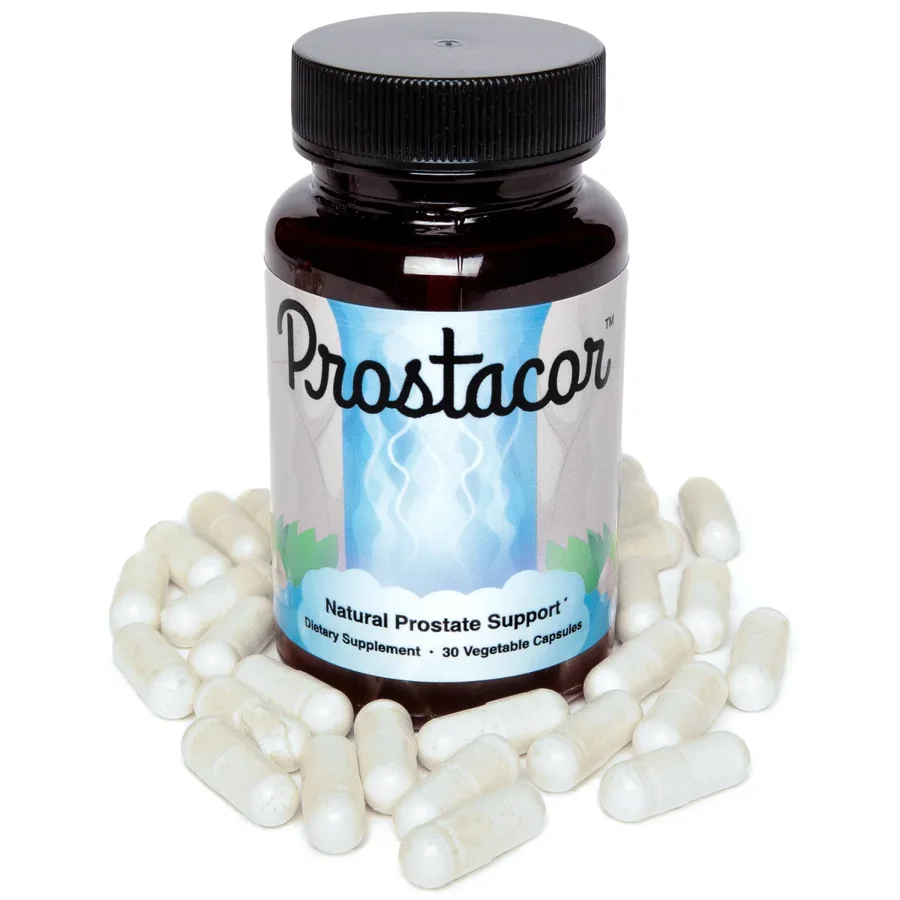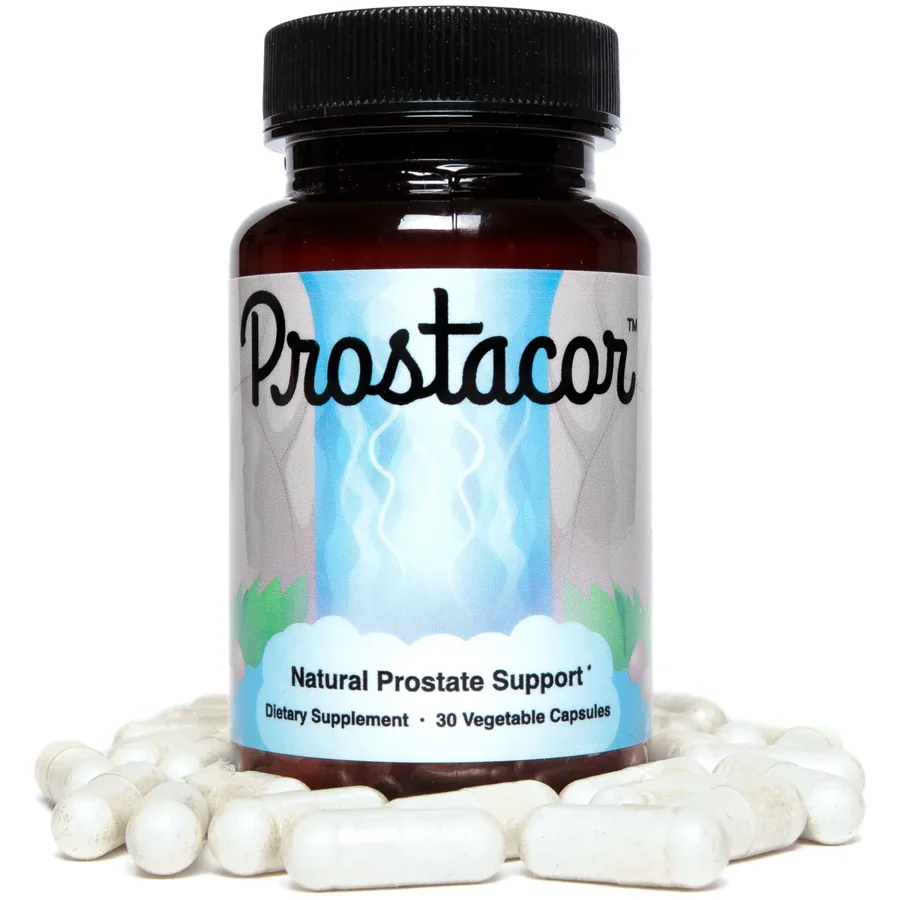
We don't recommend buying Prostacor to treat frequent nighttime urination, a weak stream or difficulty emptying the bladder. Those symptoms deserve a diagnosis. The bottle contains five plant ingredients in one 351 mg blend. It discloses the total weight and names the components, but it doesn't disclose how much of each one is present. A retail rating and a list of ingredient studies can't tell a buyer that this finished capsule will address the reason he's waking up at night.
There is one Prostacor product in the supplied collection. It's a bottle of 30 vegetable capsules, marketed by Nutreance. Someone may see different prices, purchase plans or estimated numbers of days per bottle. They describe ways to buy and count the same formula. This review inspects the actual label, compares it with a supplement that states its saw palmetto amount, and reads favorable and critical buyer accounts together. It also examines a UK advertising ruling involving a ranking in which the company's own supplement came first. Prostacor label · Manufacturer's formula information
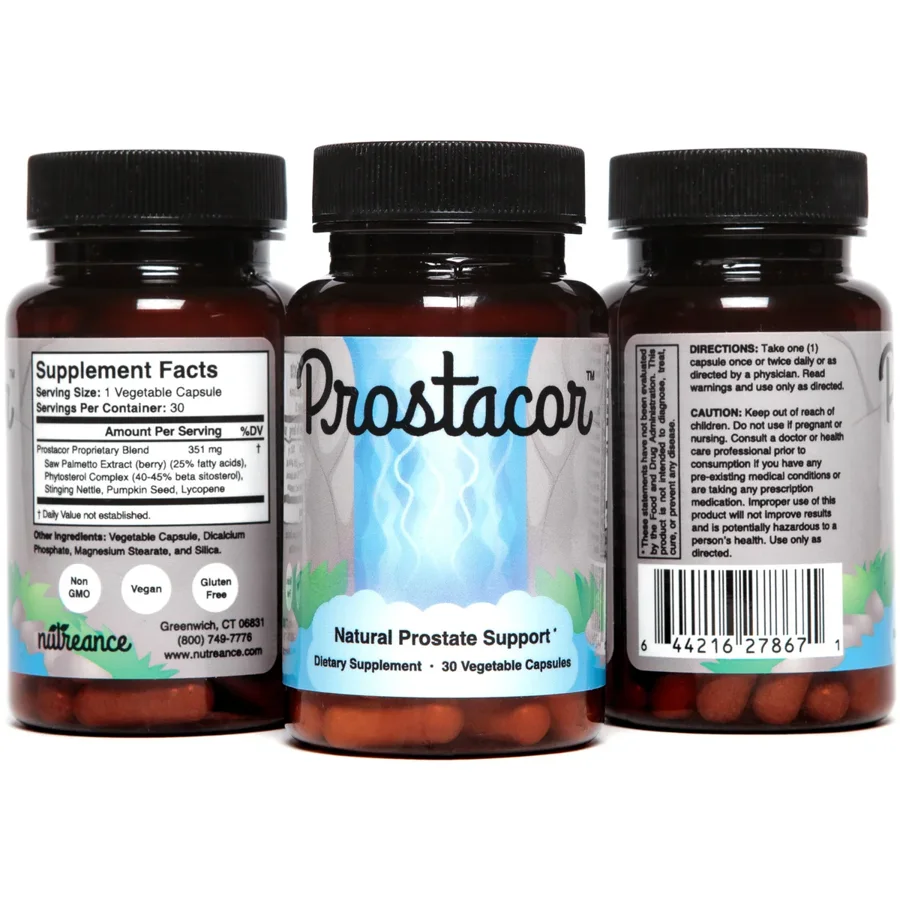
Start with the back of the bottle
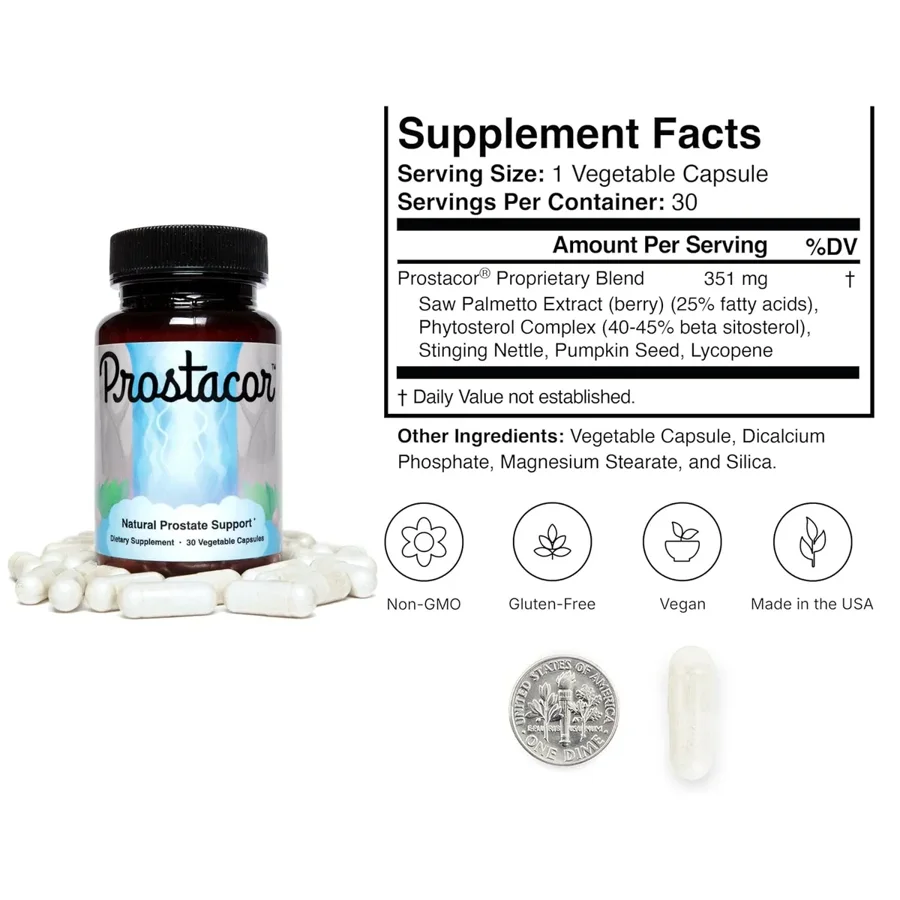
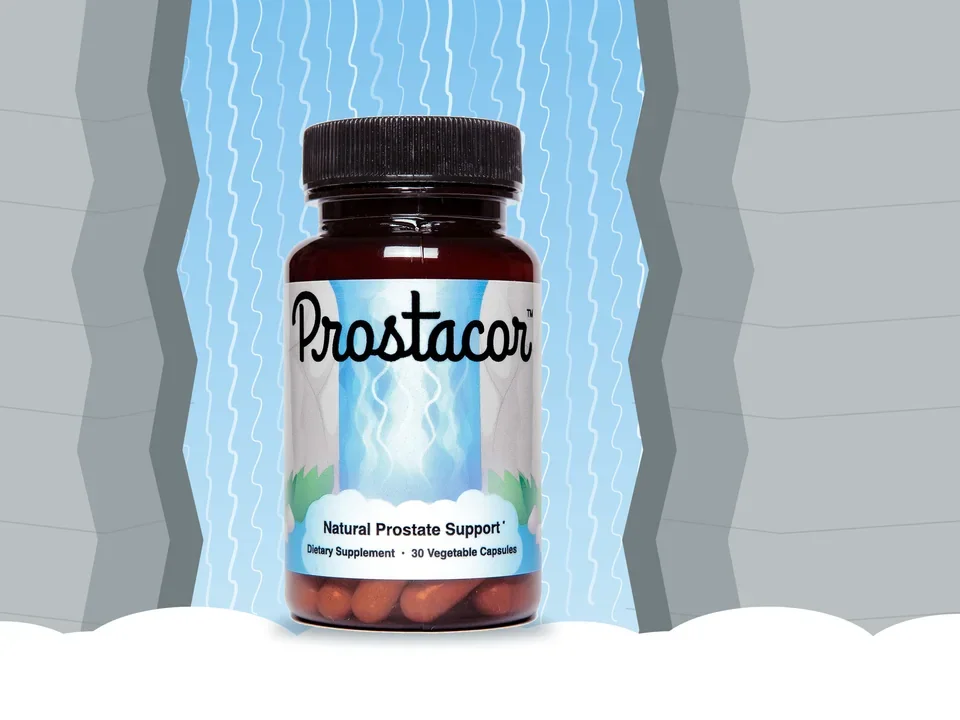
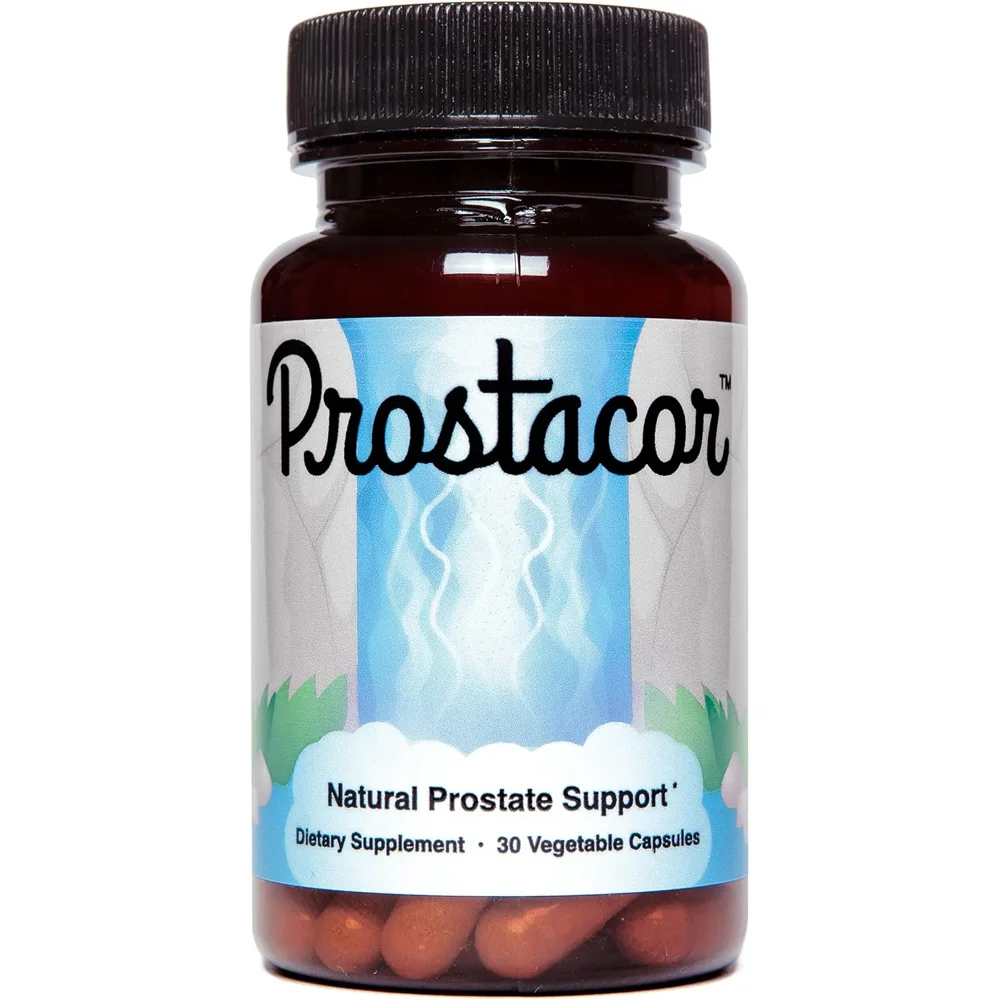
The front uses the phrase “Natural Prostate Support.” On the back, the Supplement Facts panel identifies a serving as one vegetable capsule and gives 30 servings per bottle. In that one capsule, a 351 mg proprietary blend contains saw palmetto extract, a phytosterol complex, stinging nettle, pumpkin seed and lycopene. A dagger beside the blend amount indicates that a Daily Value hasn't been established. The other ingredients listed are the vegetable capsule, dicalcium phosphate, magnesium stearate and silica. Front and back label
Imagine copying the contents onto a sheet for a pharmacist. You can write down each of those five names, the total milligrams in one capsule, and how many capsules the person actually takes. You cannot accurately fill in five separate milligram amounts. Dividing 351 by five would yield a tidy average, but the manufacturer doesn't say the five ingredients are present in equal parts. Reporting that average as the dose of saw palmetto, lycopene or anything else would invent information in the very document intended to clarify it.
| Label detail | What a buyer can record | What remains unspecified |
|---|---|---|
| Serving | One vegetable capsule | Individual response to a capsule |
| Bottle | 30 servings | How long a person will actually use the product |
| Proprietary blend | 351 mg in total | Milligrams for each of the five components |
| Saw palmetto extract | Berry extract standardized to 25% fatty acids | The weight of that extract in the capsule |
| Phytosterol complex | Standardized to 40–45% beta-sitosterol | Weight of the complex and milligrams of beta-sitosterol |
It's worth paying attention to where the percentages sit. The 25% is a property of the saw palmetto extract, and 40–45% describes the phytosterol complex. Neither percentage applies to the whole capsule. To calculate the milligrams of fatty acids deriving from the extract you would need the amount of that extract first. To calculate the beta-sitosterol contribution you would need the weight of its complex. The 351 mg printed beside the entire blend doesn't supply either missing number.
Why the formulation matters when you read a study
A study may identify the plant by its scientific name, specify a particular part, describe how an extract was prepared, and give a measured amount taken over a defined period. That level of detail matters because two products can both say saw palmetto while containing different extracts at different amounts. Someone comparing a trial with this label can recognize the plant name. Matching the actual daily exposure is harder when the weight assigned to it remains inside a proprietary total.
The presence of several additional ingredients adds another layer of uncertainty. A finding from a single-ingredient trial doesn't establish what happens when that ingredient is combined with a sterol complex, nettle, pumpkin seed and lycopene. Nor does listing four more ingredients rescue an unfavorable result from a study of the first one. To judge the finished product, the most useful evidence would identify the same formulation and amount, include a relevant comparison group, and measure outcomes that matter to the intended patient.
That might sound demanding until you consider what the person buying the bottle really wants to know. He may care about waking fewer times, getting back to sleep more easily, or feeling that the bladder has emptied. A change in a chemical marker can't answer all those questions. A survey asking whether a product feels promising on first opening it can't answer any of them. The closer a study's participants, intervention and measured outcomes are to the real buying question, the more useful it becomes.
What the evidence for saw palmetto found
In a randomized, double-blind study published in JAMA, researchers enrolled 369 men aged 45 or older with lower urinary tract symptoms. Participants received a saw palmetto extract or a placebo. Over 72 weeks, the researchers increased the daily amount in steps in the extract group and used matching procedures in the placebo group. Their main outcome was the change in a standardized symptom score. The extract didn't improve symptoms more than placebo; increasing the amount didn't reverse that result. Original randomized trial
There is a detail in those results that makes the consumer reviews easier to interpret. Average symptom scores improved in both groups. A person in either group could therefore have sincerely reported feeling better over the course of the study. Looking only at people who took the extract and felt better would have missed what happened among those who received the comparison. That is precisely the question an individual review cannot settle, even when it is carefully dated and describes a very real change in someone's life.
The US National Center for Complementary and Integrative Health draws a similar distinction in its review of saw palmetto. Its assessment of saw palmetto alone for urinary symptoms associated with an enlarged prostate is discouraging. It also describes uncertainty for combinations that include the plant. The trial and the federal summary give no basis for copying milligram amounts from research into a personal regimen, or for increasing the quantity of Prostacor to try to match a study. A proprietary blend doesn't reveal enough to make that calculation anyway. NCCIH on saw palmetto
A competitor makes the missing number visible
NOW Saw Palmetto Extract 160 mg Softgels is a useful comparison because its panel answers a narrow question directly. A one-softgel serving contains 160 mg of saw palmetto berry extract. The maker describes it as standardized to a minimum of 85% fatty acids. The other ingredients include a bovine gelatin softgel and organic extra virgin olive oil. Someone avoiding bovine gelatin has a concrete reason to distinguish that product from Prostacor's vegetable capsule. Someone tracking a particular extract amount has a concrete reason to distinguish the panels. NOW product and Supplement Facts
| Question | Nutreance Prostacor | NOW Saw Palmetto Extract 160 mg |
|---|---|---|
| How many named dietary ingredients are being compared here? | Five in one blend | One identified berry extract on the panel |
| How much saw palmetto extract per serving? | Individual amount undisclosed | 160 mg |
| What fatty-acid specification does the maker provide? | 25% for the extract | At least 85% for the extract |
| Which shell is described? | Vegetable capsule | Softgel containing bovine gelatin |
| Does the panel establish a clinical benefit for a particular person? | No | No |
It would be a mistake to simply put 351 and 160 next to each other and choose the bigger number. The first figure weighs five ingredients together. The second weighs one identified extract. If all you want to know is which bottle tells you the saw palmetto amount, NOW gives an answer. If what you really want is a treatment shown to improve your own urinary symptoms, clearer labeling alone does not establish that either bottle is the right purchase.
The same applies to shell material. A person with dietary preferences may find the vegetable capsule important regardless of anything else in this comparison. That makes it a legitimate selection criterion. It still answers only the question about the capsule's construction. No pharmaceutical advantage follows automatically from the word vegetable, just as a bovine gelatin shell cannot determine whether the ingredient inside will help. Treat each label statement as an answer to the particular question it actually addresses.
What four buyers saw after opening the bottle
The product catalog reproduces several named and dated buyer reviews. Gary J. Victorine wrote on September 3, 2026 that he noticed fewer nighttime trips after several months. Thomas Simms, on August 9, also described waking less often, with variation from night to night. These are outcomes people may genuinely care about. The accounts don't give baseline symptom diaries, an examination, a record of other changes during the same period or a comparison with what would otherwise have happened. Buyer accounts
Robert C. Martin's October 3 account is a useful counterweight. He described a difference between day and night after using the supplement for two months: daytime flow seemed good to him, while he still woke frequently overnight and sometimes had to strain. A headline star score could easily conceal a split experience like that. For a reader whose main reason for considering the purchase is a disrupted night, the distinction between daytime and nighttime experience matters more than a one-word expression of satisfaction.
Jadt2d reported on August 30 that an older family member developed marked dizziness shortly after starting Prostacor and sought emergency help. We don't know the cause from a family account. Other medical circumstances and medicines were not available for evaluation, and temporal sequence alone cannot identify a particular ingredient. The review nevertheless illustrates why serious new symptoms warrant appropriate medical attention, and why a comparison-shopping page shouldn't reassure someone that a product is harmless simply because it contains plant ingredients. Mixed and critical reviews
Price also appears in an enthusiastic review. Martin F described daily use while wishing the product cost less. The catalog reports a rating of four out of five from 1,706 ratings. That figure includes people who may be judging price, packaging or convenience alongside the outcome they hoped for. It doesn't establish how many people took the capsules as directed, how many had a confirmed diagnosis, how long they used them or how many bottles the retailer sold. On November 14, 2026, Amazon displayed 4,000 or more bought in the past month for this listing. That threshold measures recent purchase activity approximately. Exact bottle sales, repeat orders and the number of people who took the supplement are undisclosed.
How long does a bottle last?
The directions on the published label describe one capsule once or twice daily. Because there are 30 capsules, those two ends of the printed range yield different supply calculations. At one capsule a day, one bottle contains thirty days. At two a day it contains fifteen. This is calendar arithmetic for understanding the package and a potential repeat order. It is not a recommendation to start, stop or change the amount of a supplement.
For a realistic cost comparison, first ask what you are pricing. A bottle price divided by thirty gives a cost per capsule. If someone is following a clinician's advice that involves a particular daily count, multiply that unit price by the count to estimate the daily spend. A four-week purchase arrangement and a calendar month are different periods. If a subscription sends the same number of bottles regardless of the number actually used, the delivery interval can produce either gaps or unwanted extra supply.
A useful question before subscribing is what would make the next purchase worthwhile. If the aim is to discuss a new symptom with a clinician, booking the appointment answers the immediate question. Adding a second bottle to a basket doesn't. If a person already takes this supplement and has a scheduled review, bringing the actual bottle is helpful. It carries the formulation, lot information and directions for that particular purchase, which are more precise than remembering a phrase from a store description. Directions and bottle information
An advertised ranking that put its own product first
In December 2025 the UK's Advertising Standards Authority published a ruling on two paid search advertisements from Nutreance, trading as Top 5 Supplements. The landing pages ranked Prostacor first. The regulator upheld two issues: the advertisements implied treatment of symptoms, and their presentation gave consumers the impression that an independent review company had created the rankings. Nutreance, which owned the ranking website, argued that its reviews and sponsorship were sufficiently identified. The regulator disagreed. ASA ruling and advertiser response
This is a ruling about two specific ads and the impressions they created in the UK. It doesn't determine the contents of any individual bottle or invalidate a particular buyer's experience. It does answer an important provenance question for anyone who encountered those rankings during a search. The company selling the first-ranked product owned the site presenting the list. When you see a flattering ranking again, look for who funded the page and whether its claimed outcomes rest on comparable evidence for the finished products.
The disagreement also shows why a link labeled “sponsored” can leave a reader with an incomplete picture. Knowing that someone paid for an ad still leaves the question of who stands behind the recommendations on the destination page. A supplement label is primary evidence of what the manufacturer declares. A manufacturer's own review of competing products is evidence of how the company presents them. Neither source becomes an independent clinical evaluation merely because it uses a table, percentages, badges or a numbered ranking.
When the symptom is more important than the shopping decision
The National Institute of Diabetes and Digestive and Kidney Diseases describes the range of symptoms associated with benign prostatic hyperplasia and how clinicians evaluate them. Similar symptoms can have other causes. A healthcare visit may include a discussion of medicines, symptoms and medical history, along with an examination or tests appropriate to the situation. That can change the underlying question entirely, including whether an enlarged prostate is responsible for the symptoms a buyer has assumed it explains. NIDDK on enlarged prostate
Some situations need attention sooner than a routine shopping question. NIDDK advises getting medical help right away if you cannot urinate at all. It also lists painful, frequent, urgent urination with fever and chills, blood in the urine, or substantial lower abdominal or urinary tract discomfort among reasons to seek prompt help. If someone is browsing a product page because one of those things is happening right now, waiting for a delivery is the wrong next step. NIDDK urgent symptoms
For less urgent appointments, write down the change that prompted the search. A starting date, the pattern across daytime and overnight, and a list of medicines and supplements provide information that “prostate trouble” leaves out. Include any recent changes in products already being used. If shopping for a relative, ask what is actually bothering him rather than assuming his concern from his age. A disruption to sleep, difficulty starting or pain may each lead to a different conversation with his clinician.
Looking at the actual bottle
When checking a bottle against a picture, start with the count and the panel rather than the front illustration. The catalog shows the amber bottle and reproduces the Supplement Facts. Turn a bottle you already own to the panel and check that the serving is one capsule, that the total blend is 351 mg, and that the names beneath it match your notes. If there is a difference, show the actual panel to the person helping you review it. The packaging in your hand is the one relevant to your purchase. Product photograph · Label transcription
Someone watching a manufacturer video should apply the same distinction to the product on screen. NOW's page includes a short company film about its saw palmetto supplements. It belongs to the competitor. It can help identify the different product range, but it cannot demonstrate how Prostacor is made or what its users experience. For Prostacor itself, the exact bottle and its readable label offer more reliable identification than a generic video about men's health. We could verify catalog images, but couldn't authenticate a separate buyer's photograph or a product-specific demonstration for this bottle.
Our verdict
Prostacor is easy to identify, and the 30-capsule count, vegetable shell, ingredient names and total blend weight are all clear. The absent individual amounts restrict what a buyer can infer from ingredient research. The mixed buyer accounts provide a record of individual experiences, and the rating provides a record of opinions. Neither establishes that this capsule will treat an enlarged prostate or its symptoms. We do not recommend it for that purpose. For an existing user discussing supplements with a healthcare professional, its most useful feature is the actual label to bring to that conversation.