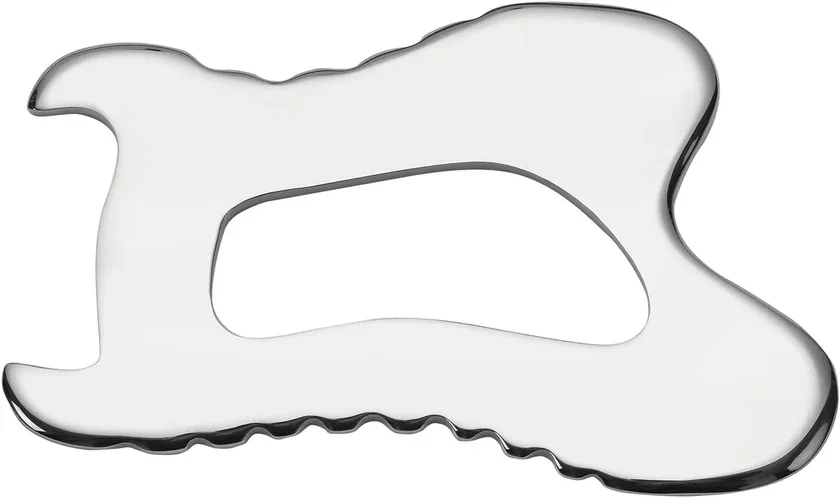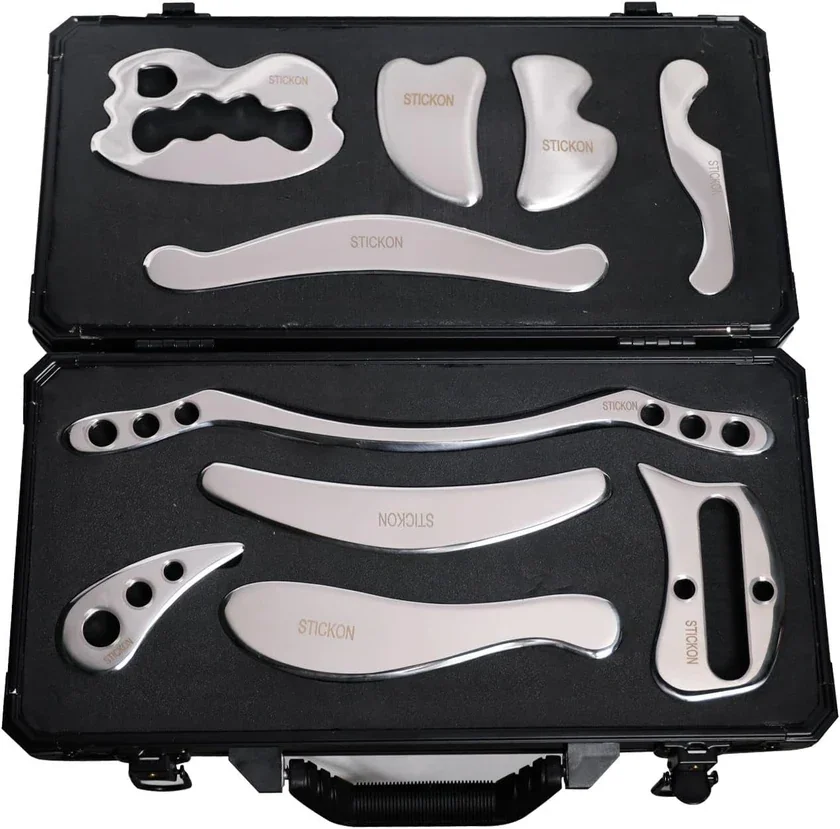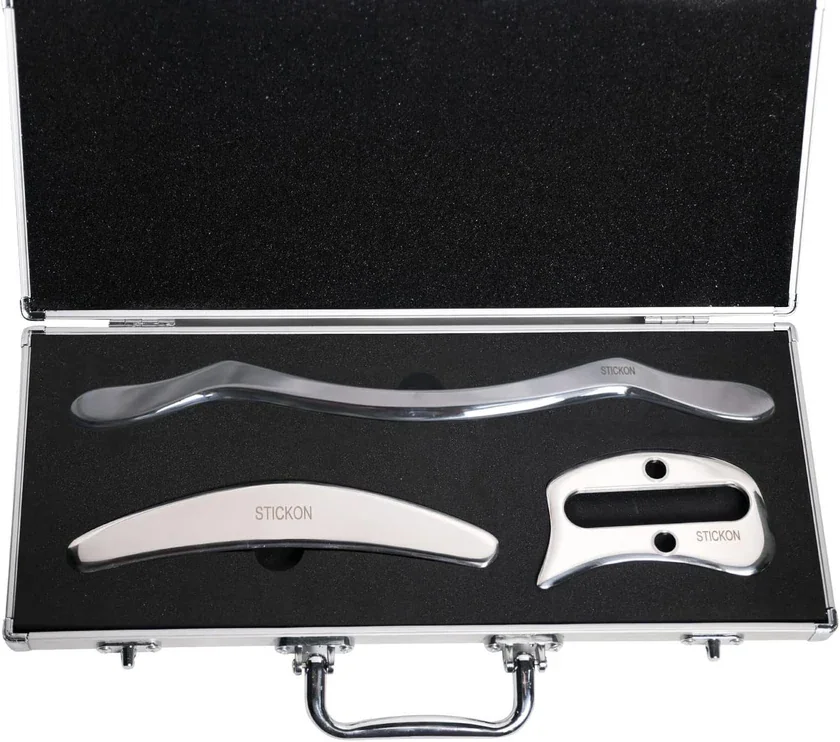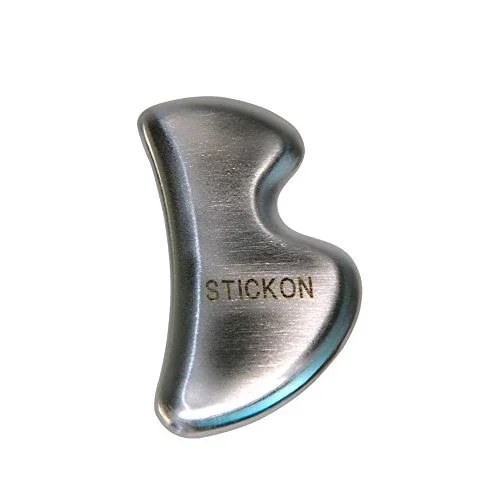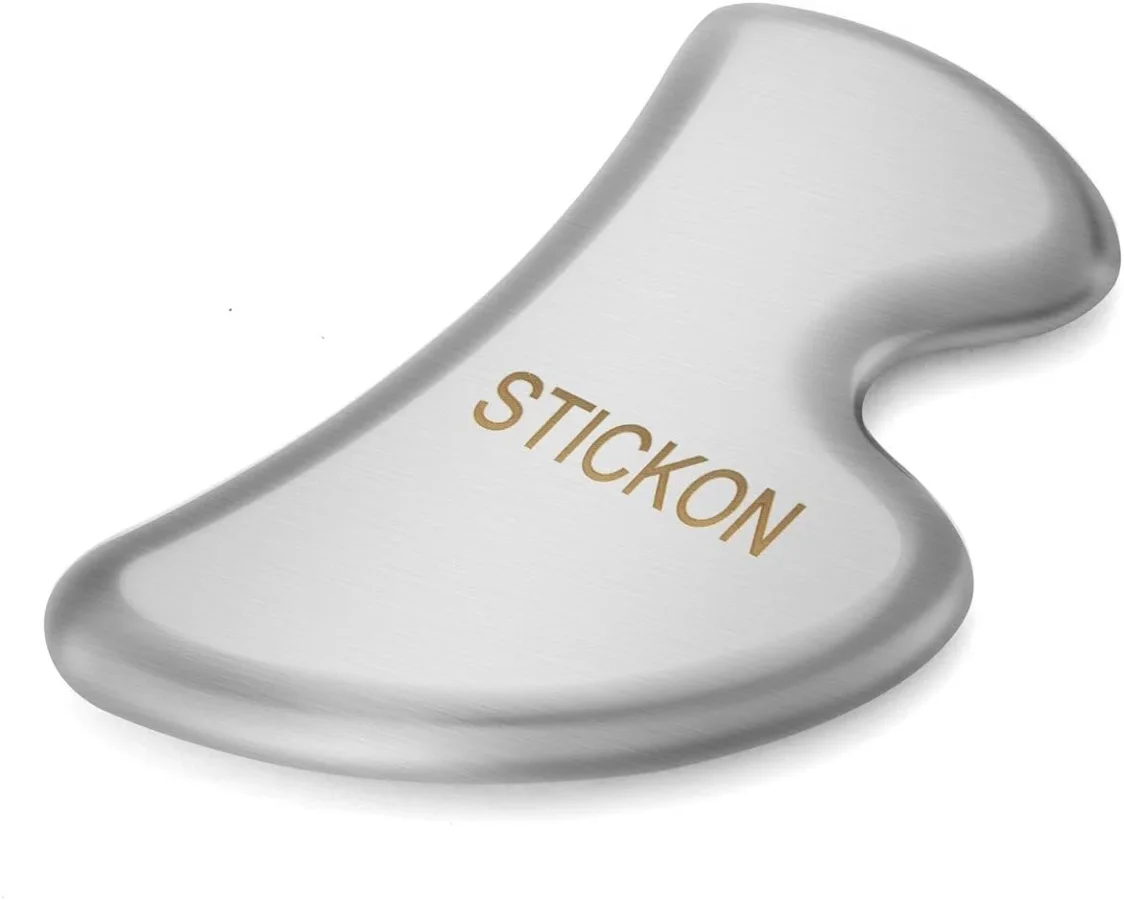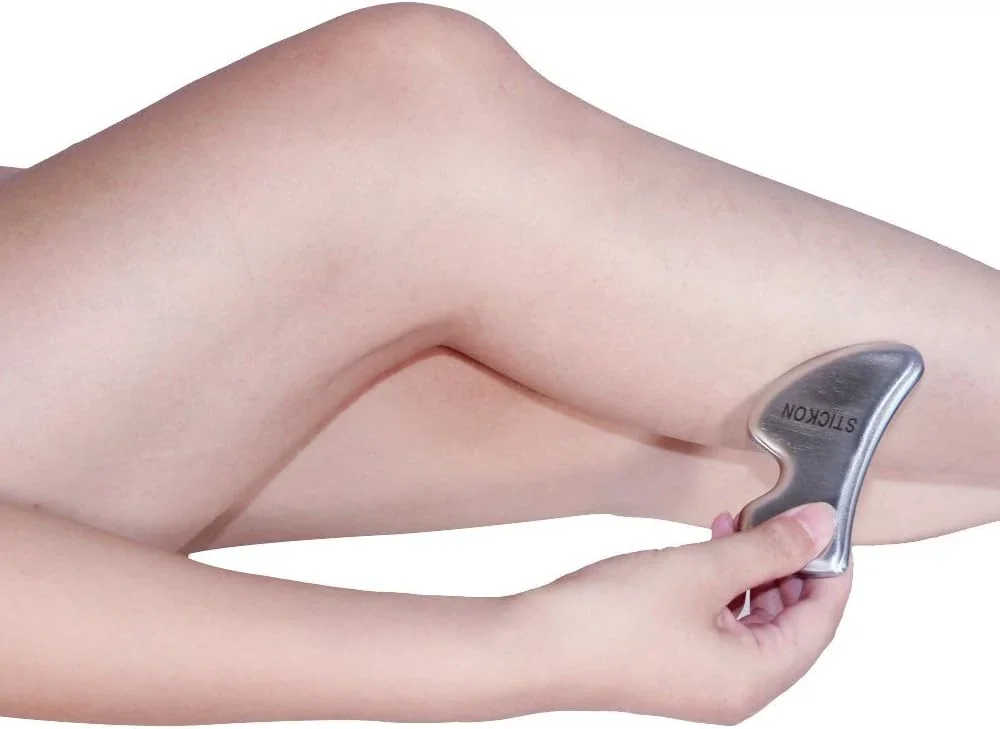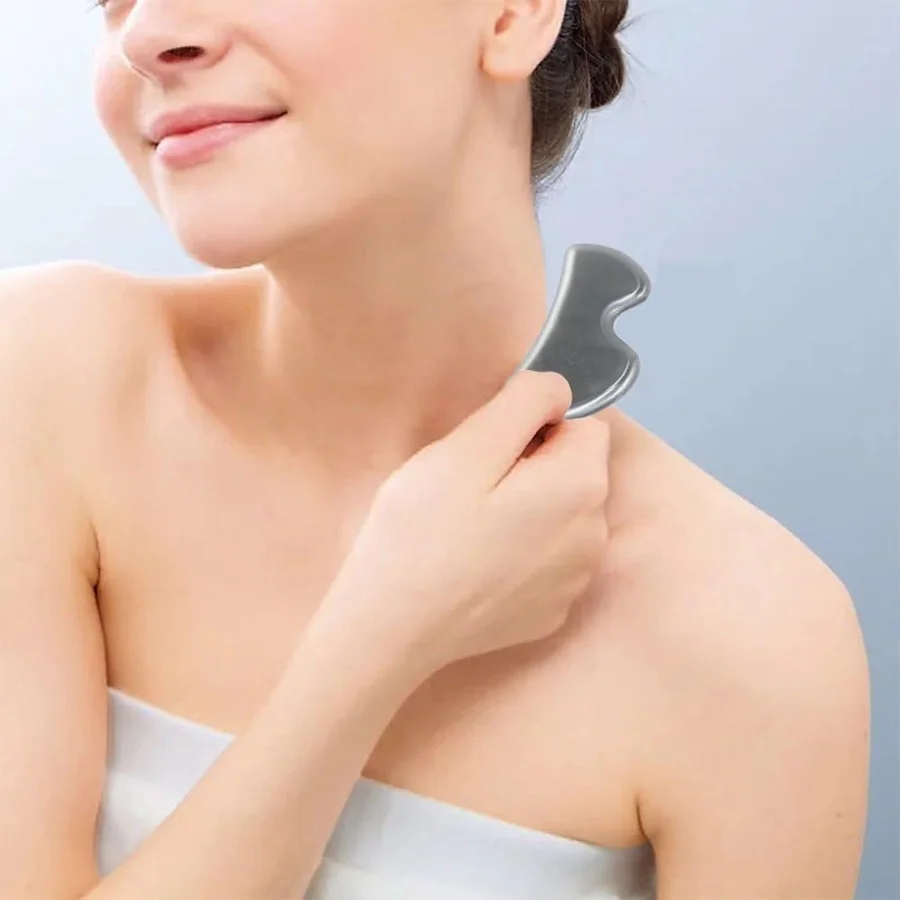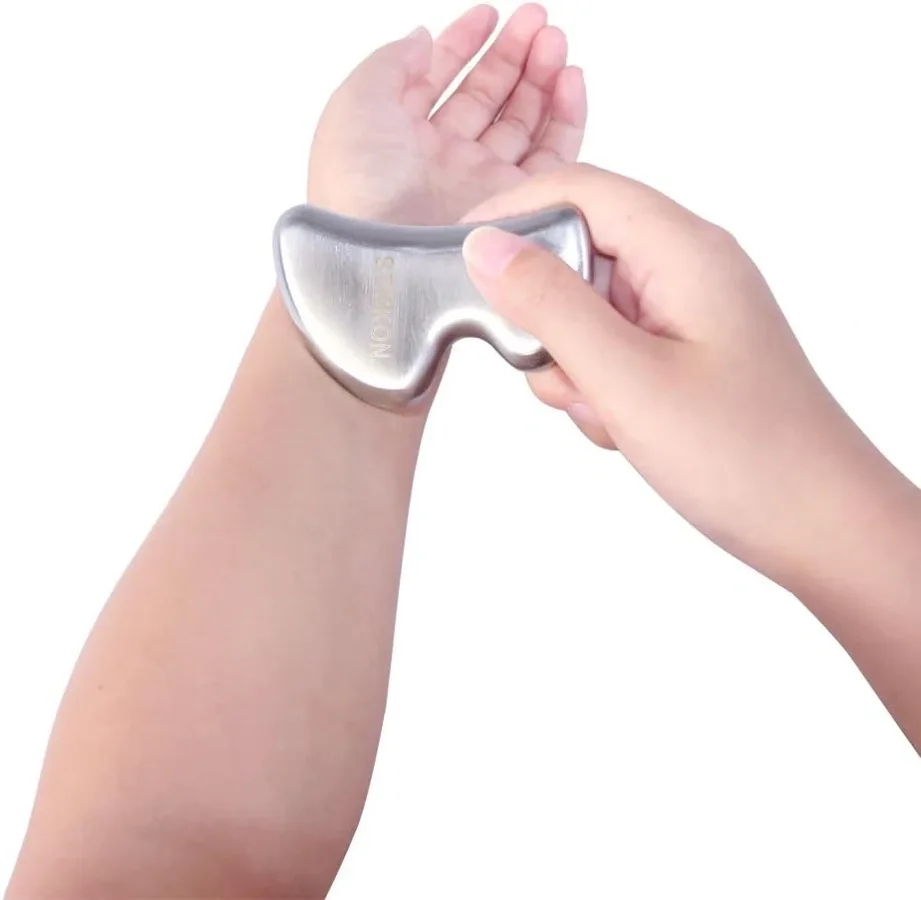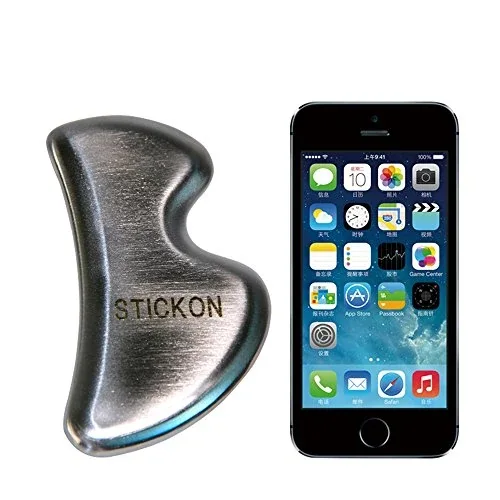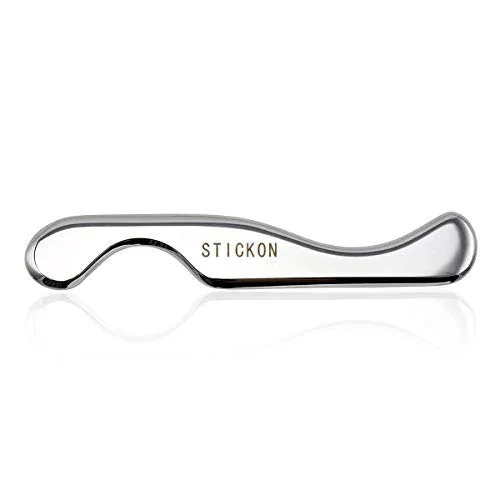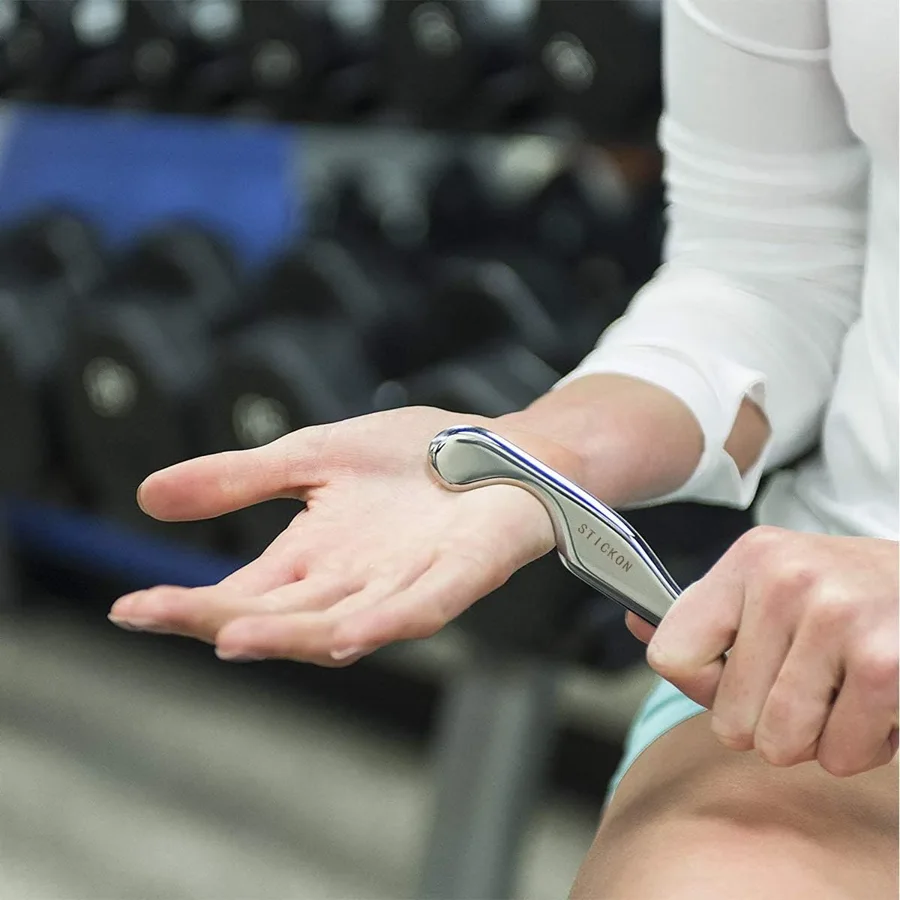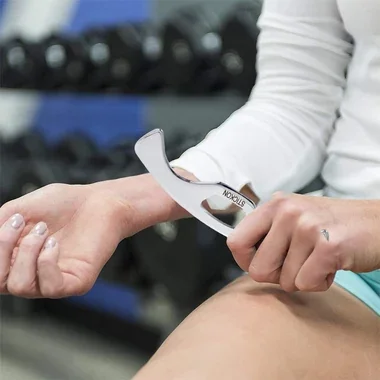
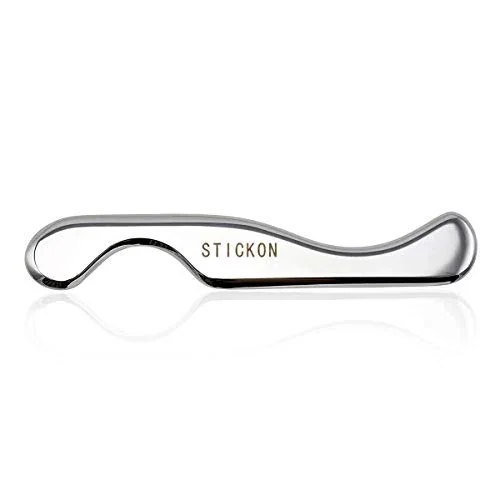
The STICKON B is our pick for someone who has already decided a stainless-steel massage tool is appropriate for them and wants to start with one broad, lightweight shape. The catalog gives dimensions you can check against your own hand: 5.11 inches long, 3.14 inches wide and 2.8 ounces. The larger sets offer more outlines but aren't automatically a better purchase. Before buying a set, identify at least two shapes you need and the reason you would choose one over the other.
We compared ten distinct purchases in STICKON's collection, including broad single tools, a narrow sickle, a compact scraper, a pen and several sets. We also looked at the RockTape Mohawk and the HawkGrips Handlebar, two professional products that show how different steel tools can be. This review is about selecting and evaluating physical objects. It doesn't establish that any shape treats an injury, removes scar tissue or should be used on a particular painful spot. Those are questions for a qualified clinician who can examine the person. STICKON range · The B shape
A useful first comparison: a short wide tool and a long narrow one
The B measures a little over five inches along its long dimension and more than three inches across. The SICKLE measures 7.87 by 1.76 inches and weighs 6.3 ounces. Both appear under single scrapers and both are stainless steel. Yet the long tool weighs more than twice as much and occupies a much narrower strip. When you look at them side by side at the same scale, the reasons someone might prefer one for holding, storing or positioning it become easier to understand.
A simple paper outline is surprisingly effective here. Draw a rectangle to the measurements of the B, then another for the SICKLE. The rectangles won't reproduce the cutouts or working curves, but they do give an honest sense of scale. Hold the paper at the spot where the hand appears in the listing photo. Notice whether the fingers would cover a large part of the outline. Someone who wants more room for the hand may prefer a longer piece. Someone packing a small personal kit may reach the opposite conclusion. SICKLE listing
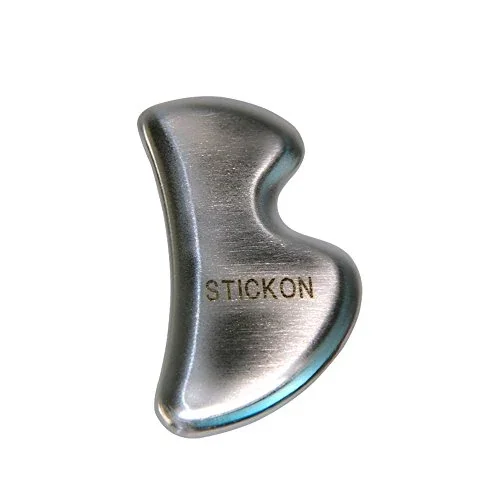
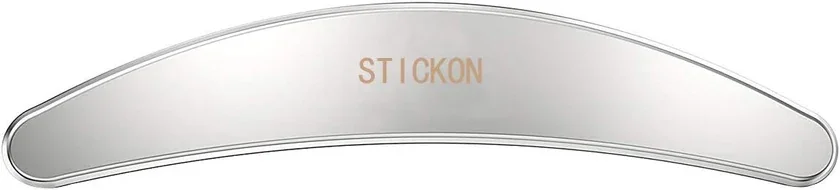
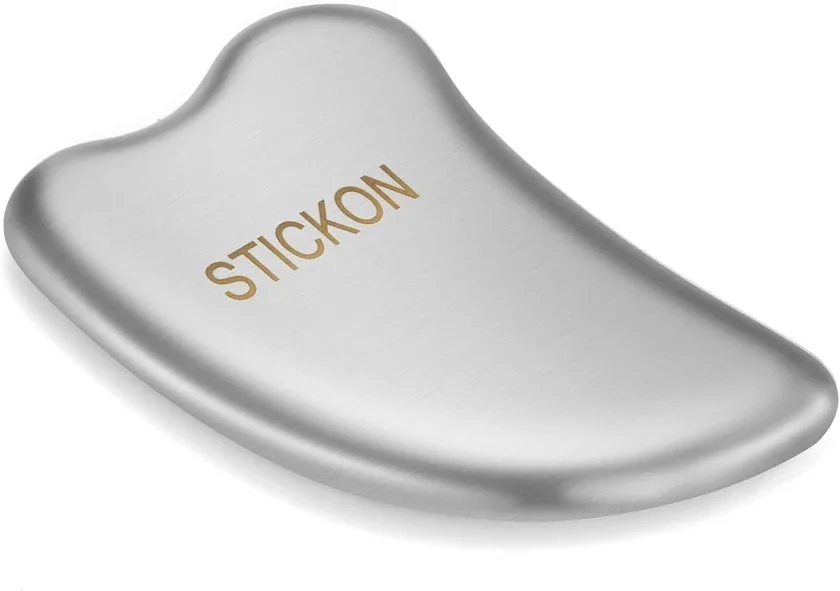
A product name several lines long is less useful than the short shape code. Most listings repeat variations on stainless steel, gua sha, scraping massage and IASTM. That makes them hard to distinguish by title in a search result. Write down the code, piece count and dimensions together before comparing tabs. The compact 3.15-inch scraper in this review has no shape letter on its page, so its measured length and specific product photograph matter more for identification. Compact scraper
Ten choices without counting cosmetic duplicates
| Candidate | What the target page actually discloses | Why it belongs in the comparison |
|---|---|---|
| B single | 5.11 × 3.14 in, 2.8 oz | Broad, light reference shape with a full dimensional description |
| C1 single | 4.2 oz | Heavier single with a different outline |
| SICKLE single | 7.87 × 1.76 in, 6.3 oz | A long and narrow alternative |
| HEART single | Double-beveled, length and weight unspecified | A shaped outline whose size requires confirmation |
| Compact unlettered single | 3.15 in long | Smaller storage and grip footprint |
| STICKON-64 pen | 3 × 0.2 in | Narrow localized contact tool |
| STICKON-58 duo | Two pieces, facial scraper and pen listed | Two different contact shapes in one box |
| STICKON-56 set | Three pieces | Several edges in one purchase |
| K set | Listing-level dimensions 14.96 × 7.7 in | Larger set, verify the dimensions of individual pieces |
| M set | Listing-level dimensions 15.8 × 9.5 in | Large-case candidate with substantial listed total weight |
The B and C1 are a good example of sensible restraint in reading a catalog. The former publishes length, width and weight. For the C1 the target page gives a weight of 4.2 ounces and a picture but no corresponding length in its specification table. It is fair to say the C1 is heavier in the listing. We can't calculate its dimensions from the difference in ounces. Thickness, outline and cutouts could all contribute. A buyer with a strict grip-size requirement should request dimensions before ordering. C1 shape
The HEART raises a similar issue in a more tempting form. Its familiar name invites a mental picture of a small facial stone. The actual listing identifies a stainless-steel single scraper and gives a set of body-area descriptions, but it doesn't state length or weight. A name that evokes a tiny object is a poor substitute for a ruler in the photograph. If you're choosing facial equipment, use a listing that actually identifies that application and gives you an appropriate size; even then, check whether use is suitable for your skin. HEART product details
Two edges, one piece of steel
STICKON uses the words “Double-beveled edges” for the B. The steel has been worked from both faces along its edge. In shopping terms, this matters because a photograph of the tool flat on a white background mostly shows the outline. It doesn't show the profile of the edge where it would make contact. Ask for or examine a side view if that is the feature you care about. A polished reflection running along the surface may highlight the edge, but it can't tell you its exact radius.
The edge is only part of the object. The part held in the hand matters just as much if the tool is used frequently. A broad sheet offers room for several fingers. A narrow piece changes how you grip it. A central opening may offer an additional place to hold or simply remove material, depending on its size and location. These are observations to make from the actual shape in the gallery. They are more useful than assuming that a polished finish by itself guarantees comfort for an extended session.
Stainless steel is common to the range. Several pages describe it as medical grade in the maker's words. That description doesn't establish a specific alloy for every listed shape, nor does it specify a cleaning or disinfection method for a professional setting. Look for the maker's care instructions for the exact item and follow the rules applicable to your work. If a clinical service requires a particular materials specification or validated processing method, ask for that information before purchase rather than inferring it from the shine of the photograph.
A pen changes the contact area
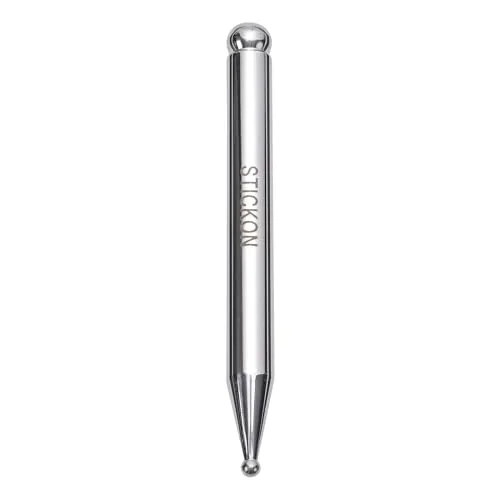
The STICKON-64 is about three inches long and one fifth of an inch wide. It is much closer to a small handheld point tool in scale than to the broad B scraper. That makes it worth comparing even if a photograph of each tool alone makes them seem similarly substantial. A narrow contact area can concentrate force more readily than a broad surface. A person searching for gentler contact should not assume that the smallest item in the basket will automatically feel the lightest against the skin. STICKON-64 product page
The target listing includes terms such as acupuncture pen in the product title. It identifies a stainless manual tool and does not describe an invasive needle, powered stimulation or a treatment administered by a licensed acupuncturist. A recognizable word in a long product title doesn't grant the purchaser clinical training or turn the item into a substitute for care. Choose it only if you have a reason to use this particular sort of contact and understand its limitations. A large area you wish to cover isn't, by itself, that reason.
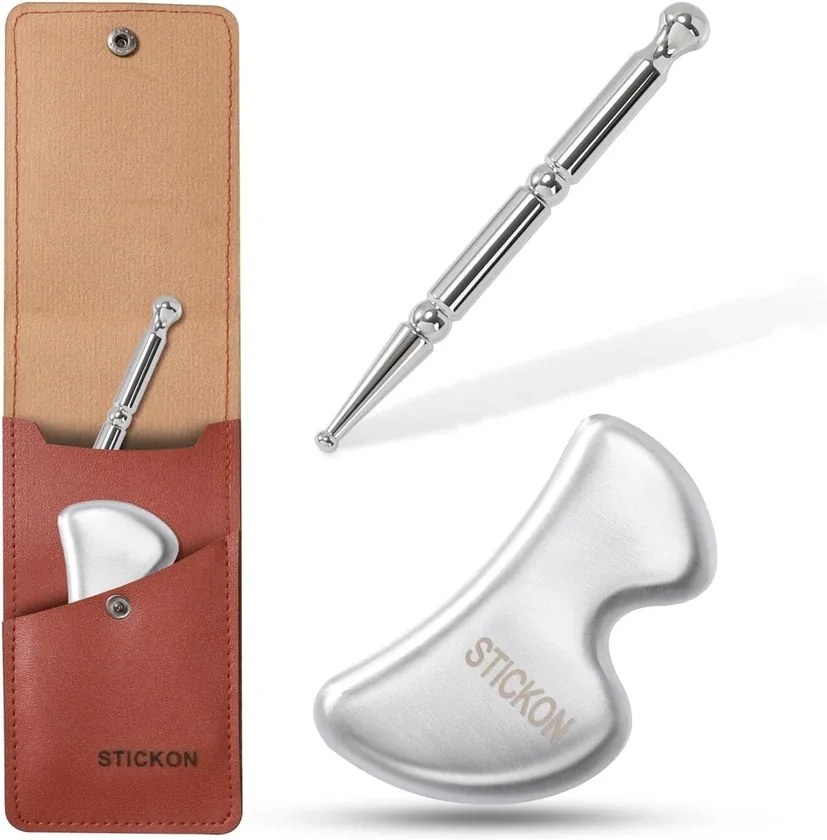
The STICKON-58 is a two-piece alternative that pairs a facial-style scraper with a pen. For someone who genuinely wants both forms, the duo avoids choosing two separate listings with similar descriptions. Check the packaging photograph and make sure the two implements actually match the ones you intend to buy. A size shown against the whole boxed pair may not be the usable width of either individual piece. When the point tool is the only intended purchase, the separate -64 provides a clearer statement of its individual size. STICKON-58 duo
When a case becomes worth carrying
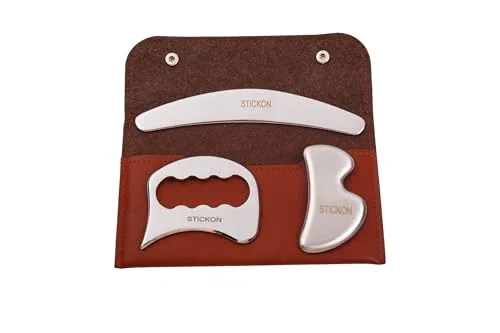
The three-piece STICKON-56 is a plausible middle ground for a trained user who wants deliberately different working edges. The catalog lists a three-piece box with dimensions of 7.87 by 4.72 inches at the product level. Think about which individual shape you would reach for first, which second shape does a genuinely different job and how the third earns its space. If the answer is simply that three tools look more professional than one, a single well-chosen shape is likely to see more actual use per dollar spent. STICKON-56 set
The K and M sets are listed at much larger dimensions than the singles. The source gives 35.3 ounces on the K listing and 88.2 ounces on M. They are sets, and we couldn't establish that those figures refer to an individual instrument. Treat them as listing-level weights unless the seller supplies a complete breakdown for pieces and case. You might use the total to ask whether a kit is sensible to carry between locations. You should not use it to claim that an 88-ounce piece will sit in someone's hand. K set · M set
A case is especially useful when it protects equipment during transport and allows each cleaned piece to be stored appropriately. Look for whether the case has a fitted space for each item and whether that area can be cared for in a way appropriate to your work. Opening a presentation case can give an excellent first impression, but a large case that doesn't fit a bag or cabinet becomes a surprisingly persistent inconvenience. Measure the storage space where it will live with the case closed and the space needed to open it.
Two professional alternatives give the comparison some scale
RockTape's RockBlades Mohawk consists of a shaped stainless-steel core, a removable silicone sleeve, a comb attachment, a case and RockRub. The maker describes different edges and radii on the tool. A purchaser choosing between this and a STICKON set is choosing between two approaches to variety. One puts more functionality around a central instrument and attachments. The other offers several separate metal shapes. Which is more useful depends on the shapes and handling characteristics you already know you need. RockTape Mohawk system
HawkGrips' Handlebar is another alternative for a trained practitioner with a different requirement. It is a broad bar offered in multiple sizes, with gripping areas on the ends. Its manufacturer's gallery includes photos and a video of the actual Handlebar. A long tool held with both hands is quite different to carry and position from a compact personal scraper or pen. The unusual appearance is useful in a comparison because it forces the buyer to ask whether broad two-handed handling is what their work calls for. HawkGrips Handlebar
| System | Main construction | What the purchase decision turns on |
|---|---|---|
| STICKON B | One short, wide steel tool | You know the dimensions and want a simple single purchase |
| STICKON-56 | Three separate implements | You have identified distinct uses for the included shapes |
| RockTape Mohawk | Steel core with sleeve and comb attachment | You want interchangeable surfaces on one system |
| HawkGrips Handlebar | Wide bar, size options | A professional needs a broad two-handed instrument |
These aren't equivalent clinical treatments just because all appear in searches for IASTM. They're pieces of equipment that may be used under different protocols and with different levels of training. Comparing stock material, shape, accessories and handling is fair. Awarding one a higher percentage for treating pain, or predicting a clinical result from the number of curves, would require much more than retailer descriptions. No matched clinical trial of these exact four buying choices was identified in the reviewed material.
What evidence about scraping can tell a shopper
IASTM stands for instrument-assisted soft tissue mobilization. Scientific papers using that phrase may study a particular instrument, brief application, measured joint movement and a defined group of patients or healthy volunteers. Results about a joint moving a little farther after one protocol don't establish that an unspecified purchaser should treat a painful condition with a particular letter-shaped scraper. The people being studied, the comparison treatment, the outcome and the time over which it is measured all matter. Published analysis of range-of-motion studies
For a concrete example, consider what a photograph of a reddened forearm can and cannot establish. It shows a change in the visible appearance of the skin at the moment the photograph was taken. It doesn't show that an injury healed, that scar tissue was broken down or that a more visible mark produced more benefit. Cleveland Clinic notes that aggressive scraping can lead to bruising, discoloration and soreness, and advises against working over inflamed, irritated or broken skin. A dramatic before-and-after picture is a particularly poor reason to try to reproduce a mark. Cleveland Clinic guide to gua sha
The same guidance flags circumstances including blood-thinning medication and circulation problems where professional advice is important. If the reason for looking at scrapers is a new injury, unexplained pain or a tendency to bruise, discuss the issue with a clinician first. A simple question to take to that conversation is whether any tool-assisted massage is appropriate for this particular problem. That is more useful than choosing between ten tools first and treating the purchase as a decision to go ahead. Cleveland Clinic precautions
Ratings, photographs and the limits of a product demonstration
The catalog reports 4.7 out of five from 6,021 ratings on the B listing, 4.7 from 1,588 on SICKLE, and 4.3 from 13 on the -64 pen. Counts on multiple related listings recur in the range. Treat them as the rating groups the source displays, without assuming that every review measures the exact outline you're holding. None provides a verified unit-sales total. On November 14, 2026, Amazon's B-shape listing displayed 400 or more bought in the past month. It also linked individual comments on grip and finish. Those excerpts omit the shape each reviewer bought, and the sales badge gives an approximate threshold for that listing.
For inspecting a tool, it helps to seek a view of the whole outline, a close side view of the edge and a picture with a hand or ruler for scale. A photo taken at an angle may make a narrow tip look broader or the broad shoulder look thicker than it is. The catalog galleries are product images. The HawkGrips page shows a competitor demonstration and RockTape publishes its own clinician-oriented video for the Mohawk; neither serves as proof of STICKON performance or as instruction tailored to a reader. STICKON single-tool gallery · RockTape's product demonstration
There is also a small set of owner reports about the B shape. The eBay B-shape product record uses the same UPC as the STICKON B and names the tool in the title, although a separate brand field says Tool Aid. eBay marks the five comments on that record as verified purchases. In June 2019, bren9175 liked the weight and the control it gave them. That month, kaleelav described a shape that worked for two people trying to reach different areas. In September, halob22 questioned the material after testing it with a magnet. That observation cannot identify an alloy. It does illustrate a reasonable shopping distinction: the first two people cared about the tool in the hand, while the third wanted stronger evidence about its composition. The five ratings average 4.6 out of five on this eBay record.
Questions worth asking the seller
Start with one photograph of the exact configuration you're considering. Ask whether the pictured tool is the one shipped under that shape code, whether its length includes a handle, and whether the weight given applies to the individual item or the packaged set. A seller who can give a straight answer in inches and ounces resolves more uncertainty than a page offering dozens of body-area tags. Keep the response beside the listing when comparing prices. A lower price for an item whose size you still don't know can turn into an expensive guess.
For someone replacing an existing instrument, measuring the old one adds another advantage. Record its overall length and broadest width, then measure the length of the particular edge you actually use. Two shapes may share the same overall dimensions while offering very different usable curves. Trace its outline on paper, mark the place where you usually hold it and compare that with the new tool's shape. This requires no claim about a medical effect. It simply distinguishes an instrument that will fit your established grip and storage space from one that only looks similar in a small listing image.
For a clinic ordering several instruments, it is also sensible to ask how individual pieces are labeled and replaced. A set that contains one indispensable tool and several duplicates becomes less attractive if the useful piece can't be replaced separately. Conversely, a single instrument from a well-documented family may be easy to reorder for another practitioner who wants the same outline. Include the exact shape code in any purchasing notes, not just the generic phrase “gua sha scraper.” Those few extra characters are often the only reliable way to distinguish neighboring listings after a catalog has been rearranged.
Our verdict
We recommend beginning with the B if you want one broadly shaped, fully dimensioned STICKON tool and already have a suitable reason to use it. Choose SICKLE only if you specifically want its longer and narrower outline. Choose the pen only if targeted manual contact is the requirement. For trained users, a set earns its place when its second and third shapes solve problems the first cannot. We would decline a large case if its individual measurements remain unclear, and we don't recommend any of these tools as a way of diagnosing or treating an unexplained injury yourself.