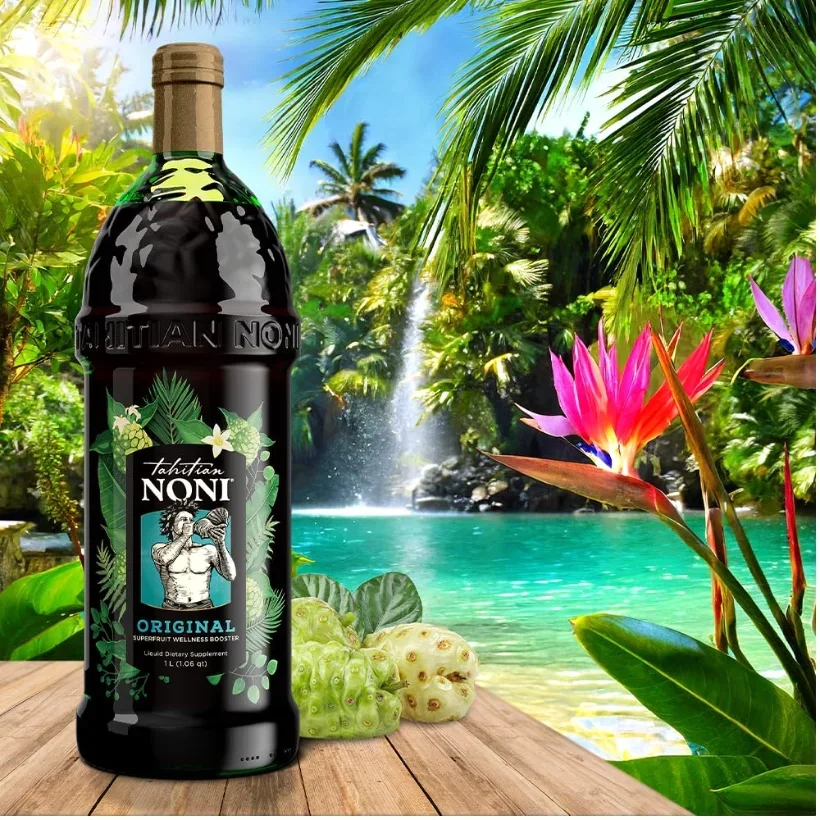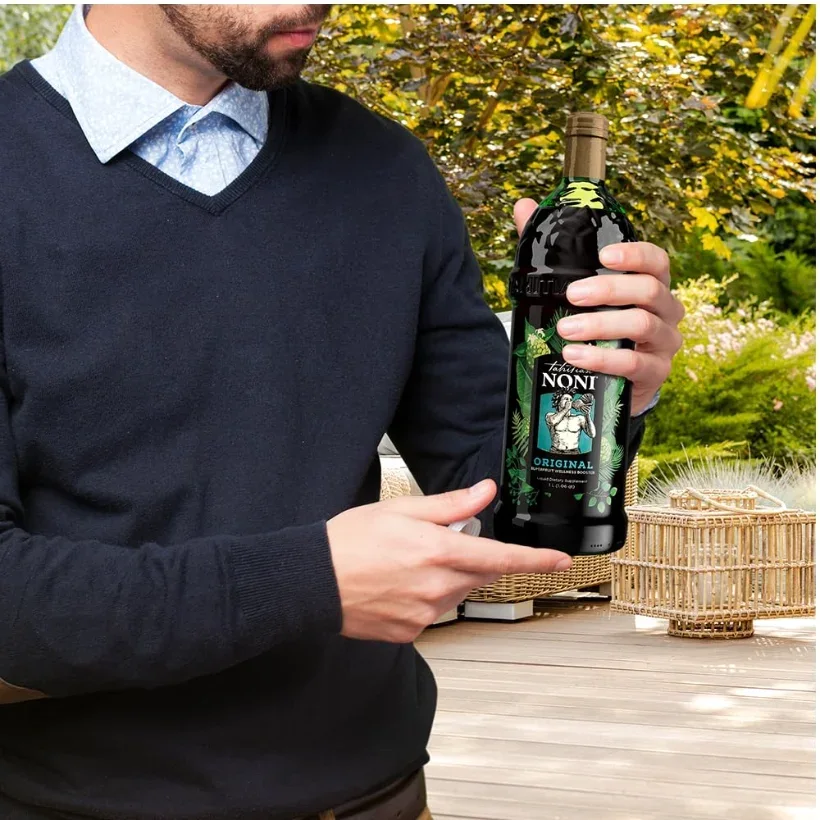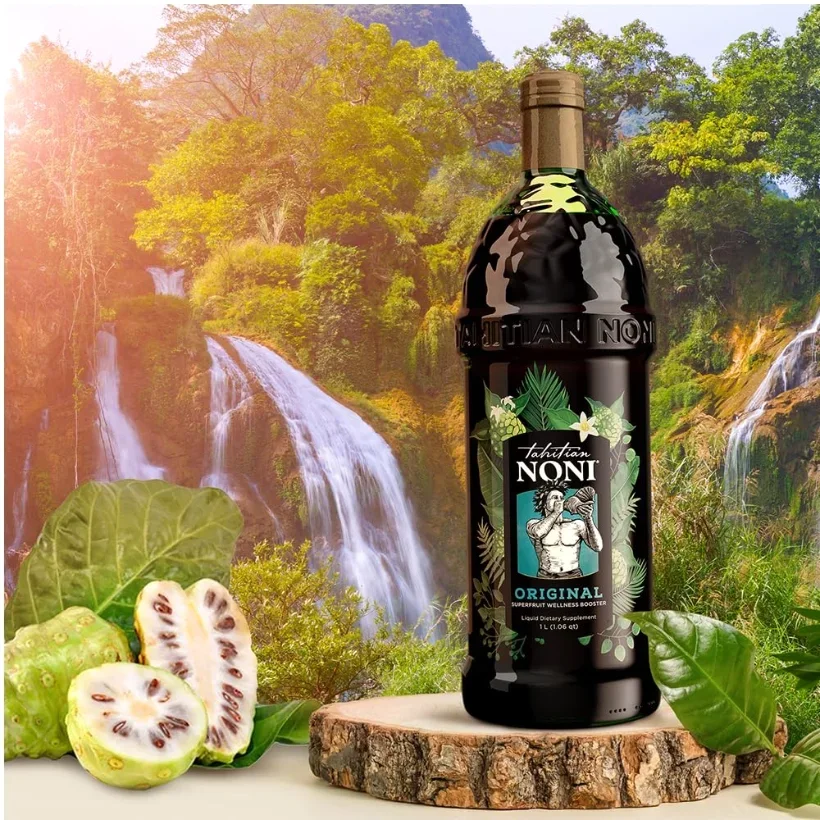
Our pick for a first order of Tahitian Noni Original is the single liter. The two-bottle and four-bottle cases contain exactly the same juice. The case only becomes good value once you know that you like the flavor, have room for the bottles and will finish them. Buyers use words like earthy and bitter even in favorable reviews. That's a more persuasive reason to start small than any photograph of a sunny orchard is to buy four at once.
This is a review of the Original drink made with noni fruit nectar, blueberry juice concentrate and grape juice concentrate. We compared the bottle and label, read the named buyer accounts, examined how serving and case sizes interact, and looked at a competing Tahitian noni juice from Dynamic Health. We haven't tasted the batch that will arrive at your door. The descriptions of taste below belong to the people who actually reported them. They agree that the drink is distinctive but disagree about how easily it earns a place in the kitchen. Original collection and buyer accounts · Partner.Co product page
One drink on the shelf, three quantities in the cart
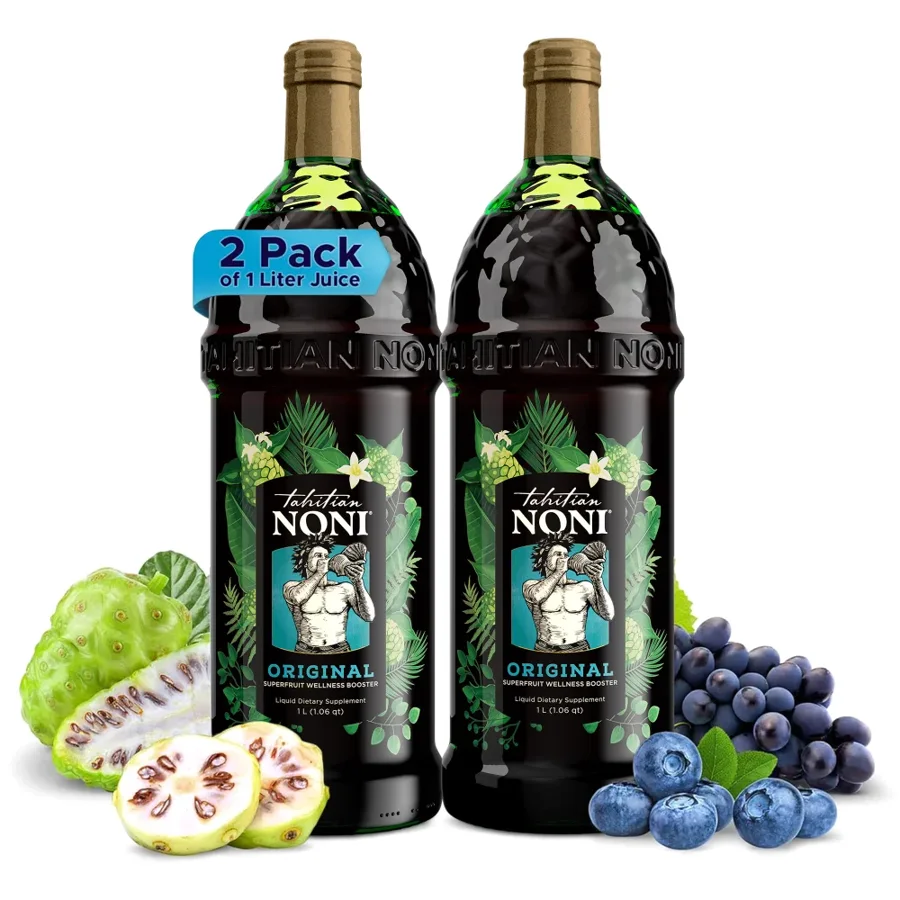
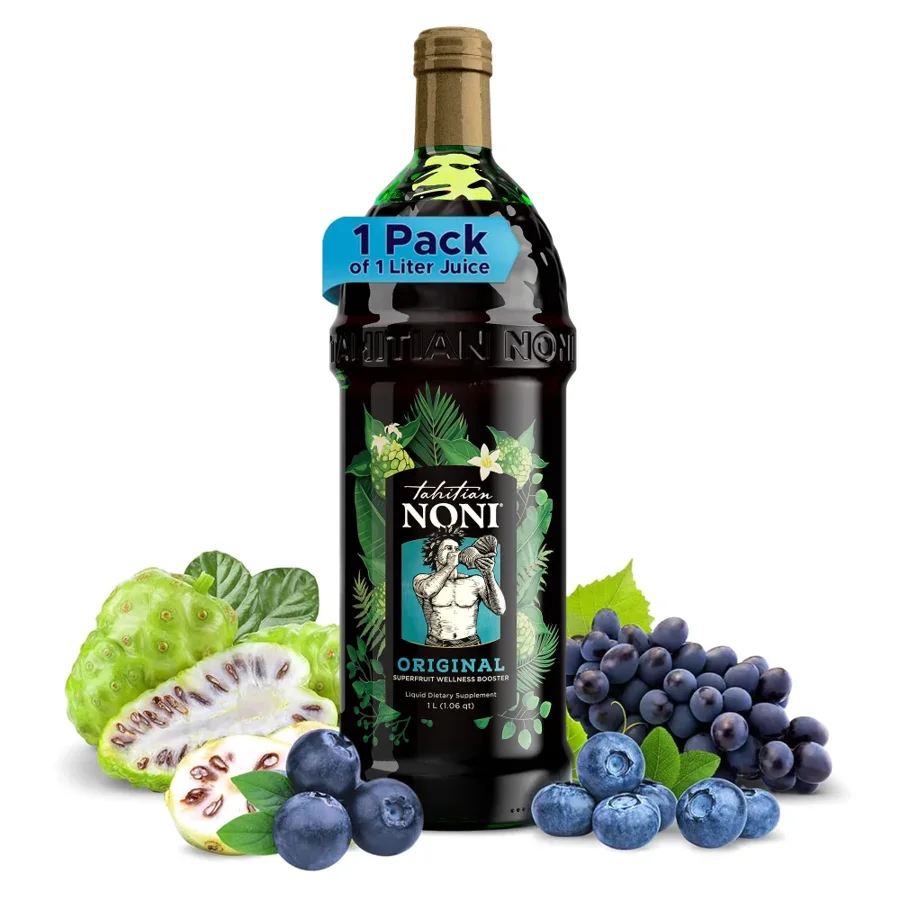
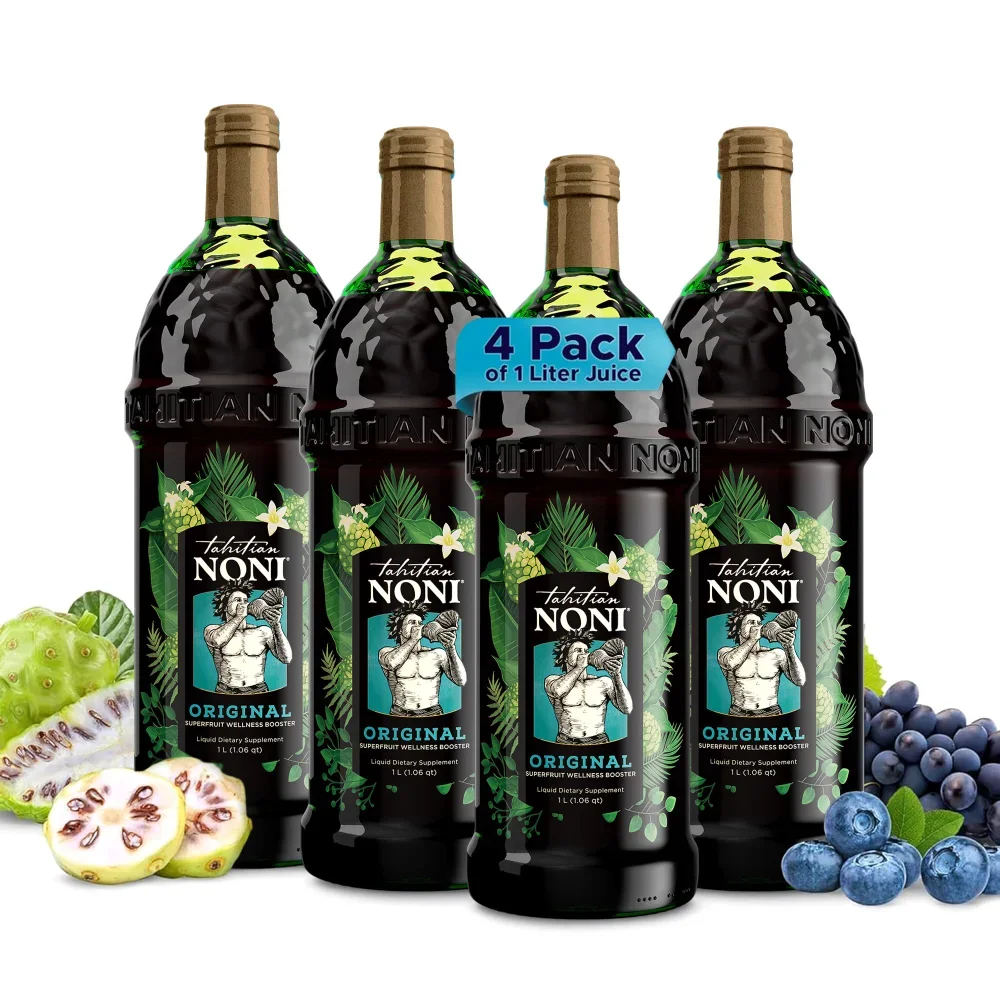
The Original is sold here in one-liter dark glass bottles. Select a single, a pair or a four-bottle case and the number of containers changes. The packaging and fruit blend inside each remain the same. Some retailer entries repeat one of those configurations. That matters if you see several prices or star counts on a search page and begin to wonder whether one bottle is more concentrated, a later release or a premium recipe. Check the word Original, the volume per bottle and the bottle count first.
A single liter is already a substantial trial for a drink with a 30 mL labeled serving. If you are accustomed to grabbing a small bottle of fruit juice and finishing it with lunch, the packaging photograph can be deceptive. Measure out 30 mL of water once and put it next to the glass you normally use. The difference between a small measure and a full breakfast glass changes your expectations about flavor intensity, running cost and how long an opened bottle might occupy the refrigerator.
| Pack of Original | Liquid purchased | Approximate labeled servings | Question to settle before ordering |
|---|---|---|---|
| Single bottle | 1 liter | 33 | Will you enjoy the flavor enough to finish one? |
| Two-bottle case | 2 liters | 66 | Will a second sealed bottle earn its space? |
| Four-bottle case | 4 liters | 132 | Does the saving survive the possibility of unused bottles? |
If you share a household, distinguish between sharing a tasting and buying for an established routine. Four people trying a small pour once can do so from a single bottle. That still leaves most of it for whoever likes it. Four people who already drink it regularly are a different proposition. A case can be sensible there because sealed bottles can wait their turn. Ask who is likely to keep pouring after the first weekend before letting the lower unit price decide. Original case options
What the label lets you calculate
The catalog reproduces the Supplement Facts panel. It gives a serving as one fluid ounce, expressed on the bottle as 30 mL. Per serving, the panel reports 15 calories, three grams of total carbohydrate, two grams of sugars, and a 15 mg figure for iridoids and phenolic compounds. It also lists a 29 g proprietary blend. The fruit names on a printed panel tell us what's in the serving. Those numbers give us a firmer basis for discussing the drink than broad statements about superfruits. Original label and serving table
The 29 g is the combined amount for the named blend. The listed components are noni fruit nectar from purée and blueberry juice concentrate. Grape juice concentrate and natural flavors appear separately in the other ingredients. Noni coming first doesn't tell us the weight of blueberry in a serving, the exact share of noni in a bottle or how much of the sugar comes from each fruit. Someone seeking a product with a declared single-fruit formulation should read the ingredient panel of an alternative beside this one.
A household tablespoon, a US fluid ounce and a milliliter are different units. A liquid measure with mL marks makes the arithmetic straightforward. At a 30 mL pour, a liter supplies about 33 full portions and a small remainder. A 60 mL pour cuts that approximate portion count in half. It also doubles the declared nutritional figures to 30 calories, six grams of total carbohydrate and four grams of sugars in that glass, before anything else goes into it. Those are calculations from the label, not suggested intakes.
| What goes in one glass | Calories from Original | Sugars from Original | What else to account for |
|---|---|---|---|
| 30 mL of Original | 15 | 2 g | Nothing else if served on its own |
| 30 mL of Original plus plain water | 15 | 2 g | Water changes volume and flavor intensity |
| 30 mL of Original plus another juice | 15 | 2 g | Add the other juice's contribution |
| 60 mL of Original | 30 | 4 g | Double the volume and the bottle goes twice as fast |
One easy mistake is to confuse the weight of the entire fruit blend with the 15 mg figure for the named compounds. Those are two different measurements of two different things in the same serving. The panel doesn't establish a Daily Value for that compound figure. It cannot be translated into a percentage of a health outcome, a target for daily consumption or an equivalence with a different brand's laboratory method. If your reason for buying depends on reaching a particular clinical target, this label doesn't supply it.
The taste that buyers actually describe
One of the more useful accounts is a four-star review of the single bottle by M isabel soria velarde, dated August 21, 2026. The reviewer had been drinking it for several weeks and described both earthy and fruity notes. Adding water or another juice made the taste easier to get used to. There's a practical detail inside that otherwise favorable account. It took experience with the drink to find a way of serving it that worked. A photograph of blueberries on a label would have told a first-time buyer much less. Nine buyer accounts
AC crown, who gave the single bottle five stars on August 18, put it more bluntly: “The taste is bitter.” The reviewer also described mixing a small amount into another drink. Both people liked the product and both found a reason to dilute it. For someone who already enjoys bitter flavors, that might sound appealing. If your usual juice is sweet and bright and you want more of the same, those accounts give you a reason to try one bottle before filling a pantry shelf.
The distinction between dilution and masking is worth thinking through. Water changes the concentration in the glass. Adding a stronger-tasting juice adds another flavor altogether. If you would only drink Original with a second fruit juice, the ongoing cost and the listed sugars in that second drink are part of the routine you're considering. You can make a fair assessment of the purchase even if your conclusion is simply that you prefer the mixer by itself. You don't owe the bottle a change in your tastes.
An interesting counterpoint comes from Sandy Tye, who wrote about the four-bottle case on May 4, 2026 and found its appearance and taste familiar. That comment is useful to someone looking for Original again. It has less to say to someone encountering the fruit for the first time. In the same collection of reviews, an enthusiast mentions years of repeat use, while a dissatisfied buyer of a four-bottle case says they would not buy it again. Averages conceal both those very different relationships to the same drink.
Is four really the best value?
The way to price a case is to start with the final delivered amount and divide it by the number of liters you reasonably expect to use. The first part is simple if all bottles arrive whole and all are finished. A four-bottle case priced below four singles gives a lower cost per liter. The equation changes if the case encourages you to buy more than you enjoy. Then the denominator is the amount actually consumed. The headline discount on the front of the page doesn't change that arithmetic.
Here's a thought experiment that works at any price. Call the current delivered price of the single bottle S and of the four-bottle case C. If you expect to finish all four, compare C divided by four with S. If you expect to finish only two, compare C divided by two with S. There's a case price low enough to be worthwhile in either calculation, but the two break-even points are quite different. Even regular buyers can use the same method when a single-bottle promotion appears.
A second way to look at value is cost per measured pour. Divide the delivered price of the single by approximately 33 for a 30 mL serving, or the case price by approximately 132 if you will use it all. This measure works especially well for comparing the same Original juice across packages. Comparing a ready-to-pour beverage with a concentrate, capsule or dried powder by price per fluid ounce would answer a different question. Check the form, the prepared volume and the serving specified by each maker before setting prices side by side.
Lily's September 2025 review of a single bottle makes a point that is easy to miss in star ratings. The reviewer liked the juice and wished it were cheaper. Price dissatisfaction and a favorable opinion of the drink can sit perfectly comfortably together. A person may love the taste and still reasonably decline the premium. On November 14, 2026, the Amazon one-liter listing showed 300 or more bought in the past month. That rolling threshold gives a sense of activity for the single-bottle listing. It does not tell us how many two- or four-bottle cases sold. The collection's reported average of 4.6 out of five and its separate counts across listings describe ratings. They do not establish how many bottles the company sold. Buyer rating and price comments
Comparing the bottle with Dynamic Health's Tahitian noni juice
Dynamic Health's Noni Juice Tahitian comes in 473 mL and 946 mL sizes on its US product page. That makes the smaller one particularly relevant for someone who wants less liquid in the house before deciding whether to make noni a regular purchase. Its larger bottle is close to a liter but still 54 mL short. Comparing shelf prices as if both larger bottles contained the same amount gives a small but real advantage to the smaller package. Convert both to price per liter if the distinction affects your choice. Dynamic Health product details
| Feature | Tahitian Noni Original | Dynamic Health Noni Juice Tahitian |
|---|---|---|
| Manufacturer's presentation | Noni, blueberry and grape blend | Pure Juice product group |
| Sizes in this comparison | 1,000 mL, singly or in cases | 473 mL and 946 mL |
| Flavor information | Buyers report bitterness and some use a mixer | Maker describes a bold flavor and suggests mixing as an option |
| Reason to consider | You like this fruit blend and want the Original | You want to start with a smaller bottle |
| Useful comparison unit | Delivered cost per liter | Delivered cost per liter at the selected size |
If you're seeking the same taste you remember from a bottle of Morinda or Tahitian Noni Original, matching the name and ingredient list has a practical advantage. A competitor might cost less per liter and still taste very different. Conversely, if you haven't tried either, brand familiarity is doing none of the work for you. Compare the amount you have to buy to find out, then examine each panel against your own preferences. Neither the word Tahitian nor an organic claim establishes how bitter you personally will find a drink.
What the glass and the photographs reveal
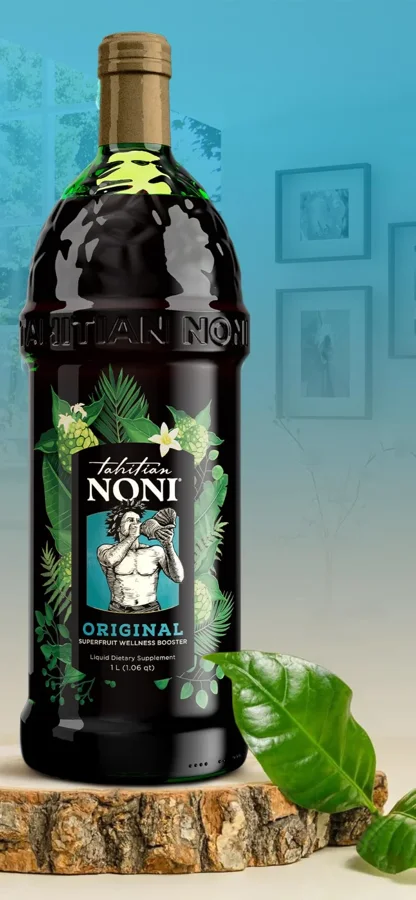
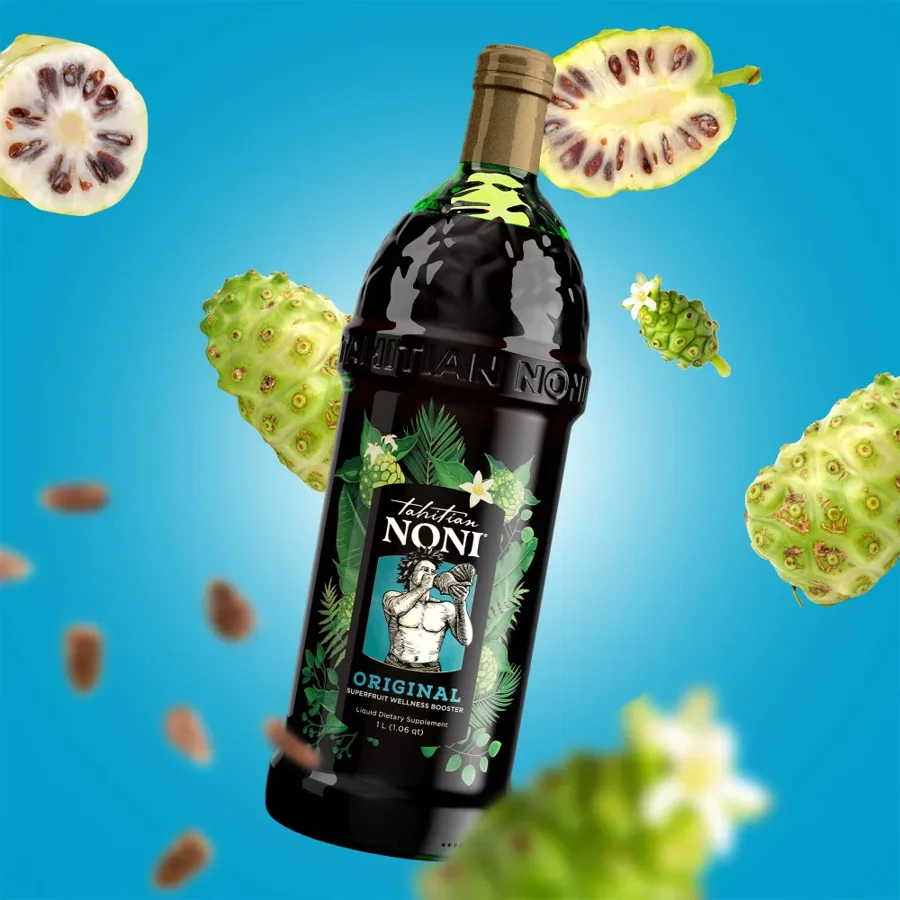
The product gallery gives four distinct views, including the liter bottle beside cut fruit, the bottle held in one hand and a closer look at its label. The dark glass can make the contents hard to judge from a photograph. The hand-held view does a better job of conveying scale. The close shot of the label is the useful one if you've received a bottle with different wording or if a search result describes a different formulation. A decorative island scene can't settle which formula you've selected. Bottle gallery
Glass becomes a real part of the purchase decision when you order more than one bottle. Ritesh reported on June 24, 2020 that one bottle in a two-bottle delivery arrived broken. Another buyer, mmh, praised the protective packing of a single in May 2026. These accounts concern different packages and deliveries years apart. They tell you that the experience can vary, without yielding a meaningful probability of breakage. Inspect a new delivery before putting the bottles away and use the seller's order channel for a damaged item. Original buyer reports
Partner.Co provides a product video presented by its global product director. Use it to identify the Original and see how the company presents the bottle. A separate thirty-second photo film on the catalog page uses its own gallery frames to show the bottle, fruit and setting. It is an edited sequence of photographs, while the Partner.Co clip is a manufacturer presentation. Neither is footage of an independent clinical trial or an authenticated purchaser opening your chosen pack. Manufacturer presentation · Short catalog film
A label comparison has limits
The National Center for Complementary and Integrative Health reports that few studies have examined noni in people and that benefits for a health condition have not been demonstrated in human studies. That's a good reason to distinguish buying a fruit drink you enjoy from buying an intervention for an illness. An attractive ingredient list, a favorable testimonial and laboratory findings about a plant each answer a different question. None tells an individual that a particular amount of this blended juice will treat a medical condition. NCCIH overview of noni
The same source flags potassium for people with kidney disease or a potassium restriction and advises discussing noni with a health professional if you take medicines. It also describes reports of liver injury after noni consumption while noting uncertainty about causation. These points matter when someone is shopping on another person's behalf. A familiar-looking glass bottle and a phrase like fruit juice can make it easy to forget to ask whether the recipient has dietary restrictions or a reason to avoid supplemental use. NCCIH safety information
A practical way to decide whether to reorder
Before ordering more, look at what is left in the first bottle and the date when you opened it. If you poured some most mornings for a week and then stopped, the relevant question is why. Perhaps the flavor only suits a particular mixer and you ran out of it. Perhaps the bottle is awkward to reach at the back of the refrigerator. Perhaps you simply prefer another drink. Those observations matter more to the next order than a projection based on one portion a day for an uninterrupted month.
Check the storage directions and date on the bottle you actually receive. The simple division that gives 33 servings tells you how much liquid there is, without making any promise about how long an opened bottle will keep. Keep sealed and opened storage instructions distinct. A shelf suitable for keeping a sealed case may be unsuitable once the cap has been opened. Make a note of an opened-bottle limit if your label specifies one and consider how many servings you would actually consume during that period.
Finally, compare like purchase arrangements. The manufacturer displays a recurring option alongside a one-time purchase. A subscription price may look attractive beside a single bottle from another seller, but the totals refer to different commitments and possibly different delivery charges. Look at the quantity in the first delivery, the interval before the next one and the amount due for that delivery. If a liter lasts you longer than the interval, the bottles can accumulate even if you enjoy every pour. A one-time order is the simpler way to establish your pace before deciding whether a repeating order matches it. Manufacturer purchase options
Our verdict
We recommend a single liter if you want to try Tahitian Noni Original as a strongly flavored fruit drink and have checked that it's suitable for you. The facts that favor it are specific: its noni, blueberry and grape blend, a clearly stated serving size, and the option to keep buying exactly the same bottle in a larger case if you like it. We would choose the two-bottle case for a household that knows its pace, and consider the four only when the current delivered price and actual consumption justify it. We don't recommend purchasing any pack for a promised medical result.