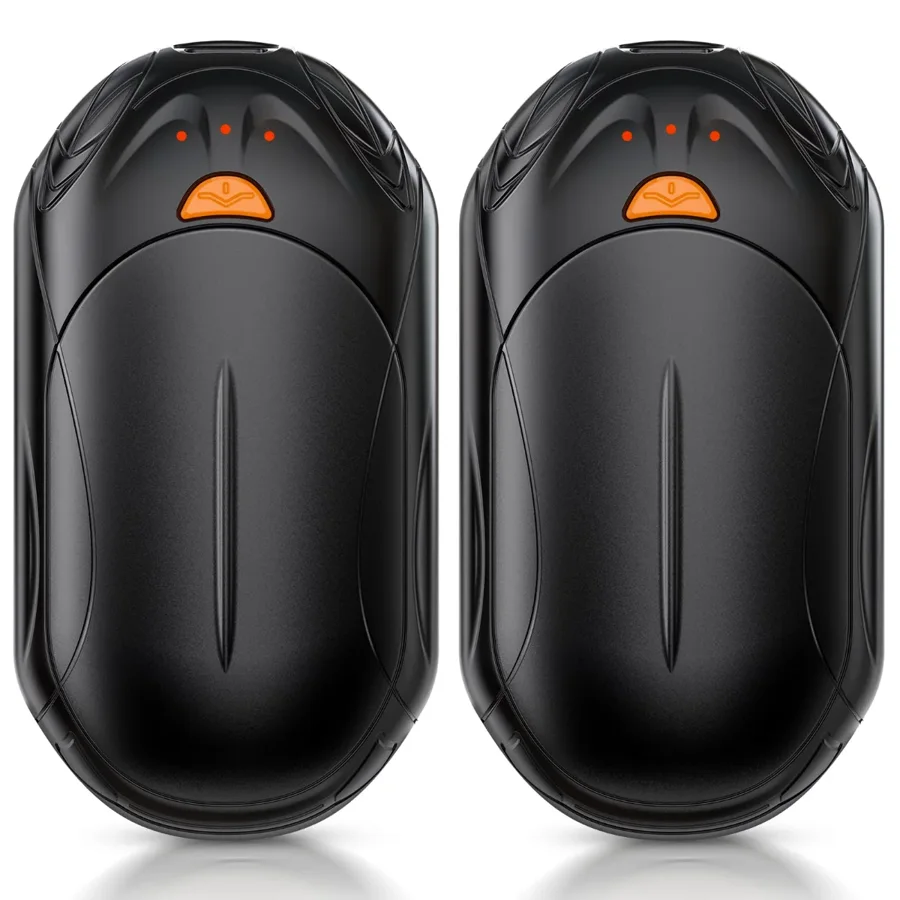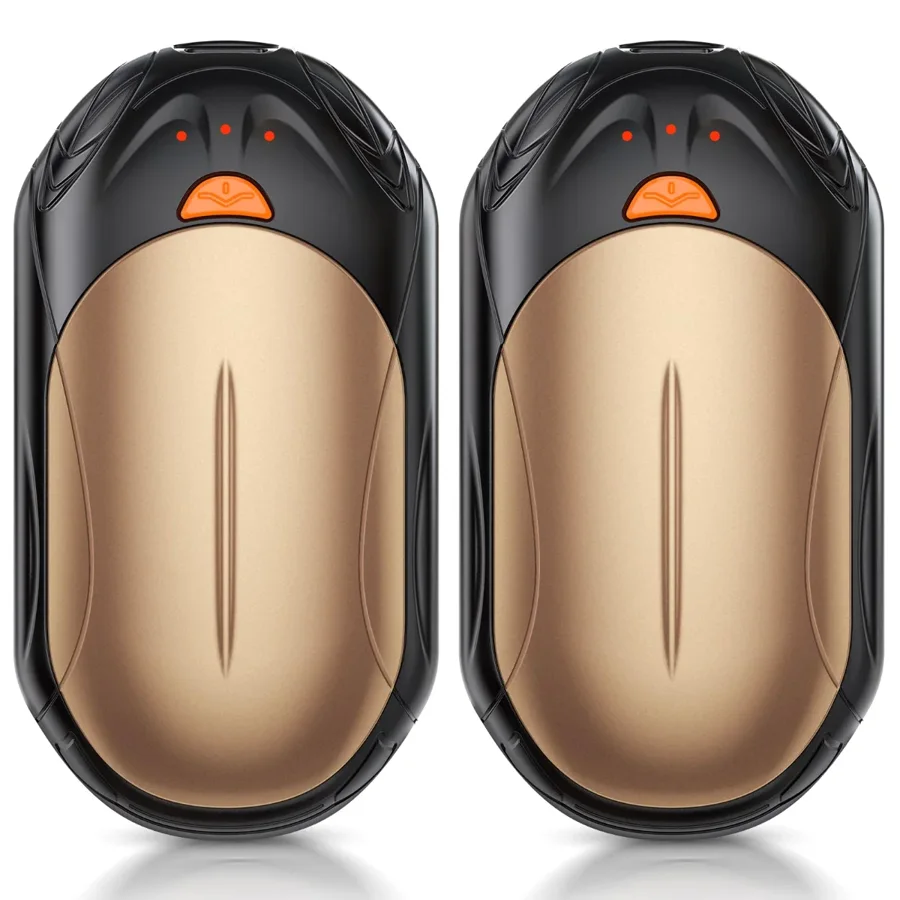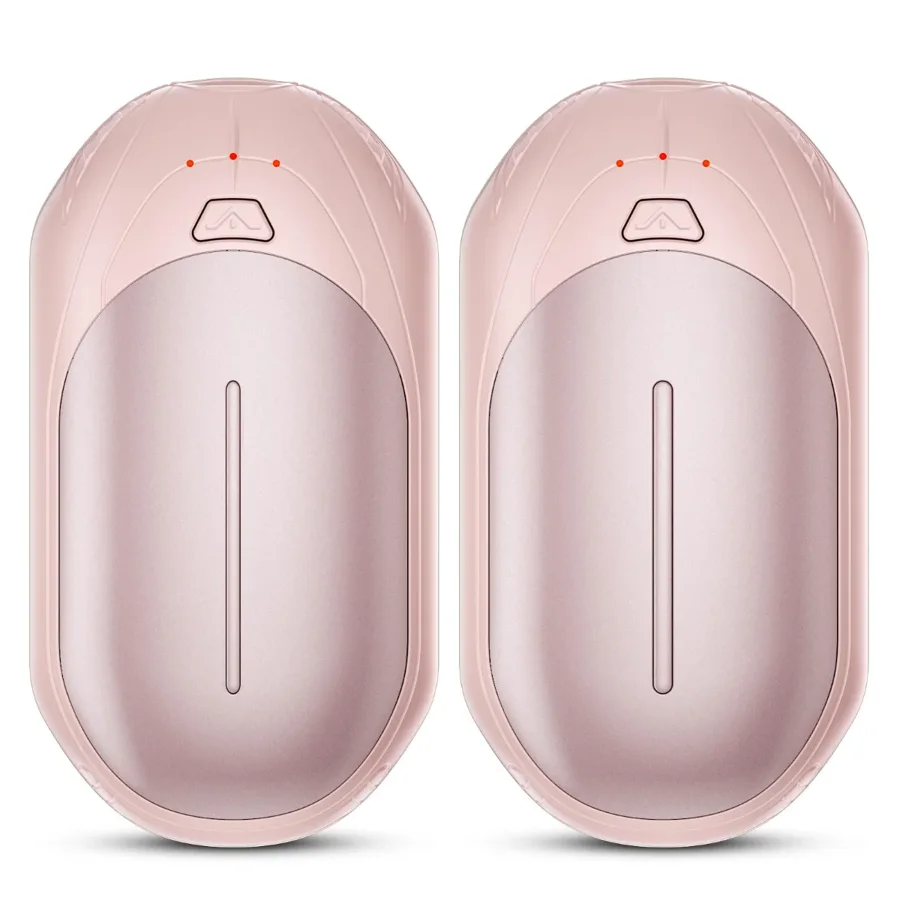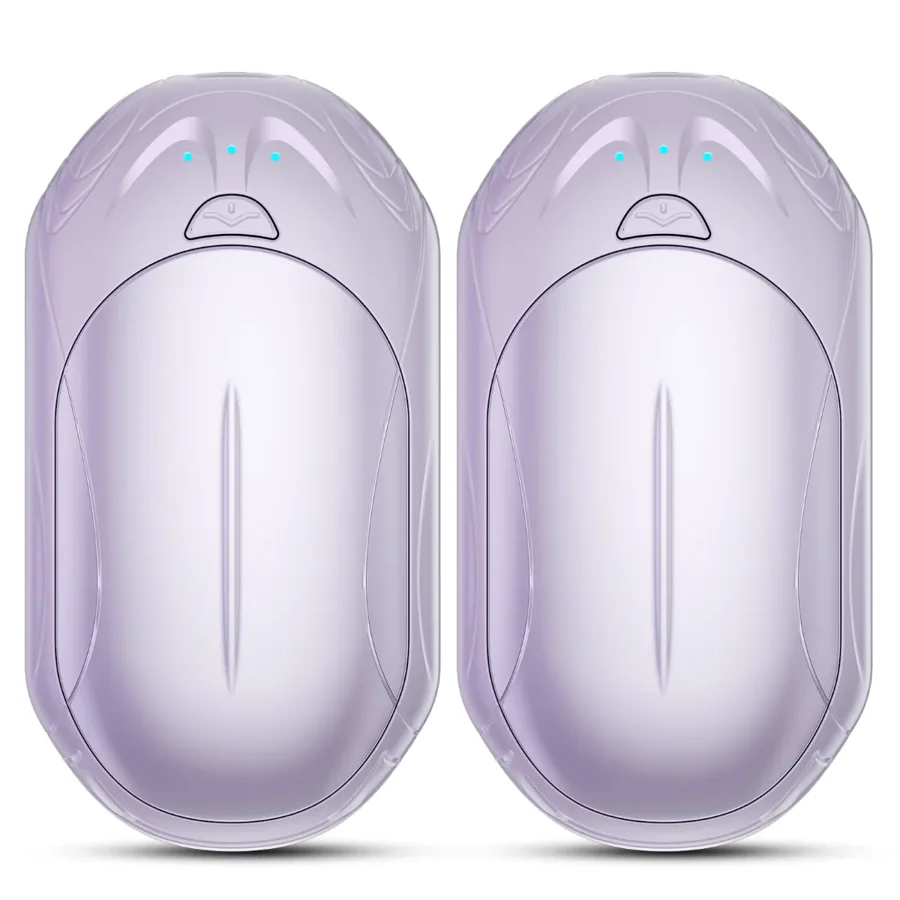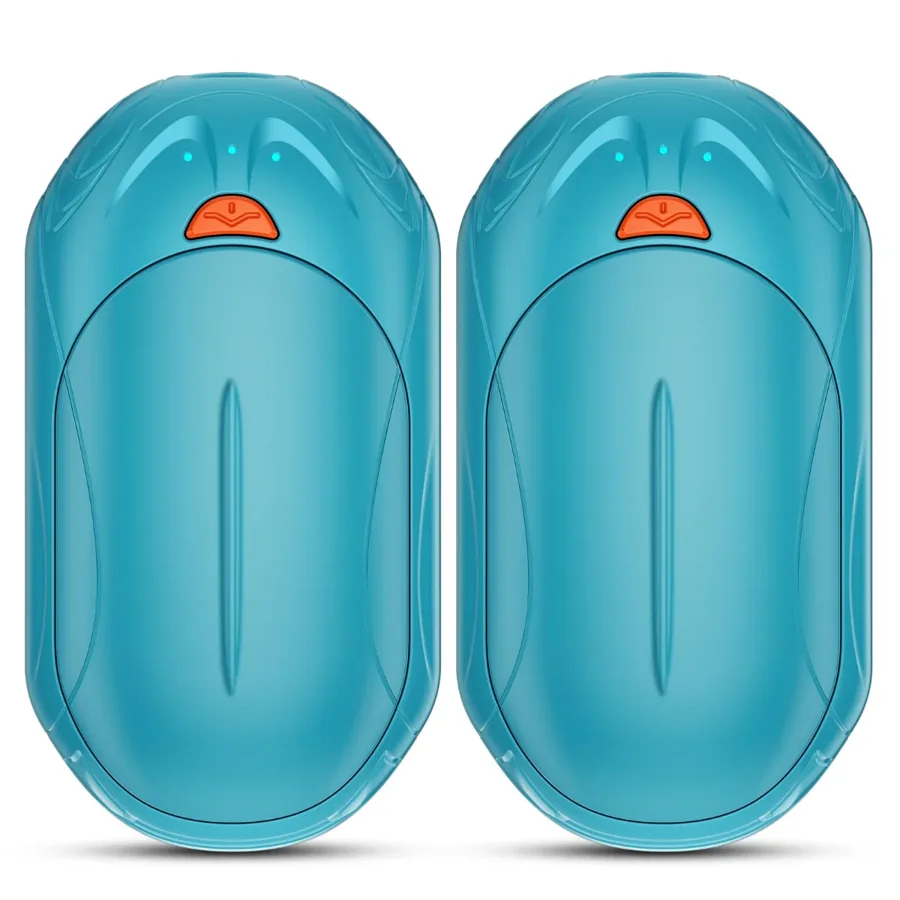
We recommend the UNIHAND two-pack for people who can charge it between outings and want a warmer in each pocket. Each half has a button, a battery and three settings. You can run them separately or latch them together. The main reasons to pass are equally concrete. The halves take up more room than thin disposable packets, the join may take some effort to release, and the twenty-hour battery claim describes the lowest setting under the seller's conditions. There's no basis for counting on twenty hours of high heat.
This review covers the pair sold in ten colors at the supplied US store. They're variations of the same product. A higher price for champagne or a better star average on purple doesn't buy a higher heat setting. We compared the product specification with an independent timed test in Outdoor Life and with buyer reports from two retail sources. Those sources disagree on some figures, which gives a more useful picture of what to plan for than selecting the best number from each. UNIHAND product · Outdoor Life comparative test
Two units mean two separate decisions
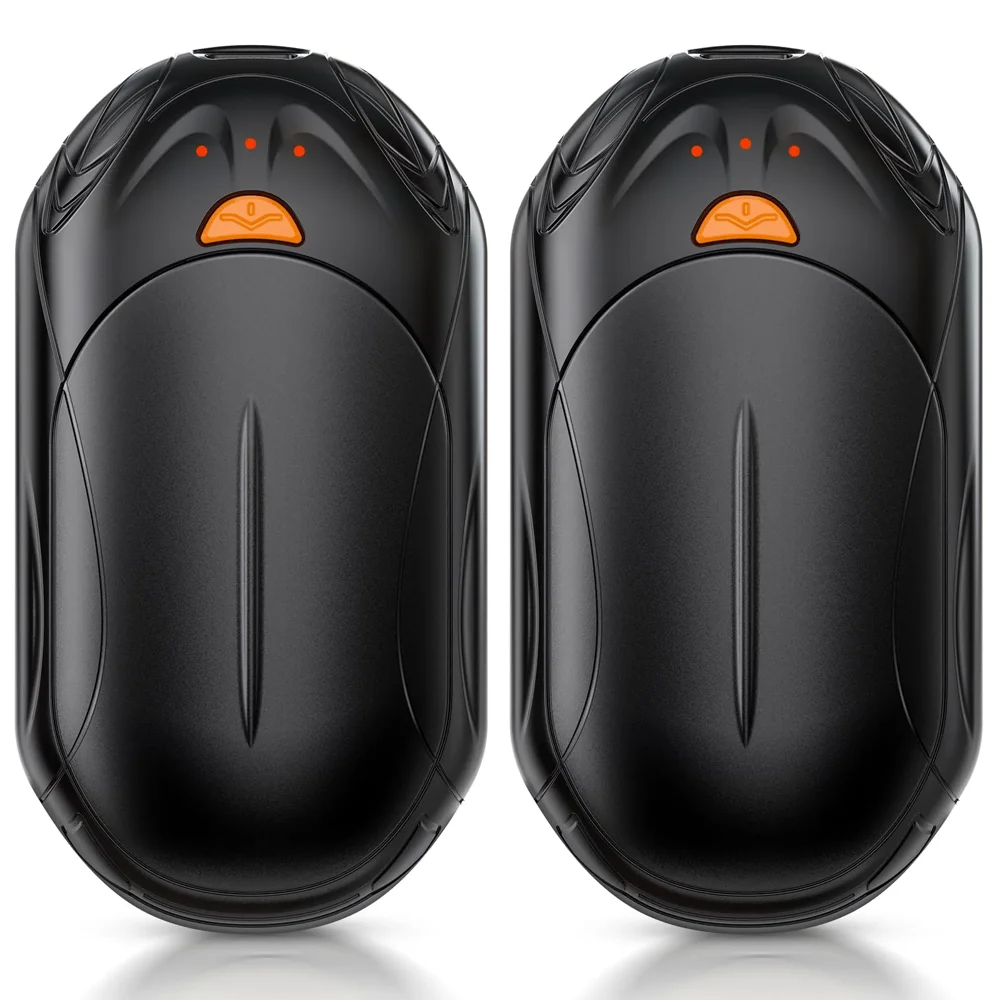
The feature most likely to matter outdoors is having a unit for each hand. Put one in the left pocket and one in the right, and you can let go of either to open a gate or answer a phone. A single, larger double-sided warmer can heat both palms when you hold them together, but that ties the hands to the same place. The UNIHAND can become a larger joined object when you want one. Separate it again when you need to use one hand or share half the pair.
Each unit is listed at 3.46 inches long, 1.84 inches wide and 0.79 inches thick, weighing around 0.15 pound. Those numbers are small enough to sound unobtrusive, but thickness is usually the dimension that decides whether something feels comfortable. Take a piece of paper roughly the stated length and width and compare it with the opening of the pocket you actually use. Then think about the additional thickness of the warmer and your hand. A pocket that fits a phone flat against your leg may feel quite different with a rigid warmer in it.
Splitting the pair also introduces a useful choice about power. Each side can be switched on only when needed. Someone holding a dog's lead in one hand may want the free hand warmed first. A person waiting at a bus stop could use both together during the wait, then turn them off on boarding. The seller says each warmer has its own battery. That means a unit left charging at home doesn't contribute power to the one you carried out the door, and latching them together doesn't pool their batteries. Pair and charging instructions
The heat settings, in everyday terms
| Setting | Indicator | Listed surface temperature | Seller's maximum runtime |
|---|---|---|---|
| Low | One red light | 95–107.5°F | Up to 20 hours |
| Medium | Two red lights | 104–118.5°F | Up to 14 hours |
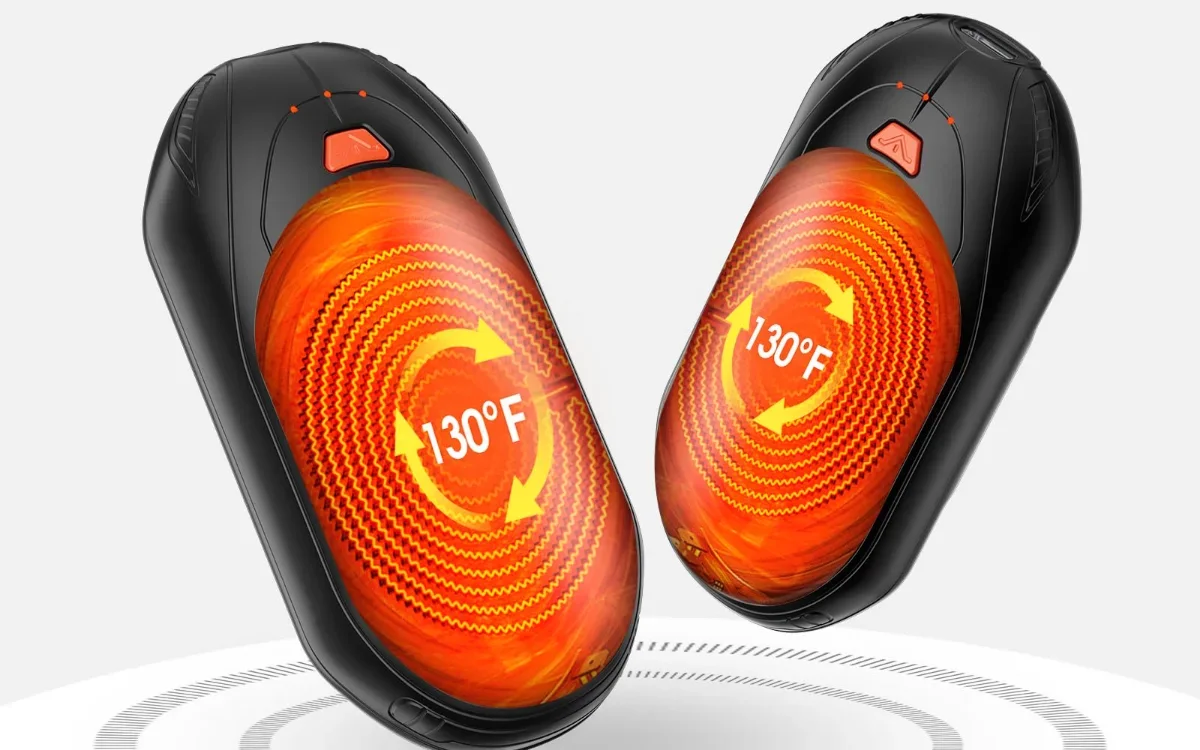
| High | Three red lights | 118.5–130°F | Up to 8.5 hours |
The button changes the heat setting, and the row of lights makes it possible to check which level you've picked. The temperature ranges overlap slightly. Medium starts at 104°F while low extends up to 107.5°F on the published chart. A change from one light to two is therefore a change of target range. It isn't a promise that the surface will jump by the same number of degrees at every point in a day's use. Look at the indicator and pay attention to whether the warmth is already sufficient. UNIHAND heat-level chart
The place you put it affects the experience. A warmer held in a glove with insulation around it feels different from one in an open coat pocket exposed to moving air. With a thick mitten, it may be easier to choose a setting before putting the mitten on. For a walk interrupted by indoor stops, an easily reached coat pocket can be more practical than a tight glove. A good choice lets you remove or reduce the heat promptly if it feels uncomfortable, while still leaving room to move your fingers.
The store describes the “AI” feature as a temperature sensor and controller. The user still chooses the setting, and the electronics regulate heat within the device. There's no health measurement or personalized learning function to buy. That detail matters when comparing these with an inexpensive warmer that uses simpler language for temperature control. A useful comparison asks whether the unit holds comfortable heat for the required time, how easily the user can change levels and what happens to the battery under load.
What happened in an independent timed test
Outdoor Life writer Laura Lancaster charged the warmers fully, set one from each pair to high and one to low, and left them on a table in a room at about 70°F. She recorded surface heat and the time until power ran out. This was an indoor bench comparison with a clear procedure. It wasn't a walk in a particular outdoor temperature or a measurement inside someone's glove. It gives all the tested pairs a common starting point, an advantage that scattered buyer comments can't offer. Test method and results
| Model in the Outdoor Life test | Low temperature and time | High temperature and time |
|---|---|---|
| Unihand | 111°F, 10.7 hours | 140°F, 6.1 hours |
| Dnaleao | 108°F, 7.5 hours | 127°F, 4.8 hours |
| Ocoopa | 105°F, 8.7 hours | 119°F, 5.4 hours |
In that test the Unihand unit on low ran three hours and twelve minutes longer than the Dnaleao and two hours longer than the Ocoopa. On high, the differences were smaller: about an hour and eighteen minutes over Dnaleao and about forty-two minutes over Ocoopa. Those comparisons have meaning within the same test. They shouldn't be read as a universal ranking of every current model carrying those brand names. The publication identifies the brands and units it sampled, and the catalog identifies the product it sells today.
One number merits particular attention. Lancaster recorded 140°F on the Unihand at high, while the current target catalog quotes an upper figure of 130°F. The low reading in the test was also above the top of the catalog's low range. The evidence doesn't establish the reason. Differences in model revision, surface location, measurement procedure or test conditions could matter, and the older test dates to November 2024. We wouldn't substitute either set of figures for the other or encourage anyone to pursue the hotter number.
How much runtime should you budget?
Consider a round trip involving a thirty-minute wait in the morning and another thirty minutes at night. That's an hour of active use if the units are switched off during the workday. Even the shorter high-setting result from the independent test leaves substantial room for such a plan on a fresh charge. A person working outside through an entire shift has a different problem. Six hours and a little extra on high may end before the shift does, particularly if the units have already been used on the way there.
The seller's published maximums give a useful sense of the relationship between the three settings. Turning both units to high consumes battery faster than leaving them on low. Lowering the setting when a pocket has warmed up may make sense for comfort as well as time. We haven't timed this pair at mixed settings, and there is no sound way to promise a particular number of additional hours from switching mid-day. Treat a day of alternating levels as an unknown until you've tried your normal pattern with a charged pair.
It also matters whether the advertised time is expressed per unit or as a sum of use across two units. Two warmers running at once for six hours warm two hands for six hours; they don't keep both hands warm for twelve hours. Sequential use can keep one hand warm for longer, but it changes the service you're getting. Anyone planning a full day outside should decide first whether both hands need heat simultaneously. That determines whether saving one unit for later is actually a useful strategy.
A sensible first outing is one close to home where you have pockets or gloves that work without the warmers. Note the charge state before leaving, the setting you actually use and whether you switch them off during indoor breaks. At the end, write down the real hours of powered use, not simply the time between leaving and returning. That gives you a personal reference for your clothing and routine without relying on either a manufacturer's best case or another writer's tabletop result.
Charging is part of the purchase
The store lists a USB-C charging cable in the box. Its support page says to charge the units indoors at room temperature. They are for warming hands; the product listing specifically says the USB-C port is there to recharge the warmers and doesn't list a phone-charging output. If a combination warmer and emergency phone battery is the feature you're looking for, check an alternative that explicitly supports power-bank output. A familiar connector on the shell can't tell you which direction it supplies power. UNIHAND product FAQ
Think through the first evening back from an outing. Two small units can end up in separate coats, leaving one on the charging cable and the other in a pocket until morning. Keeping them beside the cable at the same time solves the particular inconvenience created by the split design. People who habitually plug in a phone at night may find this effortless. Someone keeping emergency supplies in a car for occasional, unplanned stops might prefer a sealed disposable pair that doesn't depend on remembering the last charging session.
Rain and snow deserve equally plain treatment. The catalog doesn't rate this pair as waterproof. It advises keeping it protected in a pocket or glove and allowing a damp unit to dry before charging. The device is a pocket warmer used in winter, not a waterproof tool simply because photographs show it outdoors. If your activity routinely involves equipment falling into water, shop for hardware with a documented protection rating appropriate to that environment. A colored outer shell doesn't provide one. Product care and handling
What buyers liked and what they found awkward
Two customers quoted on Woot's Amazon ratings page had markedly different reactions. Tom, writing August 11, 2026, appreciated the adjustable heat and the ability to keep recharging the same units. He also thought the battery life was good. Delene Burton, writing July 7, found the units smaller than expected and objected to getting heat from one side of a separated unit. Her account makes the visual dimensions and the joined configuration particularly worth examining before purchase. Both comments are about Unihand warmers; the Woot listing has its own item identifier and rating pool. Woot's attributed Amazon reviews
The black pair is also described on an Abunda retail page that identifies the model as AOY-766. In a dated review there, Monique Rodriguez said on May 18, 2026 that rechargeable warmers were useful at her son's cold football games after repeated purchases of disposables. Michael G. Evans, on May 21, valued the adjustable setting and emphasized how hot the highest setting felt. What made the purchase worthwhile to the first person was repeated use. What stood out to the second was the intensity available at the top end. Retailer page and attributed customer accounts
The independent tester supplies another perspective on convenience. In an otherwise favorable review she described the latch as “a little stickier than I would like.” That's a minor annoyance when you split the pair once at home. It may matter more if you intend to join and separate the units repeatedly while wearing gloves. Look at both halves in the gallery before ordering, especially if you value easy handling more than a few additional minutes of runtime. Lancaster's review
UNIHAND's target listing gives an overall rating of 4.6 out of five from 10,504 ratings, described as covering the pair across colors. Some of the color cards repeat the same counts. A figure that appears under black and mint green shouldn't be counted twice to create a larger audience. Neither the reviews nor the displayed total establishes how many units the manufacturer sold in a month. The Amazon listing for the black AOY-766 pair showed 10,000 or more bought in the past month in the snapshot checked November 14, 2026. A related black UNIHAND two-pack had its own Amazon listing and a smaller badge of 900 or more bought in the past month on the same check. The two listings also have different review pools. The badges give rounded indications of activity. They cannot reliably be added together or broken down by color.
Choosing for a walk, a game or a gift
Someone walking the dog in a city can try placing one unit in the pocket opposite the lead hand, where the free hand can slip in and out naturally. A spectator with both hands still between plays may get more value from using the two units separately. A golfer who removes a glove to take a shot might prefer a front pocket with a large enough opening to return the warmer easily. These are reasons to consider the size and the separate halves before drawing conclusions from an advertised number of hours.
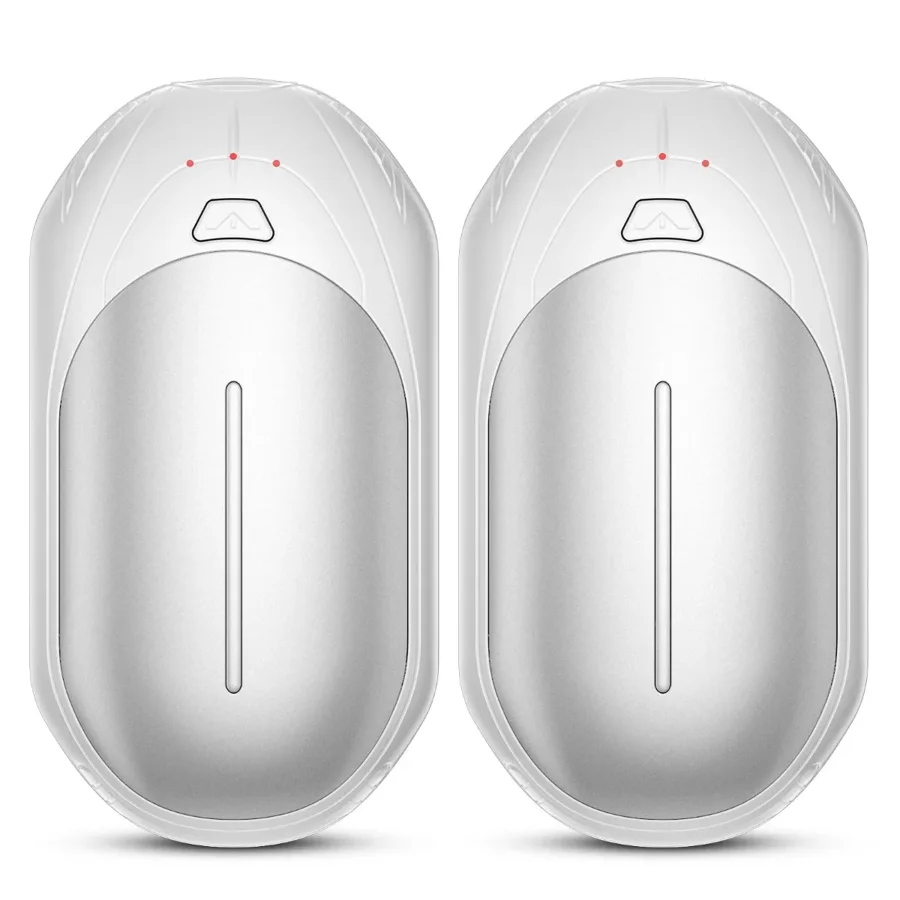
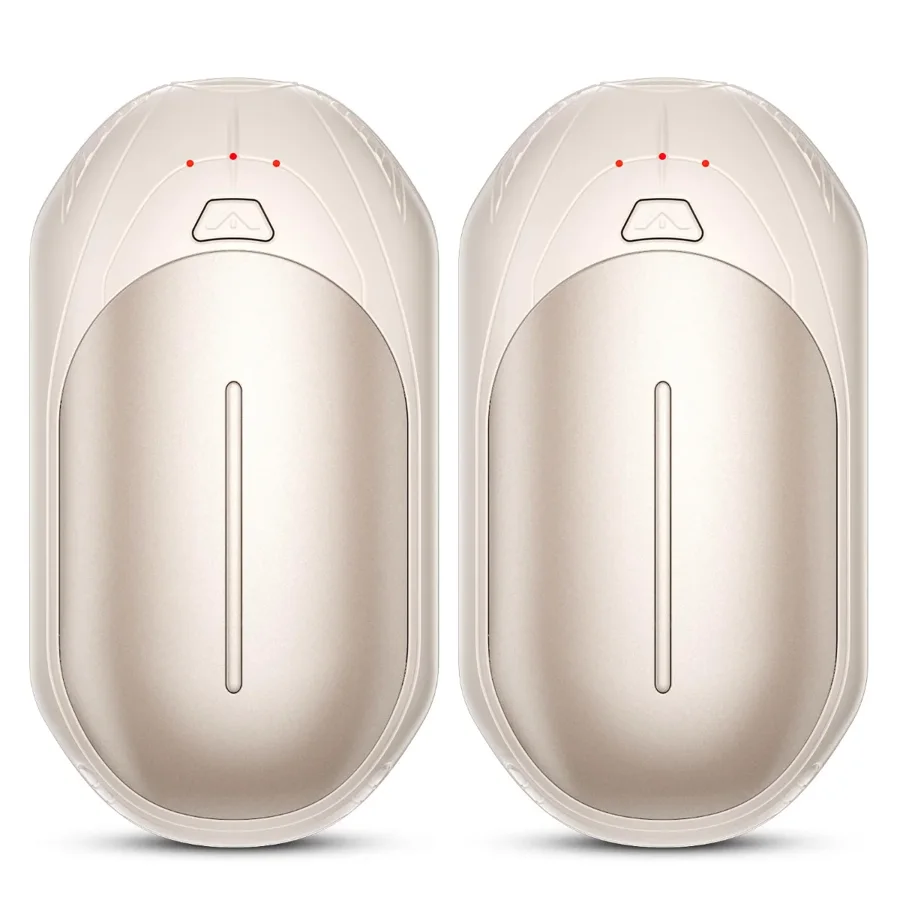
For a gift, the most useful question is whether the recipient will actually recharge a pair. Ten available colors make it easy to match a coat or choose a neutral shade. If someone already owns several sets of similar devices, an unusual color may help distinguish their pair from someone else's after a shared outing. Compare like-for-like delivery prices for the colors first. The target catalog identifies the same three heat levels and the same construction across the range, so there's no technical reason to pay more for a preferred finish unless the color itself matters. All ten colors
Official gallery views show the small control and the way the two shells sit together. For moving images, HRP Associates published a field-review video involving Unihand, Ocoopa and OVL after four weeks of use. Its presentation belongs to the testing team. A second video online identifies the Unihand two-pack in the title, but a creator's title and rating alone do not establish a verified purchase. For measurement details, Lancaster's clearly described bench test is the stronger source. For questions of handling, seeing the latch and controls in real use is more helpful. HRP team video and context · Product gallery
When does a rechargeable pair pay for itself?
Look at how many disposable packets you actually used last winter. Someone who takes a pair twice a week has a different cost comparison from someone who holds on to one unopened pair for a single annual trip. For an approximate break-even calculation, divide the delivered price of the rechargeable pair by the price you actually pay for a pair of disposables. That gives a rough number of outings before considering charging costs, useful life, or the possibility of losing one unit. It also assumes you'd otherwise open a new disposable pair each time you go out.
The calculation changes for short outings. A disposable pack may still be producing heat long after you come indoors. A rechargeable unit can be switched off when you reach the door, with battery remaining for later. On the other hand, a traveler who has no convenient way to recharge both units between days may prefer the convenience of a newly opened packet. Set the arithmetic beside your actual access to an outlet before deciding which type costs less for your particular winter.
Our verdict
Buy the UNIHAND pair for repeated winter outings if you have a place to charge between uses, the size works in your actual pockets and the option of warming both hands separately is valuable. Choose the least expensive color you like. We wouldn't buy this version for waterproof use, as a phone battery or on the assumption that high heat will last a twenty-hour day. Its practical strength is simpler: two independently switchable warmers that can ride in two pockets, with comparative test results and buyer accounts that make the limits easier to plan around.